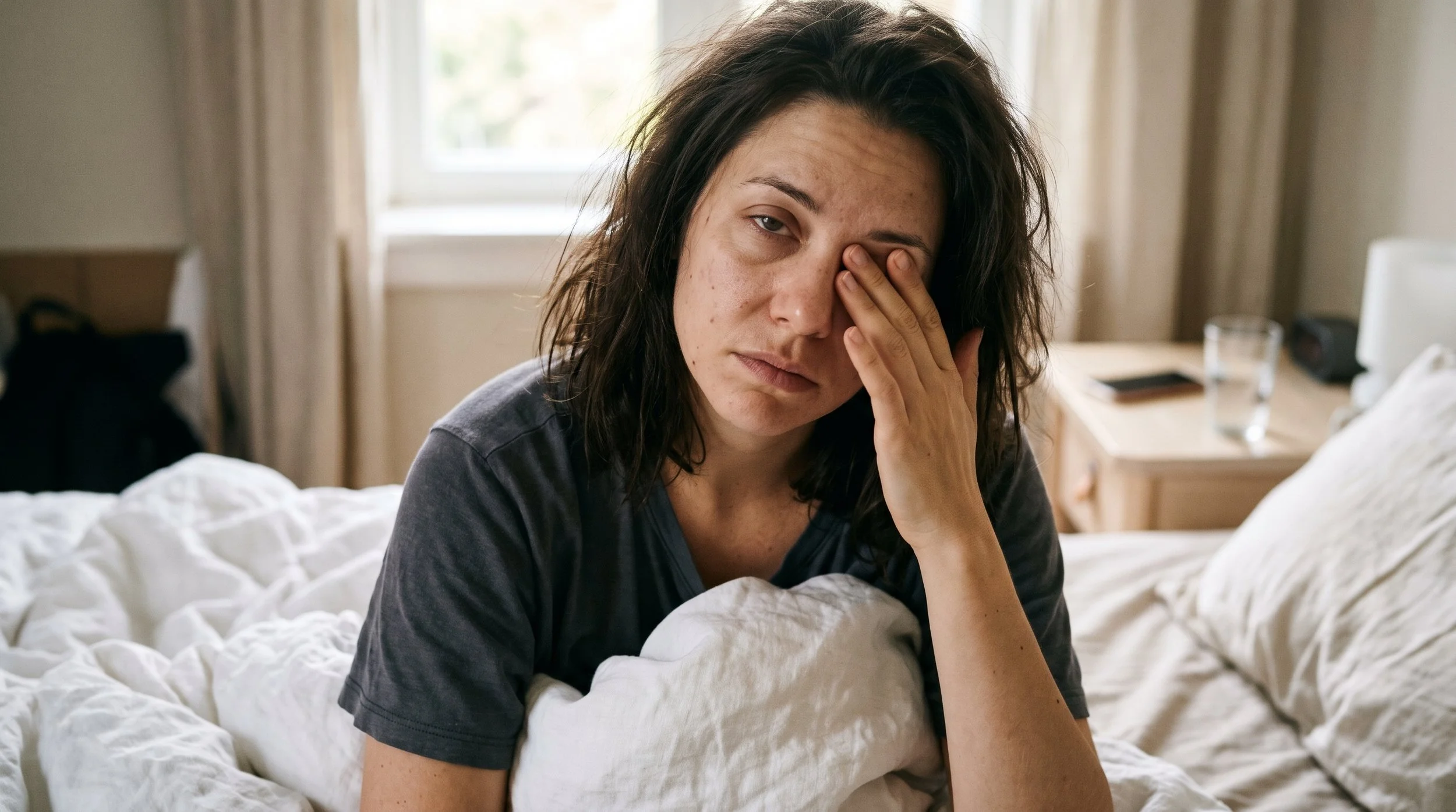
You bought the blackout curtains, cut off coffee at noon, and left your phone in another room before bed. Yet you are still lying in the dark at midnight wondering why can’t I fall a sleep while your jaw stays clenched and your mind replays the entire workday.
You are not broken. When healthy habits feel like they are failing, it is usually because they are being treated as rigid chores rather than biological signals.
At its core, sleep hygiene is a structured framework of daily environmental setups, biological boundaries, and behavioral cues designed to align your circadian rhythm and protect restorative slow-wave sleep. Used the right way, a sleep hygiene checklist removes physiological friction clearing out hidden stimulants, light confusion, and thermal stress so your autonomic nervous system can power down naturally.
Quick-Reference Summary: The 4 Daily Anchors
Daily Sleep Hygiene Anchors
Select any habit below to view its biological mechanism and clinical guidance.
Morning
-
Waking at the same time daily stabilizes your suprachiasmatic nucleus (SCN) circadian clock and cortisol rhythm.Basis: AASM Healthy Sleep Habits
-
10–15 minutes of outdoor morning light halts residual melatonin and sets your evening melatonin timer.Basis: NIH / Circadian Photobiology
-
Daytime physical activity accelerates adenosine buildup, deepening slow-wave (N3) sleep later that night.Basis: Sleep Foundation / CDC
Afternoon
-
Keeping naps under 30 minutes and before 3:00 PM prevents draining sleep pressure needed at bedtime.Basis: AASM Clinical Sleep Guidelines
-
Caffeine blocks adenosine receptors with a 5–7 hour half-life, reducing deep sleep even when you fall asleep fast.Basis: J. Clin. Sleep Med. (Drake et al.)
-
Front-loading fluids earlier in the day prevents nocturia (nighttime bathroom awakenings) that fragment REM cycles.Basis: Behavioral Sleep Medicine
Evening
-
Stopping large meals 3 hours pre-bed prevents digestive thermogenesis from keeping core body temperature elevated.Basis: Chrononutrition & Sleep Consensus
-
Though sedating at first, alcohol triggers sympathetic rebound and suppresses restorative REM sleep as it clears.Basis: NIAAA / Sleep Medicine Reviews
-
Writing a brief task list before bed offloads cognitive arousal and shortens sleep onset latency.Basis: J. Exp. Psychol. (Scullin et al.)
Bedtime
-
A cool room facilitates the ~2°F drop in core body temperature required to initiate and sustain deep sleep.Basis: National Sleep Foundation
-
Eliminating bright overhead and blue-spectrum light protects evening dim-light melatonin onset (DLMO).Basis: Harvard Div. of Sleep Medicine
-
CBT-I stimulus control: keep bed for Sleep, Sex, and Sickness; if awake >20 mins, reset in dim light until sleepy.Basis: AASM CBT-I Practice Guidelines
What Is Sleep Hygiene? (And Why Sedation Isn’t Real Sleep)
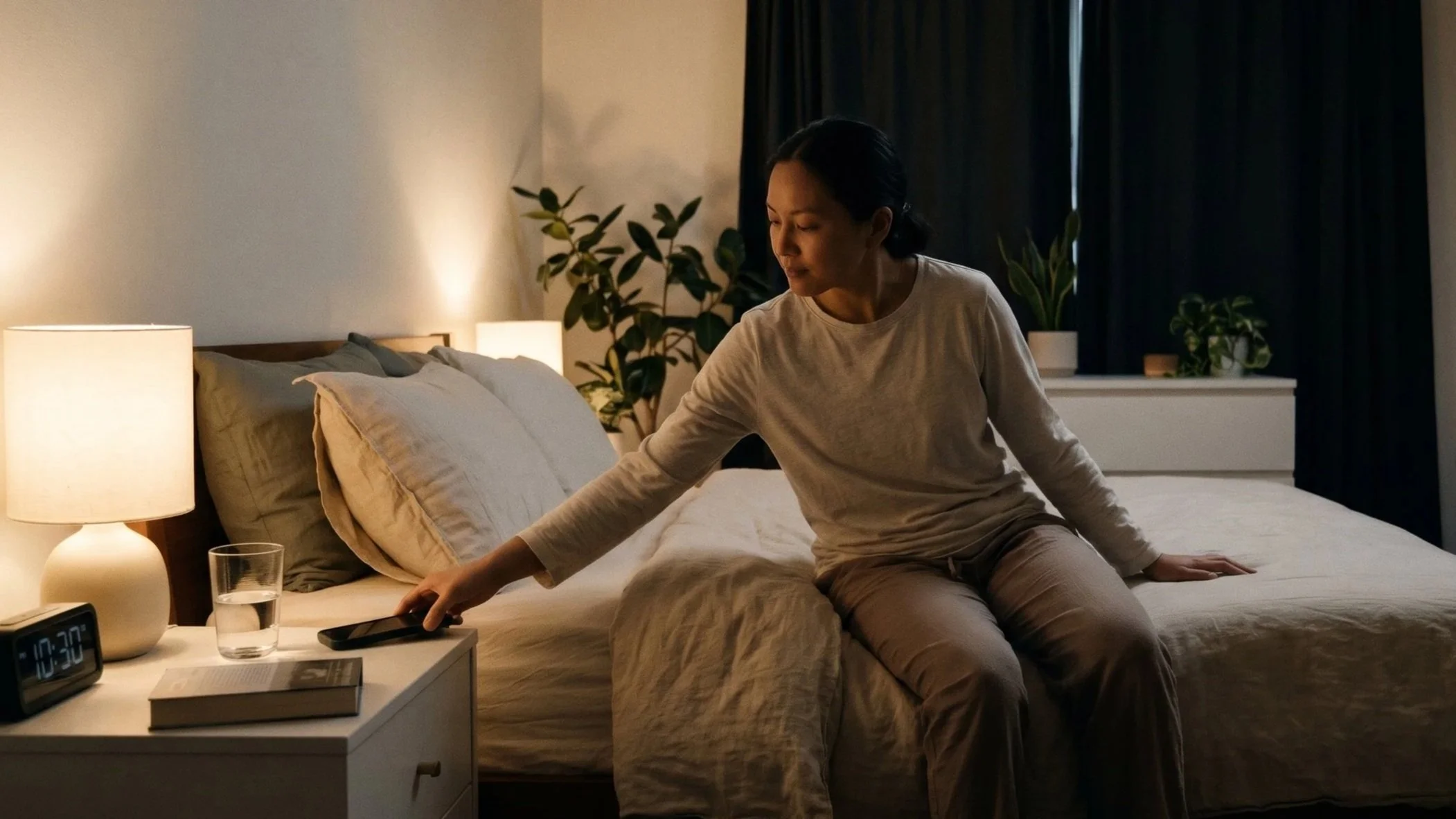
What is sleep hygiene? Sleep hygiene refers to the daily environmental setups, behavioral habits, and routines that signal to your nervous system that it is safe to sleep. A healthy sleep hygiene routine stabilizes your circadian rhythm, lowers nighttime cortisol, and prepares the body for restorative deep sleep.
Your brain does not have an instant off-switch. Instead, your autonomic nervous system relies on predictable external cues—light intensity, ambient temperature, movement, and timing—to shift from sympathetic alertness (fight-or-flight) into parasympathetic recovery (rest-and-digest). According to the Centers for Disease Control and Prevention (CDC), maintaining steady daily sleep habits and a supportive bedroom environment directly strengthens sleep continuity and long-term physical recovery.
When sleep breaks down, it is tempting to reach for fast chemical shortcuts like sedating antihistamines, high-dose synthetic melatonin, or prescription sleeping pills. While those options can induce unconsciousness, sedation is not restorative sleep:
Sleep Architecture Suppression: Pharmaceutical sedatives force the brain into an artificial hypnotic state while blunting natural neurochemical cascades. Clinical neuroimaging and polysomnography studies indexed by PubMed Central (National Institutes of Health) show that chronic use of sedative hypnotics disrupts sleep architecture, reducing restorative Stage-3 N3 slow-wave sleep.
Rebound Insomnia and Tolerance: Over time, the brain downregulates native calming receptors, requiring higher doses for the same effect. As noted in guidance from the Mayo Clinic, stopping sleep medications abruptly often triggers rebound insomnia, making behavioral and nervous-system habits the safer foundation for lasting rest.
Natural sleep architecture cannot be forced through chemical coercion. It has to be invited by setting the right physiological conditions across your day.
The Body-First Sleep Hygiene Checklist (12 Science-Backed Rules)
The most effective way to build healthy sleeping habits is to work chronologically across four daily stages. What happens at 7:30 AM directly governs how easily your body lets go at 10:30 PM.
Morning Cues (Rules 1–3: Anchoring Your Circadian Clock)
1. Maintain a rigid wake-up window every day: Your master biological clock—the suprachiasmatic nucleus (SCN) in the hypothalamus—relies on a consistent wake time to regulate hormone release and body temperature. Sleeping in more than 60 minutes on weekends triggers "social jetlag," throwing off Monday morning cortisol and delaying Monday night sleepiness.
2. Get 10 to 15 minutes of outdoor sunlight within 30 minutes of waking: Natural morning light (10,000+ lux) stimulates specialized retinal cells (ipRGCs) that shut off residual melatonin and trigger a healthy Cortisol Awakening Response—boosting daytime focus and starting an internal timer for melatonin release 14 to 16 hours later.
3. Build daytime sleep pressure through strategic movement: Physical activity breaks down cellular energy into adenosine, the compound that creates natural sleep drive. Just finish high-intensity workouts at least two to four hours before bedtime so adrenaline and core body heat have time to settle.
Afternoon & Biochemical Boundaries (Rules 4–6: Protecting Neurochemistry)
4. Set a firm caffeine cutoff by 2:00 PM: Caffeine acts as a competitive adenosine receptor antagonist—it blocks sleepiness signals in your brain without clearing accumulated adenosine. Because caffeine has a quarter-life of up to 12 hours, an afternoon espresso can quietly fragment deep slow-wave sleep even if you fall asleep easily.
Caffeine’s Adenosine Blockade
5. Cap daytime naps at 20–30 minutes before 3:00 PM: Napping too long or too late in the afternoon drains the adenosine sleep pressure you need to fall asleep at night.
6. Keep alcohol, heavy meals, and excess fluids out of your late evening: While alcohol acts as a temporary sedative, liver metabolism during the second half of the night triggers a glutamate rebound—spiking heart rate, causing 3:00 AM wake-ups, and suppressing REM sleep. Finish alcohol at least four hours before bed, wrap up heavy meals three hours prior, and hydrate earlier in the day (tapering fluids one to two hours before lights out) to prevent middle-of-the-night bathroom trips.
Bedroom Environment & Stimulus Control (Rules 7–9)
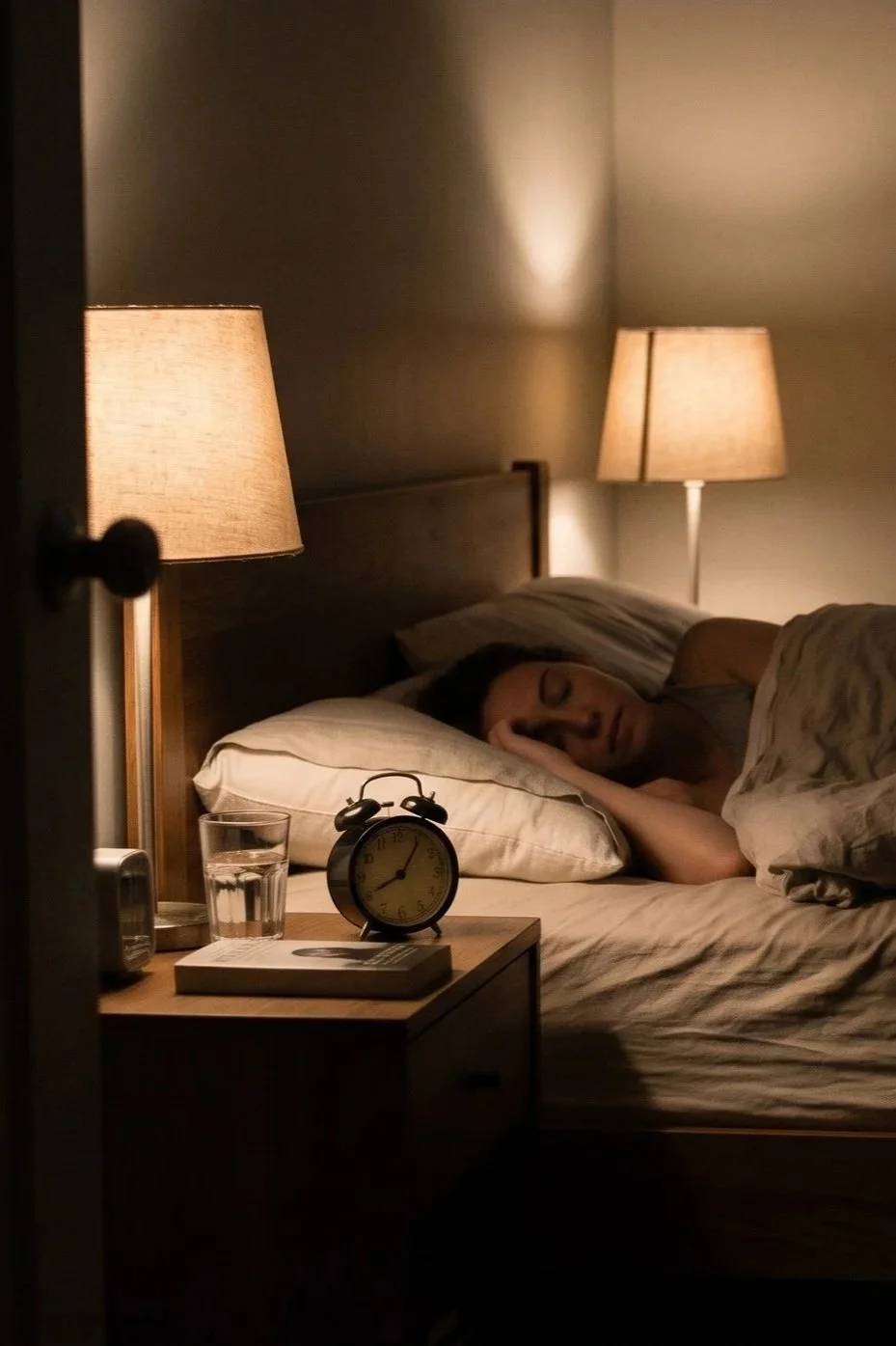
7. Cool your bedroom to 60–67°F (15–19°C): To initiate and sustain deep sleep, your core body temperature must drop by roughly 1 to 2 degrees Fahrenheit. A cool room accelerates this thermal dumping process, while a warm room increases restlessness.
Core Body Temperature Drop
8. Follow the "3 S’s Rule" and the 20-minute reset: Reserve your bed strictly for Sleep, Sex, and Sickness. Working, scrolling, or watching television in bed trains your brain to associate the mattress with alert wakefulness. If you lie awake for more than 20 minutes, get up, move to a dimly lit room, read something quiet, and return only when physically drowsy.
9. Eliminate visual, acoustic, and clock anxiety: Use blackout curtains or an eye mask, run steady brown or pink noise to mask sudden sounds, and turn digital clocks away from view. Watching the clock triggers nocturnal time-math stress ("If I fall asleep right now, I only get four hours"), spiking adrenaline.
The Best Bedtime Routine (Rules 10–12: Your 90-Minute Evening Downshift)
How to Improve Sleep Hygiene When Perfect Habits Still Fail (The Orthosomnia Trap)
How to improve sleep hygiene: You can improve sleep hygiene by anchoring a consistent wake time, getting morning sunlight within 30 minutes of waking, cutting off caffeine by 2:00 PM, cooling your bedroom to 60–67°F, and dimming overhead lights two hours before bed—while avoiding rigid perfectionism that triggers sleep performance anxiety.
In our Arvada studio, we meet high-functioning adults every week who have already checked every single box on this sleep hygiene checklist and still lie awake staring at the ceiling. When your bedroom is cold, dark, and screen-free, yet your shoulders stay braced and your heart rate refuses to drop, your habits are not the bottleneck. Your nervous system is stuck in internal sympathetic overdrive.
- • Cold, Dark Room
- • No Blue Light
- • Blackout Shades
- • High Overnight Cortisol
- • Low Vagal Tone
- • Sympathetic Survival Lock
Obsessing over every single sleep rule can also backfire, creating orthosomnia—a state of sleep performance anxiety where worrying about optimizing your routine keeps your amygdala on high alert. Sleep hygiene sets the external stage for rest, but active mental rules cannot force an overstimulated nervous system to feel safe.

The True You Collective Approach
When high-achieving adults struggle with sleep, they typically treat bedtime like a project-management problem—optimizing every environmental variable while their nervous system stays locked in protective overdrive. According to Sicadia-Paige, Certified Vibroacoustic Therapy Practitioner at True You Collective in Arvada, sleep hygiene removes external friction, but it cannot override an internal stress response on its own.
"Across more than 500 nervous system reboots at our Arvada studio, some of our most exhausted clients are people who already follow every sleep hygiene rule to the letter," says Sicadia-Paige. "Their bedrooms are 64 degrees, their blackout curtains are drawn, and they haven't touched caffeine since noon—yet the moment they lie down on the sound lounge, you can see their shoulders hovering off the cushion and their jaw clenched tight. Sleep hygiene sets the stage, but you cannot willpower a guarded nervous system into parasympathetic safety. When we pair consistent home habits with bottom-up somatic input that physically releases that muscular bracing, clients finally stop fighting for sleep and start dropping into rest naturally."
About the practitioner
Sicadia-Paige is the founder of True You Collective and a certified vibroacoustic therapy practitioner. The Arvada studio has completed 500+ nervous system reboot sessions and holds a strong local review record, with clients frequently describing easier sleep, reduced tension, and a clearer sense of regulation after working with the protocol. The work is body-first and drug-free. It is not a sleep study, not CBT-I, and not apnea care.
Shifting from Active Rules to Passive Somatic Downshift
When top-down mental wind-downs reach their limit, bottom-up modalities like vibroacoustic therapy offer a direct physical off-switch.
- • Conscious effort
- • Behavioral boundaries
- • Environmental optimization
- • Zero mental effort
- • Direct nervous system reset
- • Tactile somatic resonance
Vibroacoustic therapy uses low-frequency sound delivered through a specialized lounge so the body feels the frequency, not just hears it. At True You Collective, the sound lounge is the core of the Sleep Support protocol: vibration quiets sympathetic drive, reduces muscle guarding, and helps the nervous system shift toward rest before sleep is supposed to happen.
Instead of asking a wired mind to meditate on command, rhythmic low-frequency waves travel directly through the spine and musculature, stimulating mechanoreceptors that signal physical safety to the brainstem. At our Arvada studio, pairing that nervous system reset with integrated light and sound therapy combining the vibroacoustic sound lounge with full-body red light and infrared sauna—addresses both circadian signaling and deep somatic tension in one structured circuit. Many clients fall asleep faster and sleep more soundly after their very first session, while lasting circadian recalibration builds progressively across four to six weeks of weekly visits.
Disclaimer
This checklist and our studio protocols provide behavioral and nervous system support for healthy rest. They are not a medical sleep study, cognitive behavioral therapy for insomnia (CBT-I), or a treatment for obstructive sleep apnea. If you experience loud snoring, gasping during sleep, severe chronic insomnia, or suspected sleep apnea, please consult a licensed physician or an accredited sleep lab.
Printable Master Sleep Hygiene Checklist
| Time Frame | Biological Target | Actionable Checklist Item | Core Goal |
|---|---|---|---|
| Morning | Circadian Alignment | Fixed wake time + 15-min outdoor sunlight + daytime movement | Suppress residual melatonin and set the SCN clock |
| Afternoon | Sleep Drive Buildup | Cut off caffeine by 2:00 PM + limit naps to under 30 mins (before 3:00 PM) | Protect natural adenosine accumulation |
| Evening | Biochemical Protection | Finish meals 3 hrs pre-bed + stop alcohol 4 hrs pre-bed + taper fluids | Prevent REM rebound and nighttime core temp spikes |
| Wind-Down | Nervous System Shift | 90-min dim warm light + warm shower + 5-min worry dump + screen blackout | Initiate core cooling and quiet cognitive chatter |
| Bedtime | Stimulus Control | Bedroom at 60–67°F + bed for 3 S’s only + 20-min reset rule + hide clocks | Trigger natural N3 slow-wave sleep onset |
Let Your Body Lead the Way Into Rest
You cannot out-think an overstimulated nervous system, and you should not have to exhaust yourself trying to force sleep. Start by anchoring two or three simple cues from this checklist consistent morning light, an afternoon caffeine cutoff, and a cool, dim bedroom without turning rest into another perfectionist test.
When your daily habits are dialed in yet your body still refuses to power down at night, shifting from mental effort to physical regulation is often the missing piece. If you are in the Arvada or Denver metro area and ready to give your nervous system a true somatic reset, explore our drug-free sleep support protocol to schedule your first session.
Circadian Cutoff & Downshift Calculator
Select your consistent wake-up time to anchor your 12 daily physiological cues.
Frequently Asked Questions
-
Five foundational healthy sleeping habits include waking up at the same time every day, getting outdoor sunlight within 30 minutes of waking, cutting off caffeine by 2:00 PM, keeping your bedroom cool (60–67°F), and dimming bright overhead lights two hours before bed.
-
No. A sleep hygiene routine removes environmental and behavioral obstacles so your body can sleep naturally, but it does not cure chronic clinical insomnia or sleep apnea. Persistent insomnia often requires cognitive behavioral therapy for insomnia (CBT-I), medical evaluation, or targeted somatic nervous system regulation.
-
The best bedtime routine prioritizes physical downshifting over screen time or mental effort. Dimming household lights, cooling the bedroom, taking a warm shower 60 to 90 minutes before bed, writing down tomorrow’s tasks, and practicing five minutes of slow exhale-biased breathing signal safety to your nervous system.
-
If you lie awake in bed for more than 20 minutes, get up and move to a dimly lit room. Do a quiet, screen-free activity (like reading a physical book) until you feel physically drowsy, then return to bed so your brain never associates the mattress with frustration.
-
Sleeping in more than an hour on weekends triggers "social jetlag," delaying your Monday morning Cortisol Awakening Response and making Sunday night sleep harder. If you are recovering from sleep debt, limit extra weekend sleep to no more than 60 minutes past your normal wake time.
Read more…