Waking up exhausted after 7–9 hours of sleep is known as Non-Restorative Sleep (NRS). It occurs when your body spends time in bed but fails to enter deep cellular recovery. This is typically driven by sleep fragmentation, high overnight stress hormones, breathing resistance, or nervous system dysregulation that blocks deep slow-wave delta sleep.

Doing everything "right"—staying consistent, keeping the room cool, and avoiding late screens—only to wake up feeling like you haven't slept at all is deeply frustrating. Many spend months untangling why can’t I fall a sleep, only to discover an equally perplexing challenge: unconsciousness does not guarantee biological recovery. The root cause comes down to a clear physiological reality: sleep quantity does not equal sleep quality.
Logging hours in bed is simply time spent off your feet. Restorative sleep is an active neurological repair process. If your body cannot enter deep recovery states, spending eight hours in bed is like leaving a phone plugged into a broken charger—it shows as plugged in all night, but the battery stays at 10%.
The Architecture of Sleep: What Should Happen During 8 Hours?
To understand why you wake up exhausted, you first need to understand what your brain is supposed to be doing while you are unconscious. Healthy sleep is not a continuous, flat state of rest. It is a highly structured, dynamic process divided into 90-minute sleep cycles that repeat four to six times a night.
The 4 Stages of the Sleep Cycle
Stage N1 (Light Sleep): The transitional phase between wakefulness and sleep. Muscles relax, and brain waves begin to slow down.
Stage N2 (Sound Sleep): Heart rate and body temperature drop. Brain waves show distinct bursts of activity called sleep spindles, which help protect the brain from waking up due to mild external noises.
Stage N3 (Deep Slow-Wave Sleep): The physiological engine room. Brain waves transition into high-amplitude Delta waves. This is the most restorative stage of sleep.
REM (Rapid Eye Movement): The dream state. Brain activity surges to levels nearly identical to waking hours, while the body experiences temporary muscle paralysis.
The Critical Role of N3 Slow-Wave Deep Sleep
Stage N3 is where physical recovery occurs. During this phase, your heart rate and breathing drop to their lowest baselines. The pituitary gland secretes Human Growth Hormone (HGH), which initiates tissue repair, muscle growth, and cellular regeneration. Simultaneously, your brain’s glymphatic system opens up, washing away metabolic waste products and neurotoxic proteins that accumulate during waking hours.
If you miss out on Stage N3, your physical body will feel heavy, inflamed, and unrecovered—no matter how long you lay in bed.
The Role of REM Sleep
While N3 restores the body, REM restores the mind. REM sleep is critical for emotional regulation, memory consolidation, and neural plastic repair. It is during REM that your brain processes complex emotions and clears stress loops from the previous day. Missing REM leaves you emotionally reactive, anxious, and mentally fogged.
Why Stage Fragmentation Destroys Energy
The brain must move sequentially through these stages to complete a cycle. If you experience micro-awakenings—brief, split-second spikes in brain activity, your sleep cycle breaks.
Even if these awakenings are so short that you never consciously remember waking up, they force your brain to restart the 90-minute cycle from Stage N1. As a result, you spend the entire night hovering in light N1 and N2 sleep, completely deprived of the deep N3 and REM stages required for energy restoration.
7 Hidden Reasons You Wake Up Exhausted
If your sleep architecture is broken, it is usually being hijacked by one of seven underlying biological triggers:
| Driver | Associated Factors & Manifestations |
|---|---|
| 1. Structural Airway Disruptions | Obstructive Sleep Apnea & UARS |
| 2. Micro-Arousals | Alpha-Delta Sleep Intrusion |
| 3. Elevated Overnight Cortisol | Sympathetic Stress & High Core Temp |
| 4. Systemic Deficiencies | Thyroid, Ferritin, B12, Vitamin D |
| 5. Blood Sugar Rollercoasters | Nocturnal Hypoglycemia & Adrenaline |
| 6. Sleep Aid "Handovers" | Synthetic Melatonin, Sedatives, THC |
| 7. Chronic Mild Dehydration | Reduced Blood Volume & Cardiac Strain |
1. Structural Airway Disruptions (Sleep Apnea & UARS)
You do not have to be a loud snorer to suffer from nighttime breathing issues.
Obstructive Sleep Apnea (OSA): Physical blockages in the airway cause repeated pauses in breathing, triggering sudden drops in blood oxygen levels. According to clinical guidance from the NIH National Heart, Lung, and Blood Institute, untreated sleep apnea causes recurrent airway obstruction that prevents the brain from entering deep sleep, leading to severe daytime fatigue.
Upper Airway Resistance Syndrome (UARS): Popular among younger, non-overweight individuals, UARS involves subtle collapse or narrowing of the airway. Rather than causing full apneas, it requires increased physical effort to pull air into the lungs.
In both conditions, your brain senses oxygen deprivation or breathing strain and fires off a burst of adrenaline. This kickstarts a micro-arousal to tighten your throat muscles, knocking you out of deep N3 sleep back into light sleep.
Common Indicators: Waking up with a dry mouth, morning headaches, sore throat, jaw clenching, or night sweats.
2. Micro-Arousals & Alpha Wave Intrusion
In healthy sleep, your brain waves slow down into deep, sweeping Delta waves (0.5 to 4 Hz). However, individuals suffering from chronic stress, fibromyalgia, or environmental disruptions often experience Alpha-Delta Sleep Intrusion.
Alpha waves (8 to 12 Hz) are the brain waves associated with relaxed, awake awareness. When alpha waves intrude upon deep delta sleep, your brain remains on hyper-vigilant guard duty. Environmental triggers such as ambient light penetrating the eyelids, subtle neighborhood noises, or slight room temperature spikes keep the brain perpetually alert, preventing deep sleep access.
3. Elevated Overnight Cortisol & Stress Activation
Under normal conditions, your stress hormone cortisol follows a strict circadian curve: high in the morning to wake you up, and dropping to its lowest level around midnight to allow deep sleep and cell repair.
When you live in chronic stress, your adrenal system stays activated overnight. High nocturnal cortisol keeps your core body temperature elevated (preventing the 1–2°F drop necessary to initiate deep sleep) and keeps your amygdala, the brain's threat-detection center—alert while you sleep. You wake up feeling like your heart was racing all night because, physiologically, it was.
4. Hormonal, Metabolic, and Nutrient Deficiencies
Sometimes the breakdown occurs at the cellular level:
Thyroid Dysfunction (Hypothyroidism): A sluggish thyroid slows down baseline cellular metabolism. Your cells cannot efficiently convert nutrients into adenosine triphosphate (ATP), leaving you exhausted regardless of rest.
Iron & Ferritin Shortages: Ferritin is your body’s iron storage buffer. Low ferritin limits your red blood cells' ability to transport oxygen to tissues overnight, causing systemic muscle hypoxia and fatigue.
Vitamin D3 & B12 Deficiencies: B12 is crucial for myelin sheath protection and neural energy, while Vitamin D acts as a master hormone regulating sleep-wake neurotransmitters.
5. Overnight Blood Sugar Fluctuations
Eating high-carbohydrate or high-sugar meals late in the evening creates a severe blood sugar spike followed by a sharp midnight crash (nocturnal hypoglycemia).
When blood sugar drops dangerously low at 2 AM or 3 AM, your brain treats it as an immediate metabolic emergency. To preserve brain function, your adrenals release cortisol and adrenaline to convert liver glycogen into glucose. This sudden surge of adrenaline jolts you out of deep sleep, leaving you awake with a racing mind, sweating, or tossing frantically.
6. The "Melatonin & Sleep Aid Hangover"
Many people attempt to fix unrefreshing sleep with over-the-counter sleep aids, high-dose synthetic melatonin, prescription sedatives, or THC edibles. As outlined in the Mayo Clinic guide on prescription sleeping pills, over-reliance on sleep medications can cause tolerance, alter sleep architecture, and lead to rebound insomnia.
While these substances knock out your conscious mind, sedation is not sleep:
High-Dose Melatonin: Can desensitize melatonin receptors and alter core body temperature regulation.
Benzodiazepines & Sedating Antihistamines: Suppress Stage N3 slow-wave sleep and REM sleep.
THC Edibles: Known to suppress REM sleep, leading to a build-up of REM sleep debt.
You wake up feeling chemically sedated, heavy-headed, and groggy because your nervous system was silenced, not restored.
7. Mild Chronic Dehydration
During 8 hours of sleep, you lose roughly 1 to 2 liters of fluid through respiration and perspiration. If you enter sleep already mildly dehydrated, your total blood volume drops overnight.
To maintain circulation, your cardiovascular system must work harder, forcing your resting heart rate to stay elevated throughout the night. You wake up with physical heaviness, tight muscles, and persistent morning brain fog.
The Root Cause Competitors Miss: Sympathetic Lock & Vagal Tone
While sleep hygiene guides focus on cold rooms, eye masks, and chamomile tea, they miss the primary physiological reason most modern adults suffer from Non-Restorative Sleep: Nervous System Dysregulation.
Overnight State: Sympathetic Lock (Fight-or-Flight)
Your brain registers the environment as physiologically unsafe. Even while lying perfectly still under a warm blanket, your body remains primed to fight or flee.
Your Autonomic Nervous System (ANS) relies on two complementary systems:
- Sympathetic Branch: The survival engine responsible for threat response, adrenaline secretion, and vigilance.
- Parasympathetic Branch: The rest-and-digest recovery engine that promotes cell repair, tissue growth, and slow brain waves.
To enter restorative Stage N3 slow-wave sleep, your central nervous system must relinquish autonomic control to the parasympathetic network. If chronic stressors keep the sympathetic branch engaged, your brain will defend against deep unconsciousness as if real danger is present.
The Vagus Nerve serves as the primary conduit for parasympathetic communication between your brainstem, heart, and visceral organs:
- High Vagal Tone: Rapidly decelerates your heart rate during exhalation, causing overnight Heart Rate Variability (HRV) to climb—a hallmark sign of deep neurochemical recovery.
- Low Vagal Tone: Prevents cardiac braking. Nocturnal heart rate remains static or elevated, and high-frequency brain activity overrides delta rhythm generation.
Blackout curtains, blue-light blockers, and herbal teas optimize external sensory stimuli. However, you cannot hygiene your way out of a nervous system trapped in threat mode.
When systemic burnout or neurological overload exists, external adjustments cannot compensate for persistent neurochemical threat signaling. Sleep quality improves only after internal biological safety is restored through vagal modulation and autonomic regulation.
Sympathetic vs. Parasympathetic Sleep
Your Autonomic Nervous System (ANS) has two main branches:
Sympathetic Branch: The "Fight-or-Flight" survival engine.
Parasympathetic Branch: The "Rest-and-Digest" recovery engine.
To drop into Stage N3 deep sleep, your body must hand control over to the parasympathetic nervous system. However, if you spend your days processing high work demands, emotional stress, unresolved trauma, or chronic inflammation, your body becomes trapped in Sympathetic Lock.
Your brain registers the environment as fundamentally unsafe. Consequently, even when you lie completely still under a warm blanket, your physiological state remains primed to fight or flee.
The Role of the Vagus Nerve & Vagal Tone
The Vagus Nerve is the main highway of the parasympathetic nervous system. It acts as a natural brake pedal for your heart and stress response.
High Vagal Tone: Your vagus nerve rapidly slows your heart rate during exhalation, causing your Heart Rate Variability (HRV) to surge during sleep—a key indicator of deep recovery.
Low Vagal Tone: Your vagus nerve cannot apply the brake. Your HRV remains low, your heart rate stays elevated, and your brain refuses to enter low-frequency Delta sleep.
Why General Sleep Hygiene Fails for Burnout
Blackout curtains, blue-light glasses, and lavender sprays address environmental inputs. But you cannot hygiene your way out of a nervous system that feels physiologically unsafe.
If your body is trapped in a sympathetic state due to burnout, chronic illness, or nervous system overload, minor external tweaks will fail to grant access to deep sleep. The internal biological signal for safety must be restored first.
The No-Alarm Weekend Audit (Self-Assessment Checklist)
Use this step-by-step audit over a two-day weekend to evaluate whether your exhaustion stems from simple sleep debt or underlying non-restorative sleep dysregulation.
Step 1: The Alarm-Free Sleep Test
Turn off all alarms on Friday night. Go to bed when you feel tired.
Outcome A (Sleep Debt): You sleep for 10 to 12 hours straight, wake up feeling significantly refreshed, and feel clear-headed. Diagnosis: You are simply chronically sleep-deprived.
Outcome B (Non-Restorative Sleep): You wake up spontaneously after 7 to 8 hours (or wake up repeatedly), but still feel completely unrefreshed, heavy, and exhausted. Diagnosis: You are suffering from disrupted sleep architecture or nervous system dysregulation.
Step 2: Morning Symptom Checklist
Check all symptoms that apply within 30 minutes of waking:
[ ] A dry mouth, sore throat, or morning headache (Airway/Apnea Marker)
[ ] Muscle stiffness, jaw soreness, or clenched teeth (Sympathetic Tension)
[ ] Severe morning brain fog that takes 2+ hours to clear (Low N3/Glymphatic Clearance)
[ ] Immediate desire for caffeine before opening your eyes (Adrenal Exhaustion)
[ ] Afternoon "wall" crashing around 2 PM to 4 PM (Cortisol Imbalance)
Step 3: Wearable Data Review (Oura, Apple Watch, Garmin)
If you track your sleep via a smart wearable, look beyond your overall "Sleep Score" and focus on these three physiological markers:
| Metric | Red Flag Marker | Healthy Target |
|---|---|---|
| Deep Sleep (N3) | Less than 15% of total sleep time | 15% – 25% (roughly 1.5 to 2 hours) |
| HRV (Heart Rate Variability) | Drops or stays flat overnight | Peaks during the first half of the night |
| Resting Heart Rate (RHR) | Reaches lowest point right before waking | Reaches lowest point during the middle of sleep |
How to Restore Deep Sleep: Somatic Interventions
Restoring deep, restorative sleep requires working from the physical body upward to give your nervous system clear signals of physiological safety.
Active Daytime & Evening Habits
Circadian Photobiology: View direct sunlight for 10 to 15 minutes within 30 minutes of waking. This sets your brain's suprachiasmatic nucleus (SCN) to trigger natural melatonin production 14 hours later.
Vagal Tone Exercises: Practice vagus nerve stimulation exercises, such as gargling water, singing loudly, cold water face splashes, or slow 4-7-8 diaphragmatic breathing, to manually engage your parasympathetic brake before bed.
Blood Sugar Stabilization: Ensure your evening meal contains adequate protein and healthy fats. Avoid high-glycemic carbohydrates within 3 hours of sleep to prevent nocturnal hypoglycemia crashes.
The Limit of Active Effort
While breathwork and lifestyle habits are beneficial, they have a limit. When a person is experiencing severe burnout, dysregulation, or chronic pain, actively trying to relax often backfires.
Focusing intently on breath counting or meditating in bed can trigger performance anxiety, causing you to monitor your body for signs of relaxation—which keeps your brain alert and sympathetic.
Active Effort
- Breathwork
- Meditation
- Mindful Tracking
Cognitive Bottlenecks
- Requires Conscious Focus
- Can Cause Performance Anxiety
Passive Entrainment
- Vibroacoustic Therapy
- Frequency Entrainment
- Tactile Sound Waves
Somatic Breakthrough
- Bypasses Hyperactive Mind
- Direct Cellular & Neural Shift
Passive Entrainment: The Power of Vibroacoustic & Light Therapy
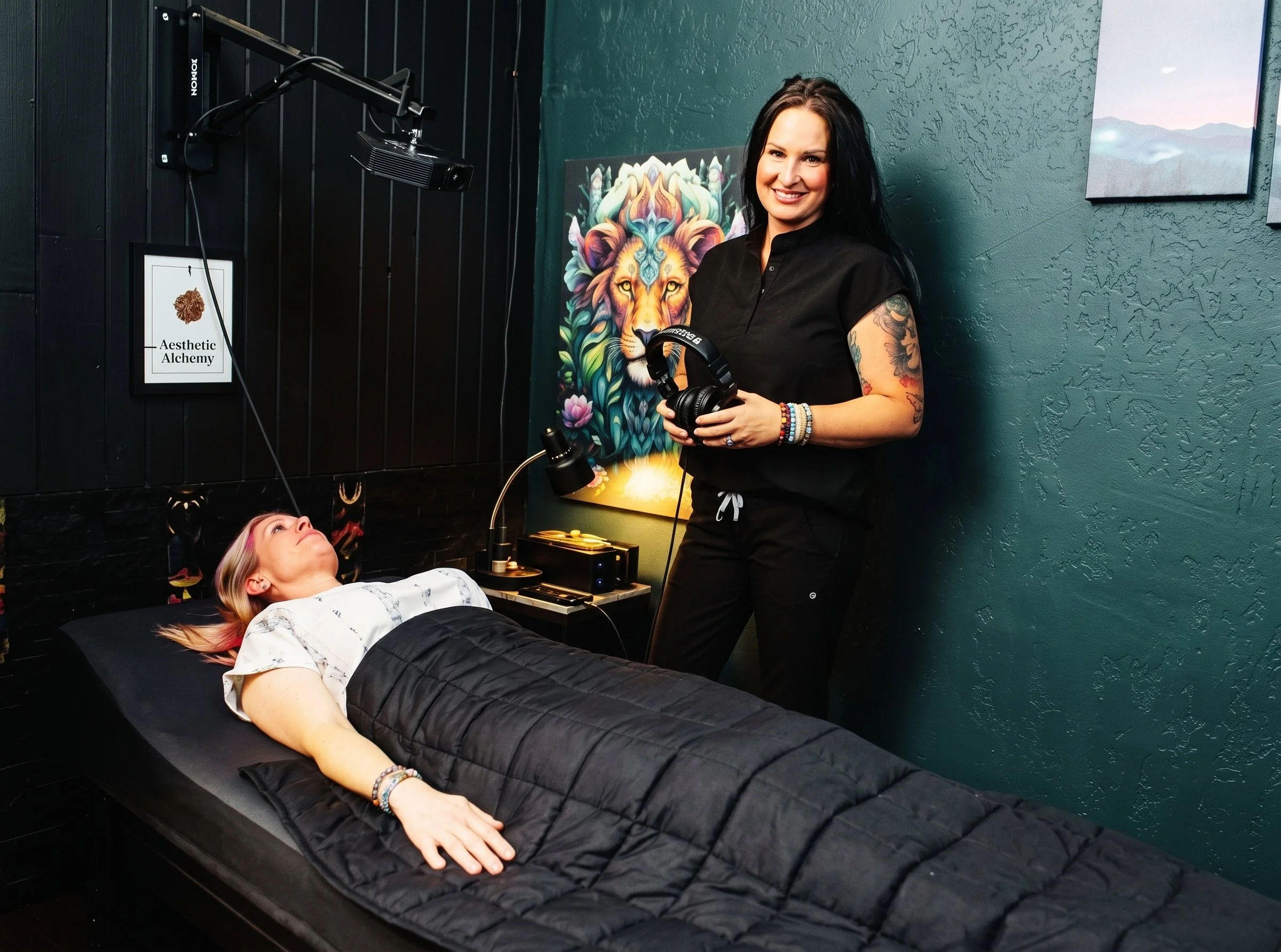
When active effort fails, passive entrainment offers a direct alternative. Rather than asking your hyperactive mind to quiet down, passive entrainment uses external physical frequencies to gently pull your brain and nervous system into deep recovery states.
Clinical vibrational sound therapy utilizes low-frequency sound vibrations (between 30 Hz and 120 Hz) delivered directly through a specialized sound table into the tissues of the body.
Because sound travels four times faster through fluid and muscle than through air, these physical sound waves directly stimulate the vagal nerve endings embedded throughout your torso and viscera. The brain automatically synchronizes its internal neural rhythms to the external frequencies—a process called frequency following response, transitioning your nervous system from active Beta waves directly down into restorative Theta and Delta waves without requiring conscious effort.

The True You Collective Approach
At True You Collective in Arvada, CO, founder Sicadia-Paige specializes in helping individuals break out of chronic sympathetic lock.
By combining vibroacoustic therapy, Red Light Therapy, and Infrared Modalities, True You Collective provides drug-free, non-invasive wellness therapy focused on complete nervous system resets. These somatic sessions bypass the conscious mind, giving your body the direct physiological signal of safety it needs to restore natural sleep architecture, increase vagal tone, and help you wake up truly rested.— Sicadia-Paige, Certified Vibroacoustic Therapy Practitioner and founder of True You Collective, Arvada, CO
About the practitioner
Sicadia-Paige is the founder of True You Collective and a certified vibroacoustic therapy practitioner. The Arvada studio has completed 500+ nervous system reboot sessions and holds a strong local review record, with clients frequently describing easier sleep, reduced tension, and a clearer sense of regulation after working with the protocol. The work is body-first and drug-free. It is not a sleep study, not CBT-I, and not apnea care.
Why Are You Still Exhausted After 8 Hours?
Identify the physiological failure points preventing your nervous system from accessing Stage N3 slow-wave deep sleep and cellular recovery.
Stage N3: Deep Slow-Wave Sleep
The biological engine room. Human Growth Hormone (HGH) surges to initiate cellular repair, while the glymphatic system flushes metabolic waste. Missing N3 leaves muscles rigid and inflamed.
Airway collapse forces tissues to starve of oxygen, sparking sympathetic micro-arousals. The brain wakes throat muscles with an adrenaline rush, resetting sleep cycles from N3 back to light N1. Marker: Dry mouth, morning headache, jaw soreness.
Waking alpha rhythms (8–12 Hz) invade deep delta sleep (0.5–4 Hz). While eyes stay closed, the amygdala maintains hypervigilance. Marker: Light sleeper profile, waking exhausted despite lack of remembered awakenings.
Cortisol should bottom out around midnight. Chronic stress keeps nocturnal levels elevated, blocking the necessary 1–2°F core body temperature drop required for deep slow-wave initiation. Marker: Waking hot, high resting heart rate.
Low ferritin limits nocturnal tissue oxygenation; low B12 blunts ATP cellular energy. Marker: Muscle heaviness, sluggish recovery despite long sleep duration.
Late evening simple carbohydrates cause a rapid midnight glucose dip. The adrenals release cortisol and epinephrine to rescue brain glucose, jolting you awake. Marker: Waking wide awake between 2 AM and 4 AM with racing pulse.
Sedation is chemical unconsciousness, not physiological recovery. Benzodiazepines, OTC antihistamines, and THC suppress REM and flatten delta slow waves. Marker: Heavy grogginess, brain fog, feeling chemically sedated.
The body loses 1–2 liters overnight through respiration and sweating. Mild dehydration lowers blood volume, forcing the heart to beat faster and preventing heart rate deceleration. Marker: Elevated night resting heart rate, morning fatigue.
Frequently Asked Questions
-
Unrefreshing sleep (Non-Restorative Sleep) is a sleep architecture issue where sleeping adequate hours fails to deliver energy due to a lack of deep N3/REM stages. Chronic Fatigue Syndrome (ME/CFS) is a complex systemic neuroimmune condition characterized by Post-Exertional Malaise (PEM), where physical or mental exertion causes a severe drop in energy levels, though unrefreshing sleep is often a core symptom of ME/CFS as well.
-
Yes. Anxiety keeps your sympathetic nervous system active overnight. This triggers elevated cortisol levels and Alpha-Delta Sleep Intrusion, where waking-state brain waves fragment your deep sleep. Your eyes remain closed for 8 hours, but your brain remains hyper-vigilant, depriving you of cellular repair.
-
Waking up at 2 AM or 3 AM with a sudden surge of alertness or a racing heart is typically caused by a nocturnal blood sugar crash (hypoglycemia) or an overnight spike in adrenaline/cortisol. When blood sugar drops too low late at night, your adrenal glands release stress hormones to signal your liver to break down glycogen, jolting you wide awake in a fight-or-flight state.
-
If you suffer from loud snoring, gasp for air, wake up choking, or have severe morning dry mouth and high blood pressure, consult a sleep physician for a clinical Polysomnography (Sleep Study) to rule out Obstructive Sleep Apnea. However, if your sleep study comes back normal, but you remain trapped in chronic stress, anxiety, muscle tension, and unrefreshing sleep, your issue is likely an autonomic nervous system dysregulation that benefits from somatic vagal reset work.
Read more…