
Your body may be doing everything it can to protect you – even when that protection no longer feels helpful. Racing thoughts at night, a short fuse, persistent exhaustion, muscle tension, digestive changes, and feeling emotionally flat can all be signs that your system has been carrying too much for too long. When people ask what helps regulate chronic stress naturally, the most useful answer is not one more item for an already overwhelming to-do list. It is consistent support that helps the nervous system recognize safety again.
Chronic stress is not simply a mindset problem. It is a whole-body state. Your nervous system influences sleep, energy, pain perception, mood, digestion, focus, and your ability to recover after a hard day. Natural regulation practices work best when they are repeated often enough that your body has a new experience to learn from: life may still be demanding, but you do not have to stay braced for it every moment.
What Helps Regulate Chronic Stress Naturally at the Root?
The nervous system responds to cues. Some cues signal urgency, danger, conflict, overstimulation, or depletion. Others signal steadiness, connection, warmth, rhythm, and rest. Chronic stress can develop when the first category becomes the body’s default.
Regulation is the gradual process of expanding your capacity to move out of survival mode and return to balance. This does not mean you will never feel stressed, angry, grief-stricken, or overwhelmed. Those responses are human and sometimes necessary. The goal is to become less stuck in them – to recover more fully after the stressor passes.
For many people, the most effective natural approach combines daily foundations with body-based support. Thinking your way into calm can be difficult when your physiology is already on high alert. The body often needs to feel safety before the mind can believe it.
Start With Rhythms Your Body Can Trust
A dysregulated nervous system tends to struggle with unpredictability. You do not need a perfectly scheduled life to heal, but a few reliable anchors can make a meaningful difference.
Start with your sleep and wake times. Waking at roughly the same time most days, getting daylight early in the day, and lowering stimulation before bed all help reinforce your circadian rhythm. Sleep is not a reward you earn after being productive. It is one of the primary ways the body repairs, processes, and recalibrates.
Regular nourishment matters too. Long stretches without food, excess caffeine, dehydration, and blood sugar swings can feel remarkably similar to anxiety in the body. This does not require rigid food rules. It means noticing whether your system feels more steady when meals include adequate protein, fiber, hydration, and enough total nourishment.
Movement can be another powerful signal of completion. A stressful meeting, an emergency, or a painful interaction can leave stress chemistry lingering in the body. A walk outside, gentle strength work, stretching, shaking, dancing, or a few minutes of mobility can help create an outlet. Intense exercise may be supportive for some people, but when you are deeply depleted, more intensity is not always better. The right movement should leave you feeling more connected to yourself, not more drained.
Use Breath Without Turning It Into Another Performance
Breathwork is accessible because your breath is always with you, but it works best when it is gentle. If forceful breathing makes you lightheaded, panicky, or more activated, that is useful information. Choose a softer practice.
Try letting your inhale arrive naturally, then making your exhale slightly longer. You might inhale comfortably for four counts and exhale for six, without straining. Repeat for one to three minutes. Longer exhales can support the parasympathetic branch of the nervous system, often called the rest-and-digest response.
Another simple option is the physiological sigh: take an easy inhale, add a small second inhale, then release a slow exhale. A few repetitions can create a noticeable shift when your chest feels tight or your thoughts are accelerating. These practices are not meant to erase the reason you are stressed. They give your body a small experience of having room to respond rather than react.
Give Your Senses More Signals of Safety
The nervous system is always taking in sensory information. Light, sound, temperature, touch, and the environment around you can either add to your stress load or help soften it.
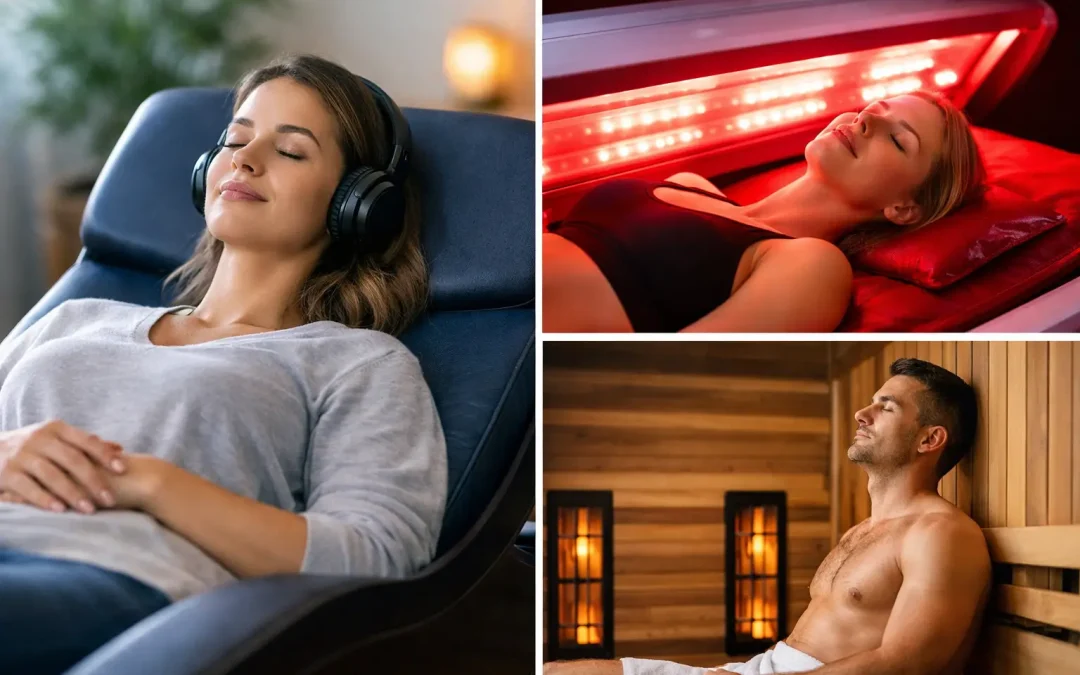
Warmth is a common calming cue. A warm shower, bath, heating pad, or infrared sauna session may help the body release physical tension and transition toward rest. Heat is not appropriate for everyone, especially if you have certain medical conditions, are pregnant, or are prone to dizziness, so it is wise to check with a qualified healthcare professional when needed.
Light matters as well. Morning outdoor light supports a healthy sleep-wake rhythm, while bright light late at night can tell the brain to stay alert. Creating a dimmer, quieter evening environment is a simple way to make rest more available.
Touch and pressure can be deeply regulating for some people. This may look like placing a hand over your heart, wrapping up in a weighted blanket, receiving a supportive hug, or simply sitting with both feet firmly on the floor. The point is not to force relaxation. It is to give your body a clear, present-moment message: you are here, and you are supported.
Why Sound and Vibration Can Reach Beyond the Thinking Mind
When chronic stress has been present for months or years, stillness alone may not feel restful. Some people find that silent meditation leaves them alone with racing thoughts, physical discomfort, or emotions that feel too big to hold. That does not mean they are doing it wrong. It may mean their system needs a more embodied doorway into regulation.
Vibroacoustic therapy uses low-frequency sound and gentle vibration, typically experienced while resting on a specialized treatment bed. Sound frequencies are felt through the body as well as heard, creating an immersive sensory experience designed to support deep relaxation. This approach is grounded in the principle of entrainment: biological rhythms can respond to steady external rhythm and vibration.
Research on vibroacoustic interventions continues to grow, particularly around relaxation, stress reduction, pain support, and quality of life. Individual responses vary, and it is not a substitute for medical or mental health care. Yet for people who feel disconnected from their bodies or exhausted by trying to talk themselves out of stress, the experience can offer something different: a chance to receive support without having to perform, explain, or solve anything in the moment.
At True You Collective, vibroacoustic therapy is part of a nervous system-first approach that also incorporates light, heat, and restorative rest. The value is not in chasing a single dramatic session. Like building strength or restoring sleep, regulation often deepens through repetition. Each supportive experience helps the body remember a state it may have lost access to: calm without collapse, energy without hypervigilance, and rest without guilt.
Connection Is a Biological Need, Not an Extra
Chronic stress often convinces people to withdraw. You may feel too tired to make plans, too irritable to talk, or ashamed that you are not functioning as you once did. But safe connection is one of the most natural forms of regulation available to us.
This does not require a large social circle or constant conversation. It may be a friend who can sit with you without trying to fix you, a family member who makes you laugh, a therapist, a faith community, or a wellness space where you feel genuinely cared for. Co-regulation happens when another steady presence helps your system settle. Over time, these experiences can strengthen your ability to offer steadiness to yourself.
If grief, trauma, panic, depression, persistent pain, or sleep disruption is making daily life feel unmanageable, reaching out for professional support is a meaningful act of self-care. Natural tools and clinical care can exist alongside one another. Healing is not accessed only one way.
Make Regulation Small Enough to Repeat
The most supportive practice is usually the one you can return to on an ordinary Tuesday. A 90-minute routine may sound inspiring, but it can become another standard to fail. Instead, choose a few moments that fit your real life: two minutes of slower breathing before opening your inbox, a walk after work, ten minutes without your phone before bed, a weekly restorative session, or a meal eaten sitting down.
Pay attention to what changes after you practice. Do your shoulders lower? Does your jaw soften? Do you sleep a little more deeply, feel less reactive, or recover more quickly after a difficult moment? These are quiet but meaningful signs that your body is learning.
You do not need to become a different person to feel better. You may simply need repeated opportunities to reconnect with the part of you that knows how to settle, restore, and heal. Your body remembers more than survival, and every gentle signal of safety gives it a reason to remember.