
When your body has been bracing for too long, rest does not always feel restful. You can book the massage, take the supplements, go to bed earlier, and still feel wired, sore, foggy, or emotionally stretched thin. That is often a sign that your system does not just need relief. It needs regulation. That is where vibroacoustic therapy benefits stand out. This approach works through sound frequencies and therapeutic vibration to help the nervous system settle, the body soften, and healing become easier to access.
Vibroacoustic therapy is not about forcing the body to change. It is about giving the body the right conditions to remember what regulation feels like. Science meets soul here. Specific low frequencies travel through the body, creating a deeply felt sensory experience that can support entrainment, the process of helping your internal rhythms shift toward greater balance.
What is vibroacoustic therapy?
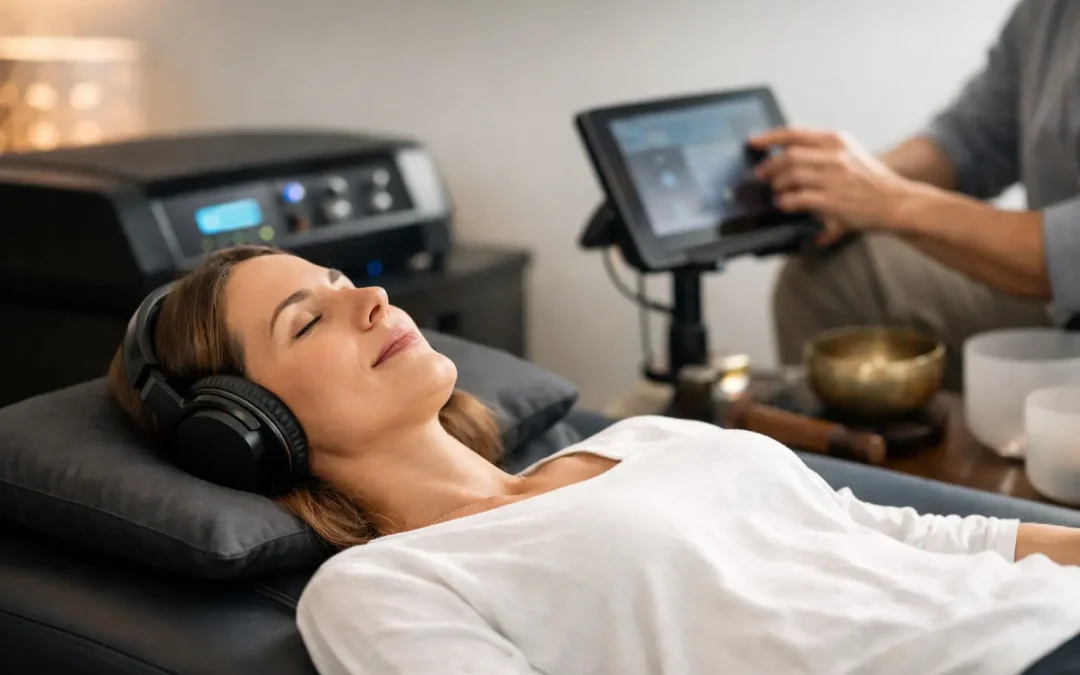
Vibroacoustic therapy uses low-frequency sound waves delivered through speakers or transducers built into a table, mat, or chair. You do not just hear the sound. You feel it move through the body. That physical vibration, paired with intentional audio, creates a full-body experience that can calm overstimulation and support restoration.
For many people, the first thing they notice is not dramatic. It is subtle but powerful. Their jaw unclenches. Their breath drops lower. Their mind stops racing for a few moments. That shift matters because a regulated nervous system is the foundation for better sleep, lower pain sensitivity, steadier energy, and emotional resilience.
The real vibroacoustic therapy benefits
The most meaningful vibroacoustic therapy benefits are connected to how the body responds when it feels safe enough to downshift. The therapy itself is gentle, but the effects can be far-reaching when used consistently.
1. It helps calm the nervous system
If you live in a constant state of go, your body can start treating everyday life like a threat. That can show up as tension, shallow breathing, racing thoughts, irritability, or the strange feeling of being exhausted and restless at the same time.
Vibroacoustic therapy offers rhythmic sensory input that can encourage the body to shift out of stress response. Many people feel more grounded after a session, not because they were talked into relaxing, but because their physiology finally had support to soften. This is one reason it can feel so different from passive rest. It helps create the conditions for regulation rather than simply telling the body to calm down.
2. It may reduce pain and physical tension
Pain is not only about muscles or joints. It is also shaped by the nervous system. When the body is chronically stressed, pain can feel louder, more persistent, and harder to move through.
The vibration used in vibroacoustic therapy may help reduce muscle guarding, improve body awareness, and interrupt patterns of tension. For some people, this means less neck and shoulder tightness. For others, it means relief that feels broader, like the whole body is no longer gripping so hard. It is not a replacement for medical care when pain has a serious underlying cause, but it can be a meaningful part of a larger healing plan.
3. It supports deeper rest and better sleep
Sleep issues are often rooted in an overactive nervous system. You may feel tired all day and suddenly alert the moment your head hits the pillow. Or you wake up through the night and never feel fully restored.
One of the most appreciated vibroacoustic therapy benefits is how it supports the body in settling before sleep. When the system spends time in a calmer state, it can become easier to fall asleep, stay asleep, or experience more restorative rest. Some people notice immediate changes. Others need repeated sessions before sleep starts to improve. It depends on how long the body has been stuck in survival mode.
4. It can ease emotional overwhelm
Stress does not only live in the mind. It lives in the body too. Grief, burnout, anxiety, and emotional fatigue often show up as heaviness in the chest, a lump in the throat, digestive upset, or that constant sense of being on edge.
Because vibroacoustic therapy works through the body first, it can reach places that talking alone does not always touch. Many people find it easier to process emotions when they are not fighting so much internal tension. This does not mean every session feels emotional. Sometimes it simply feels quiet. But even that quiet can be healing when your inner world has been loud for a long time.
5. It may improve circulation and recovery
Gentle vibration has long been used to support circulation and tissue recovery. In a vibroacoustic setting, that support is paired with nervous system regulation, which matters because healing happens more efficiently when the body is not locked in defense.
If you deal with physical fatigue, inflammation, post-workout soreness, or a general sense of sluggishness, this therapy may help your body feel more open and restored. It is not a magic fix, and results vary from person to person. But many people report feeling looser, lighter, and more energized after sessions, especially when care is repeated over time.
6. It can sharpen mental clarity
When your system is overloaded, brain fog often follows. Concentration becomes harder. Decision-making takes more effort. Even simple tasks can feel heavy.
One reason this happens is that stress pulls energy toward survival. When the body senses threat, clarity and creativity tend to narrow. By helping the nervous system settle, vibroacoustic therapy may support a clearer, more present mental state. People often describe it as feeling more like themselves again, less scattered, less reactive, and more able to engage with life.
7. It creates a felt sense of safety in the body
This may be the deepest benefit of all. Many people have spent years trying to think their way into healing while their body still feels guarded. Vibroacoustic therapy offers a bottom-up experience, meaning the body receives calming input directly through sensation.
That felt experience can be profoundly restorative. When the body begins to recognize safety again, other shifts often become more possible. Breath deepens. Digestion improves. Emotions feel less sharp. Recovery stops feeling like a fight. Your body remembers how to heal when it is no longer using all of its energy to protect.
Why consistency matters more than intensity
A single session can feel powerful, especially if your system has been running on empty. But lasting change usually comes from repetition. Nervous system patterns are learned over time, and they often need repeated support to change.
This is where people sometimes get discouraged. They expect one appointment to undo months or years of stress, poor sleep, overwork, grief, or chronic pain. Sometimes there is a big first shift. Sometimes the change is gradual. Both are valid. Healing is not always dramatic. Often it is a steady recalibration.
At True You Collective, this is why the focus is not just on one-off relaxation, but on creating experiences that support entrainment and whole-body restoration over time. The body tends to respond best when it is given regular opportunities to practice regulation.
Who tends to benefit most?
Vibroacoustic therapy can be especially supportive for people dealing with burnout, chronic stress, nervous system dysregulation, sleep issues, chronic pain, emotional overwhelm, and sensory overload. It may also appeal to those who have tried more traditional approaches and still feel like something essential has been missed.
That said, it is not about being at your breaking point before you seek support. Many people use it proactively because they want to stay connected to themselves, not just recover after collapse. If your life asks a lot of your body and mind, regulation is not a luxury. It is maintenance for being human.
What to expect from the experience
Most sessions are quiet, gentle, and non-invasive. You lie or rest comfortably while low-frequency sound and vibration move through the body. Some people drift into a meditative state. Others stay awake and simply notice their body becoming heavier, calmer, and less defended.
You might feel immediate relief. You might feel sleepy afterward. You might notice later that you are reacting less, sleeping better, or carrying less tension through the day. The experience is highly individual. The common thread is that the body is being supported rather than pushed.
There is also room for nuance. If you are highly sensitive, very depleted, or carrying significant trauma, your system may need a gradual approach. Gentle care is still powerful care. The goal is not intensity. The goal is creating enough safety for your body to soften into healing.
When life has pulled you away from yourself, the path back does not always begin with doing more. Sometimes it begins with receiving the right kind of support, consistently enough, that your body can finally exhale and remember its own wisdom.