You can be functioning on the outside and still feel like your body never gets the message that the emergency is over. Maybe you wake already tired, clench your jaw through meetings, scroll late because your mind will not settle, or feel pain and irritability rise over seemingly small things. Root cause wellness for chronic stress begins with a different question: What has your nervous system been carrying, and what would help it feel safe enough to come out of survival mode?
Chronic stress is not a personal failure or proof that you are doing self-care wrong. It is often a whole-body pattern. When demands, loss, pain, caregiving, work pressure, poor sleep, or emotional overwhelm continue without enough recovery, the body adapts. That adaptation can look like anxiety, exhaustion, inflammation, disrupted sleep, low mood, brain fog, tension, or a sense that you no longer recognize yourself.
The goal is not to eliminate every difficult thing in life. It is to build a nervous system that can meet life without remaining trapped in its stress response.
What Root Cause Wellness for Chronic Stress Looks At
Symptom relief matters. A good night’s sleep, a quieter mind, and less pain can make an immediate difference. Yet when relief is the only goal, it can be easy to return to the same cycle: push through, crash, recover just enough, then repeat.
A root-cause approach looks beneath the surface for the conditions keeping the system activated. For many people, that includes a nervous system that has learned to stay on alert. The body may scan for the next demand even during rest, making stillness feel uncomfortable and slowing the recovery that sleep, digestion, mood, and physical resilience depend on.
This does not mean every symptom has one simple cause, or that stress is the explanation for every health concern. Chronic symptoms deserve thoughtful medical care when needed. Root-cause wellness is not about making sweeping claims. It is about recognizing that nervous system regulation can be a meaningful part of a broader healing path, especially when stress has become woven into how the body feels day after day.
Your body is constantly receiving information through breath, sensation, environment, relationships, sleep, movement, and sound. When the inputs signal urgency all the time, the nervous system can remain braced. When the inputs become more supportive and consistent, it has an opportunity to recalibrate.
Why the Nervous System Comes First
The nervous system influences far more than your emotions. It helps coordinate how you respond to perceived threat and safety. When it is overloaded, even healthy habits can feel hard to access. You may know that a walk, yoga class, nourishing meal, or early bedtime would help, yet feel too depleted or restless to follow through.
That is why willpower alone rarely resolves chronic stress. A body in protection mode needs experiences of safety, not more pressure to perform wellness perfectly.
Nervous system regulation creates the internal conditions for choice. With more capacity, you may notice that you pause before reacting, sleep more deeply, feel less consumed by pain, or have enough energy left for the people and practices that matter to you. These changes can be subtle at first. They are still meaningful. Healing is often less about one dramatic breakthrough and more about repeated moments when your body learns, “I can come back to myself.”
Regulation is not the same as being calm all the time
A regulated nervous system is not one that never feels stress, grief, anger, or fear. Those responses are part of being human. Regulation means you can move through activation and find your way back toward balance rather than getting stuck there.
For a first responder, executive, caregiver, or person living with chronic pain, that may mean recovering more fully after a demanding day. For someone moving through grief or burnout, it may mean having space to feel what is real without becoming overwhelmed by it. The work is not about bypassing your experience. It is about creating enough internal support to meet it.
How Vibroacoustic Therapy Supports a Stressed System
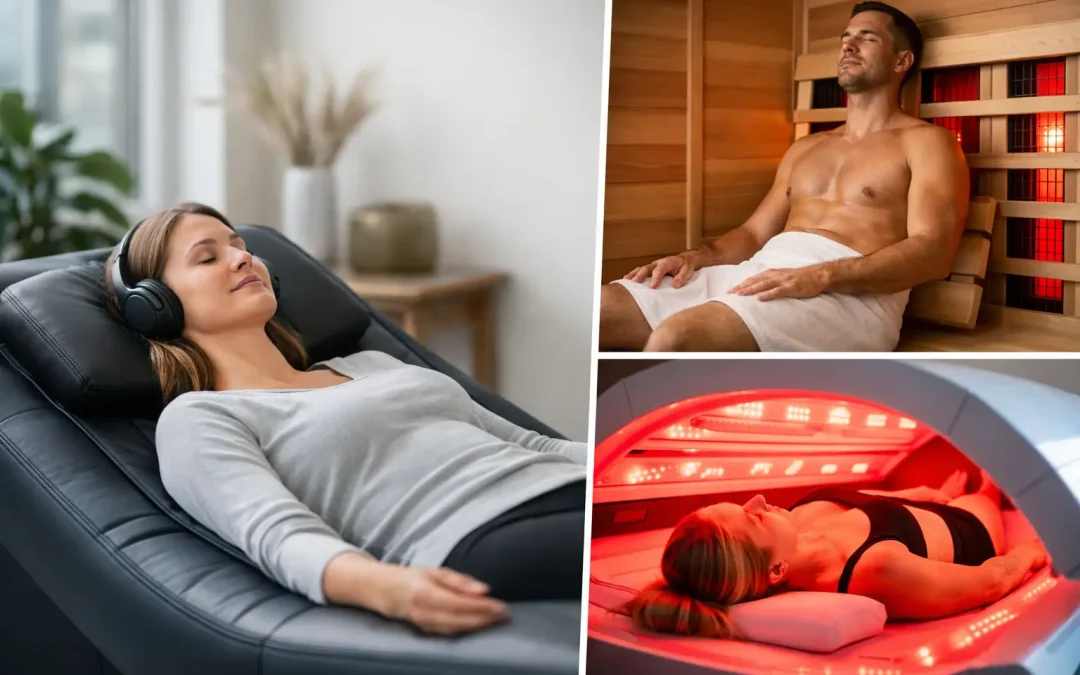
Some forms of care ask you to talk, analyze, or try harder to relax. Those can be valuable, but they are not the only door into healing. Vibroacoustic therapy offers a body-based experience: carefully selected low-frequency sound vibrations move through a specialized treatment bed while therapeutic music or sound is heard through headphones.
The experience is felt as much as it is heard. Gentle vibration gives the body sensory input that can support relaxation and help shift attention away from the constant mental loop of stress. Research on vibroacoustic therapy is growing, with promising findings related to relaxation, stress, pain, and well-being. Individual results vary, and it is best viewed as supportive care rather than a replacement for medical or mental health treatment.
One reason this modality can feel so powerful is entrainment. In simple terms, the body can begin to respond to steady, rhythmic input. When your internal experience has been rushed, fragmented, or hypervigilant, supported vibration and sound may offer a felt sense of rhythm, grounding, and rest. You do not need to force the process. You get to receive it.
At True You Collective, vibroacoustic therapy is part of a nervous system-first approach designed to help the body reconnect with its own capacity for restoration. It is science meeting soul in a very practical way: you lie down, you are supported, and your system is given room to soften.
Why repetition matters more than a one-time reset
One session can be deeply calming. It may also show you what your body has been missing. But chronic stress usually develops over time, and the nervous system often benefits from repeated experiences of regulation.
Consistency helps create familiarity. A weekly session, a package, or a membership can become a protected point of recovery in your life rather than another item you have to earn. Over time, many people become more aware of their early stress signals and better able to respond before complete depletion takes over.
The right frequency depends on your current capacity, symptoms, schedule, and goals. Someone in acute burnout may benefit from more regular support at first, while another person may use sessions as ongoing maintenance. There is no prize for doing the most. The most supportive plan is one you can sustain.
A Whole-Body Approach to Stress Recovery
Vibroacoustic therapy can stand on its own, and it can also be paired with other supportive modalities. Red light therapy, infrared sauna sessions, and multi-modality immersion experiences can offer complementary sensory and restorative support. Heat may help some people release muscular tension and settle into rest. Red light therapy is often chosen as part of a wellness routine focused on cellular support and recovery.
The trade-off is simple: more is not automatically better. If your system is highly sensitive, depleted, pregnant, managing certain medical conditions, or prone to feeling overwhelmed by heat or stimulation, a gentler starting point may be wiser. A practitioner-guided approach makes room for your actual body rather than following a one-size-fits-all protocol.
Root-cause care also reaches beyond the treatment room. Hydration, nourishing food, movement that feels supportive, boundaries around work, therapy, time outdoors, meaningful connection, and sleep all contribute to nervous system health. You do not have to overhaul your life in a week. In fact, aggressive change can become another stressor.
Start by choosing one practice that makes your body feel more resourced, then return to it often enough that it becomes familiar. A 10-minute walk without your phone, a consistent bedtime cue, a few slow breaths before entering your home, or a regular vibroacoustic session can all become signals of safety.
Signs You May Need More Than a Day Off
A vacation or quiet weekend can help, but chronic stress often follows you into the time that was supposed to restore you. Consider more intentional nervous system support if rest does not feel restorative, your sleep remains disrupted, your body feels persistently tense, or you are increasingly disconnected from joy, focus, or the people you love.
Also seek appropriate licensed medical or mental health support for severe anxiety, depression, trauma symptoms, persistent pain, thoughts of self-harm, or sudden changes in physical health. Holistic care works best when it honors the full picture of your well-being and connects you to the level of support you need.
You are not broken because your body has been trying to protect you. It may simply be asking for a new rhythm, repeated care, and a place where it can remember how to heal.