
Pain is rarely only about the place that hurts. For many people, the ache in the low back, shoulders, hips, or jaw is also tied to a nervous system that has been bracing for far too long. This vibroacoustic pain relief case study looks at what can shift when low-frequency sound and vibration give the body a consistent invitation to soften, rest, and regulate.
The story below is a representative composite based on common client experiences, not a clinical trial or a promise of a particular outcome. Every body has its own history, needs, and pace. Still, the pattern is meaningful: when the nervous system begins to feel safer, pain may become less consuming and daily life can start to feel possible again.
Vibroacoustic Pain Relief Case Study: When Bracing Becomes a Habit
The client was a working professional in her late 40s with persistent neck, upper-back, and low-back discomfort. She had lived through a demanding stretch of caregiving, deadlines, interrupted sleep, and little true downtime. Her pain was not constant at the same intensity, but it flared after long periods at a desk, stressful conversations, poor sleep, or even a busy weekend.
By the time she sought support, the pain had begun to shape her choices. She declined walks with friends, felt guarded during movement, and woke already tired. What frustrated her most was not simply the discomfort. It was the sense that her body was no longer hers to trust.
She was not looking for a quick fix or being told that the pain was “all in her head.” She wanted a non-invasive, body-based approach that acknowledged a fuller picture: physical tension, accumulated stress, emotional overload, and a nervous system that seemed unable to stand down.
The starting point
Before her first session, she described her average pain as a 7 out of 10 on difficult days, with tightness through her shoulders and a familiar low-back ache. Sleep was light and broken. She also noticed that her breathing stayed shallow when she was overwhelmed, even when she was sitting still.
This matters because pain and stress can reinforce one another. When the body senses threat, whether from injury, pressure, uncertainty, grief, or chronic overload, muscles may stay guarded. Sleep can suffer. Sensation can become amplified. The protective response is not a personal failure. It is the body trying to help, even when the pattern has outlived the moment that created it.
The Care Plan: Repetition Over Rescue
Her plan centered on six vibroacoustic therapy sessions over three weeks, paired with simple support between visits: hydration, gentle walking when comfortable, a few minutes of slower breathing before bed, and permission to reduce the pressure to “push through.”
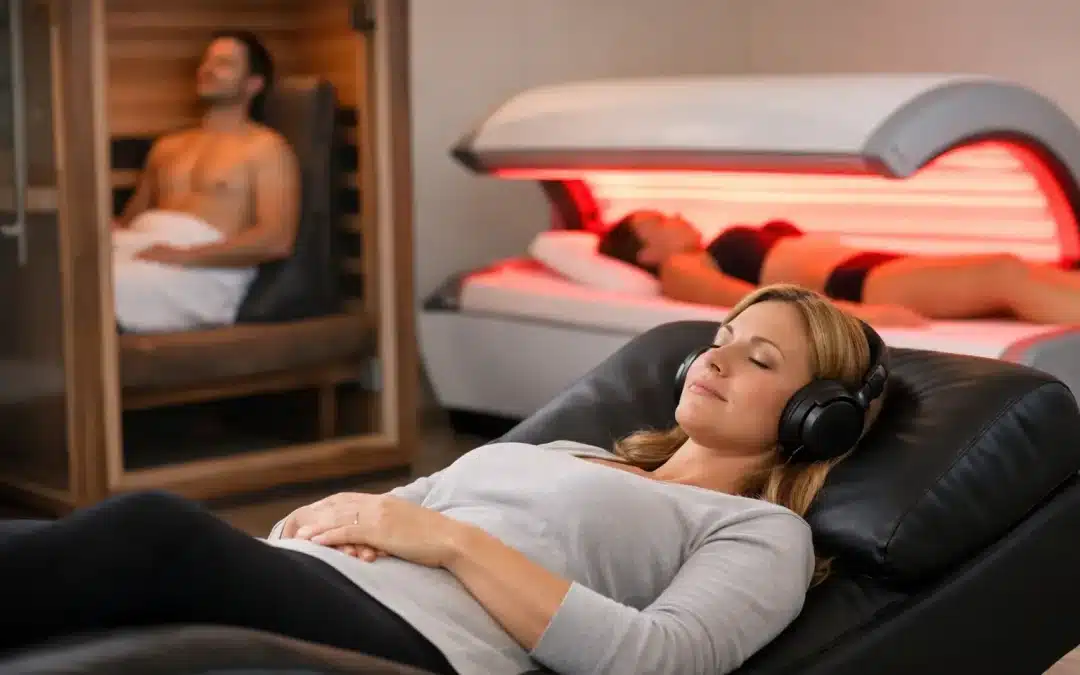
Vibroacoustic therapy uses precisely delivered low-frequency sound vibrations through a therapeutic bed or chair, often paired with music designed to support relaxation. The client does not need to perform, explain, or force anything. She rests fully clothed while the body receives vibration as sound is heard and felt.
At True You Collective, this work is understood through the lens of entrainment. Just as a fast heartbeat can gradually settle after a period of calm, steady input, the nervous system can respond to consistent rhythmic cues. Low-frequency vibration may support a shift out of high alert and toward a more regulated state. For a person whose body has been gripping all day, that shift can be deeply felt.
The goal was not to chase a pain score after one session. It was to create repeated experiences of safety and settling, so her system could remember another option besides bracing.
What the sessions felt like
During the first session, the client reported noticing the vibration most clearly around her back and legs. At first, she found it difficult to stop mentally scanning her body for pain. About halfway through, her breath naturally slowed and her shoulders dropped into the table.
Afterward, she did not describe a dramatic disappearance of pain. She described something more foundational: “I feel like I can finally exhale.” That evening, she slept more deeply than usual, though she still woke once during the night.
The second and third sessions brought a similar pattern. She arrived tense and mentally busy, then left with less jaw tension and a fuller breath. She also began to notice an important distinction. The pain was still present at times, but it did not immediately send her into panic or frustration. Her relationship with the sensation was changing.
What Changed Across Three Weeks
By the sixth session, the client reported that her difficult-day pain was more often in the 3 to 5 range rather than 7 or 8. More significantly, flare-ups felt less sticky. She had begun taking short walks again and returned to gentle stretching without the same fear that movement would make everything worse.
Her sleep was not perfect, and stressful days still brought tension. Healing did not mean life stopped being life. But she had more capacity inside the life she was living. She could identify early signs of overwhelm and use rest before her body had to demand it through a full pain flare.
Three changes stood out.
First, her body awareness became kinder and more useful. Instead of ignoring discomfort until it was unbearable, she recognized tension earlier and responded with support.
Second, she experienced more restorative rest. Better sleep alone does not solve chronic pain, but it can give the nervous system and body a more favorable environment for recovery.
Third, she regained a sense of agency. She no longer viewed herself as broken or at the mercy of every flare-up. She had felt, in her own body, that settling was possible.
Why Vibroacoustic Therapy May Help With Pain
Pain is complex. It can involve tissue irritation, injury, inflammation, movement patterns, sleep, stress physiology, past experiences, and the brain’s ongoing interpretation of danger and safety. That complexity is why a single approach is rarely the whole answer.
Vibroacoustic therapy may be valuable because it meets the body where verbal understanding often cannot. Low-frequency vibration offers sensory input that can support relaxation, body awareness, and parasympathetic nervous system activity. In simpler terms, it may help the body move from “I need to protect myself” toward “I have enough safety to let go a little.”
For some people, the most immediate benefit is a quieter mind. For others, it is a reduction in muscular holding, improved sleep, or the ability to move with less guarding. Results depend on the person, the nature of their pain, consistency of care, and what other supports are needed.
Vibroacoustic therapy is not a replacement for medical evaluation, especially for new, severe, unexplained, or worsening pain. It also does not ask us to pretend pain is purely emotional. It is a complementary, science-informed modality that recognizes the nervous system as part of the pain experience and part of the path toward relief.
The Larger Lesson From This Case
The most powerful outcome in this case was not a number on a pain scale. It was the client’s return to herself. She began to feel less trapped in vigilance and more connected to the signals her body was offering.
That is the deeper purpose of nervous system regulation. It is not about achieving permanent calm or eliminating every hard day. It is about building the capacity to come back to center, again and again, with more compassion and fewer alarms.
If chronic pain has made your world smaller, begin with curiosity rather than force. Your body may not need another demand. It may need repeated, supportive experiences that remind it how to soften. Beneath the tension, your body still carries an inner wisdom for healing, rest, and return.