
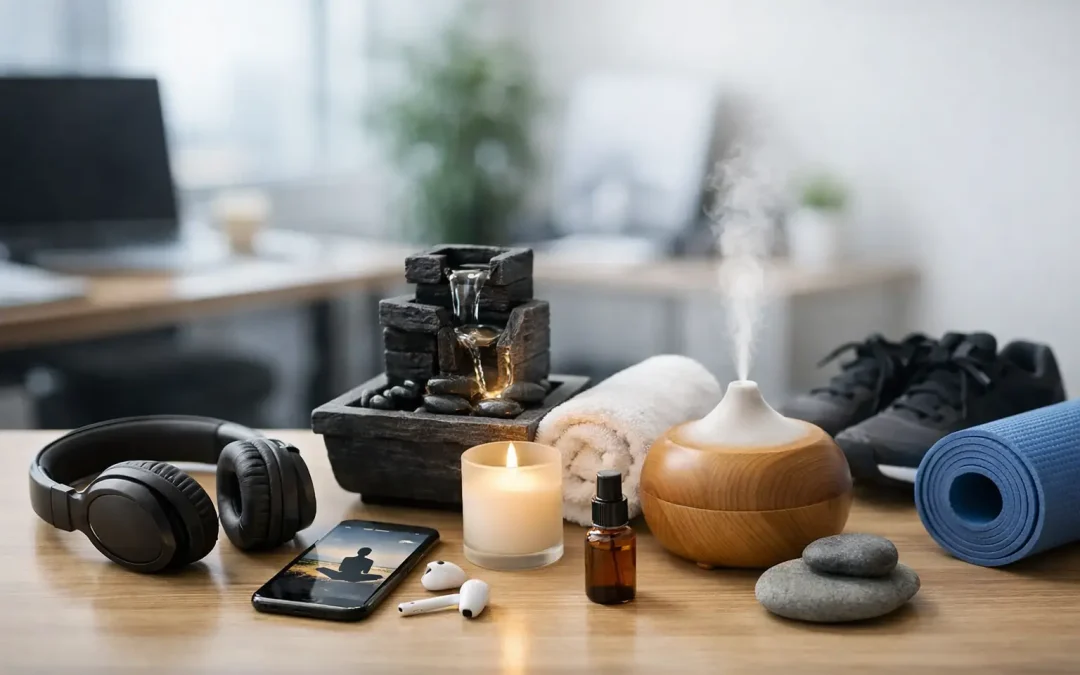
Your calendar is full, your mind is still racing at 9 p.m., and even your days off do not feel restorative. That is exactly why the best recovery tools for stressed professionals need to do more than offer a quick sense of relief. They need to help your nervous system shift out of constant survival mode so your body can remember how to heal.
For high-capacity people, stress is rarely just mental. It settles into the body as shallow breathing, tight shoulders, irritability, poor sleep, brain fog, inflammation, and a strange kind of exhaustion that rest alone does not fix. If you are a leader, caregiver, first responder, entrepreneur, or simply someone carrying too much for too long, recovery has to be intentional. Science meets soul here – because real restoration is both physiological and deeply personal.
What makes the best recovery tools for stressed professionals different?
Not every wellness tool is true recovery. Some methods stimulate you, distract you, or temporarily mask fatigue. The best options support regulation. They help your body move from fight, flight, freeze, or functional overdrive into a state where repair, digestion, deeper sleep, and emotional steadiness become possible.
That does not mean there is one perfect tool for everyone. It depends on your stress load, your sensitivity, your schedule, and whether you are dealing with burnout, chronic pain, grief, poor sleep, or all of the above. The most effective recovery tools tend to work on the nervous system first, because when the nervous system feels safe, the rest of the body can follow.
1. Vibroacoustic therapy for full-body regulation
If stress has been living in your body for months or years, talk therapy and mindset work may not be enough on their own. Vibroacoustic therapy can be especially powerful because it works through sound frequency and gentle vibration to create a deeply embodied experience of calm.
Instead of asking your brain to force relaxation, this modality gives your body rhythmic input it can respond to. That process, often called entrainment, helps shift internal patterns toward regulation. Many people notice that their breathing softens, muscle tension decreases, and their thoughts stop looping quite so loudly. For professionals who feel wired and tired at the same time, that matters.
The trade-off is that this is not always a one-and-done solution. Like many nervous system therapies, repetition strengthens the effect. But for people who have trouble meditating, trouble sleeping, or trouble feeling safe enough to slow down, vibroacoustic therapy often meets the body in a way words cannot.
2. Infrared sauna for stress, tension, and recovery
Infrared sauna is often treated like a luxury, but for stressed professionals it can be a meaningful recovery practice. Heat helps the body release physical tension, increase circulation, and create space for decompression after long days spent sitting, bracing, performing, or carrying emotional weight.
It can also support recovery indirectly by encouraging stillness. That may sound simple, but many high performers never stop long enough for their system to downshift. Time in the sauna can feel like a reset button – not because it erases stress, but because it gives your body a chance to process it.
That said, sauna is not ideal for everyone in every season. If you are severely depleted, dehydrated, or highly heat-sensitive, shorter sessions may be a better place to start. Recovery should feel supportive, not overwhelming.
3. Red light therapy for energy and repair
Stress shows up in the skin, muscles, joints, and energy systems of the body. Red light therapy supports cellular repair in a way that feels gentle but can have a meaningful cumulative effect over time. For professionals dealing with fatigue, inflammation, workout soreness, or chronic tension, this can be one of the steadier tools in a recovery plan.
What makes red light therapy helpful is that it does not demand much from you. You are not trying to push, strive, or perform. You simply receive. For people who are used to earning their rest, that alone can be healing.
The limitation is that red light therapy may not create the immediate emotional exhale that some people feel with vibration or heat. Its benefits can be quieter at first. But quieter does not mean less effective. Sometimes the body responds best to consistent, low-friction support.
4. Breathwork that does not overstimulate
Breathwork is often recommended for stress, and for good reason. Your breath is one of the fastest ways to communicate safety to the nervous system. But not all breathwork is calming. Some styles are energizing and intense, which may not be the right fit when you are already running on adrenaline.
For stressed professionals, slower and simpler tends to work better. Longer exhales, gentle diaphragmatic breathing, and paced breathing can help lower internal intensity without adding another challenge to your day. If your body has been stuck in hypervigilance, subtle regulation often lands better than dramatic emotional release.
This is also one of the most accessible tools. You can use it between meetings, before bed, or after a hard conversation. The key is consistency. A two-minute practice done daily often serves the body more than a single long session once in a while.
5. Light and sound-based recovery spaces
There is a reason so many people feel better when the environment around them changes. The nervous system is always taking in cues. Harsh lighting, constant notifications, noise, and pressure tell the body to stay on alert. Recovery spaces that use soothing light, sound, and sensory design can send the opposite message.
This is where modern wellness technology becomes more than a trend. Carefully chosen frequencies, calming visual input, and low-stimulation environments help create the conditions for regulation. They are not magic, but they can make it easier for the body to release guarding patterns and settle into a more restorative state.
For people who have trouble relaxing at home because home still feels like work, caregiving, or unfinished tasks, stepping into a dedicated healing environment can make a real difference.
6. Body-based recovery instead of mind-only coping
Many stressed professionals live from the neck up. They analyze, plan, manage, and push through. Then they wonder why they cannot think their way out of burnout. The truth is that stress physiology does not always respond to insight alone.
That is why body-based tools matter. Therapeutic touch, vibration, heat, stillness, and sensory regulation help shift the body from protection into repair. These practices remind you that healing is not only about understanding what happened. It is also about helping the body feel safe enough to stop bracing against it.
This may be especially important if you are dealing with grief, emotional fatigue, chronic pain, or a history of stress that has become your normal. Sometimes the most effective recovery starts when you stop asking your mind to carry the whole process.
7. Integrated recovery sessions for deeper results
The best recovery tools for stressed professionals are often most effective when they are combined thoughtfully rather than used in isolation. Heat, light, sound, and vibration each support the body in different ways. Together, they can create a more complete reset.
An integrated session may help calm mental noise, release muscular tension, support circulation, and promote the kind of nervous system recalibration that lingers after the appointment ends. That is often what busy professionals need most – not another wellness task, but an experience that helps them feel clear, grounded, and more like themselves again.
At True You Collective, this nervous system-first approach is central to the work. The goal is not to chase symptoms one by one. It is to help the body reconnect with its own healing intelligence through consistent, supportive care.
Choosing the right tool for your stress pattern
If you are exhausted but cannot sleep, a deeply regulating modality like vibroacoustic therapy may be the strongest place to begin. If your body feels heavy, inflamed, or physically tight, infrared sauna or red light therapy may offer more immediate relief. If your days are packed and you need something simple, breathwork may be the easiest tool to use consistently.
And if nothing seems to help for long, that is often a sign that your system needs more than symptom management. It may need repetition, layering, and a space where your body feels safe enough to let go.
Recovery is not a reward for finishing everything. It is how you stay connected to yourself while life is still life. When the right tools support your nervous system, calm stops feeling so far away, and the version of you beneath the stress has room to return.