
When the lights feel too bright, ordinary sounds land like sharp edges, and one more question from someone you love feels impossible to answer, your body is not failing you. It is communicating. Learning how to reduce sensory overload starts with recognizing that overwhelm is often a nervous system response, not a personal weakness or a lack of resilience.
Sensory overload can make even a normal day feel like too much. The grocery store, a busy office, a crowded family gathering, a phone full of notifications, or a season of grief can leave you feeling irritable, shut down, exhausted, disconnected, or on the verge of tears. Your system has taken in more input than it can comfortably process.
The goal is not to create a life with no stimulation. Life is still life. The goal is to help your body return to enough safety and regulation that you can meet stimulation without losing yourself in it.
What sensory overload feels like in the body
Sensory overload happens when your brain and nervous system are receiving more information than they can sort through efficiently. That information may come through sound, light, touch, movement, screens, social interaction, pain, stress, or intense emotions. Sometimes the source is obvious. Sometimes it is the buildup of a hundred small demands that never gave your system room to settle.
It can look different from person to person. You may become restless and reactive, feel unusually sensitive to noise, struggle to make simple decisions, or feel your thoughts racing. Others experience the opposite response: numbness, fatigue, brain fog, withdrawal, or the strong urge to lie down in a dark, quiet room.
These reactions are not always about what is happening in the present moment alone. A nervous system that has been carrying chronic stress, poor sleep, pain, caregiving demands, burnout, or emotional loss may have less capacity available. What once felt manageable can suddenly feel like too much.
Reduce sensory overload by lowering the input first
When you are already overwhelmed, trying to think your way out of it can add another layer of effort. Start with the environment. Lowering sensory input gives your nervous system a clearer signal that it can begin to downshift.
Dim the lights if possible. Step outside or into a quieter room. Put your phone on Do Not Disturb for 20 minutes. Choose comfortable clothing, take off restrictive layers, or use headphones to soften background noise. These may sound like small changes, but small changes matter when your body is nearing its limit.
You do not need to earn a pause by reaching a breaking point. A five-minute reset between meetings, before walking into the house after work, or after a crowded errand can prevent the accumulation that leads to a full shutdown later.
It also helps to name what is happening without judgment: “My system has had a lot of input. I need less right now.” That language creates space between you and the experience. You are not the overwhelm. You are a person having a nervous system response that deserves care.
Create a personal sensory recovery plan
Your best reset will be personal. Some people feel better with silence and stillness. Others need gentle movement, a warm shower, a familiar playlist at a low volume, or time outdoors. The key is noticing what helps your body soften rather than simply distracting your mind.
Consider keeping a short mental list of your most reliable supports: a quiet drive without a podcast, ten minutes with your feet on the ground, a warm drink, slow breathing, a weighted blanket, or a short walk at dusk. Use the options that are available to you instead of waiting for the perfect conditions.
If you are frequently overwhelmed by particular places or situations, planning ahead can be an act of self-respect. Shop during quieter hours. Build extra time into transitions. Sit near an exit at an event. Let a trusted person know you may need a break. Boundaries are not avoidance when they help you stay connected to your capacity.
Regulation is different from distraction
Scrolling, snacking, zoning out in front of a show, or pushing through may offer temporary relief. There is no shame in reaching for what gets you through a hard moment. But distraction does not always help the nervous system complete its stress response.
Regulation is the felt experience of returning to a steadier state. Your jaw unclenches. Your breath becomes easier. Your shoulders drop. You can hear yourself think again. It does not require you to be perfectly calm or positive. It simply creates more room inside your body.
Gentle, repeatable practices often work better than forcing a dramatic reset. Try extending your exhale slightly longer than your inhale for a few breaths. Place one hand on your chest and one on your abdomen. Feel the support beneath your feet or back. Let your eyes rest on one neutral object in the room. These are simple ways of reminding your system that it is here, now, and not alone.
For some people, stillness can initially feel uncomfortable, especially after long periods of stress. In that case, choose rhythmic movement first. Walking, rocking, stretching, or slowly shaking out your hands can give activated energy somewhere to go before you ask yourself to rest.
Why sound and vibration can support a busy nervous system
The body responds to rhythm. Consistent, low-frequency sound and vibration can offer a physical cue of steadiness, especially for people who feel disconnected from their bodies after prolonged stress. This is one reason vibroacoustic therapy can be a meaningful part of a nervous system care plan.
In a vibroacoustic session, therapeutic sound frequencies are experienced not only through the ears but through gentle vibration in the body. This body-based experience is designed to support relaxation and regulation through entrainment, the natural tendency for internal rhythms to respond to an external, steady rhythm.
For someone who is mentally exhausted, talk therapy, journaling, or even meditation may feel like more work in the moment. Vibroacoustic therapy offers a different doorway. You are invited to rest, receive, and let sound and vibration meet your system where it is. Many people describe feeling more grounded, less tense, and more connected to themselves afterward.
It is not a replacement for medical or mental health care when those supports are needed. It can be a complementary, science-backed way to create the conditions for your body to shift out of constant alertness. Repetition matters. Nervous system regulation is often less about one perfect session and more about giving your body consistent experiences of safety, rest, and recovery.
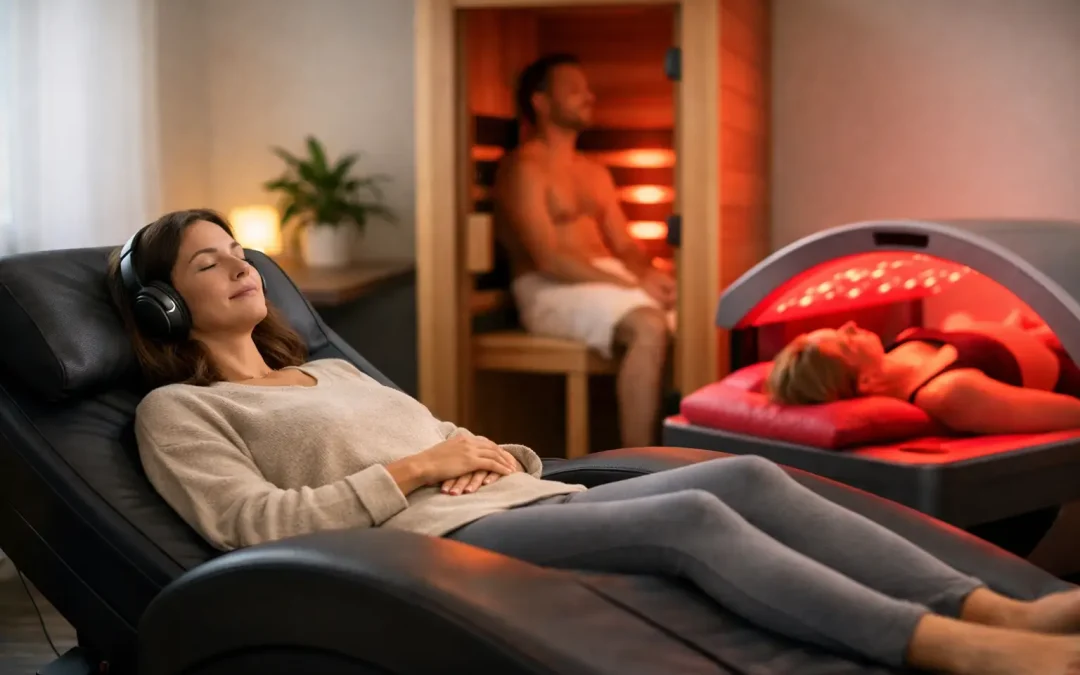
At True You Collective, vibroacoustic therapy can also be combined with supportive modalities such as red light therapy and infrared heat in an Immersion Reboot™ session. For some people, this layered approach feels like a deeper exhale: fewer demands on the mind and more opportunity for the body to remember its own capacity to settle.
When sensory overwhelm keeps returning
If sensory overload is becoming frequent, intense, or disruptive to work, relationships, sleep, or daily life, look beyond the immediate trigger. Ask what your nervous system has been carrying. Is your schedule leaving no recovery time? Are you sleeping lightly? Are you managing chronic pain, grief, anxiety, hormonal changes, or ongoing high-pressure demands?
The answer is not always to remove every stressor. That is rarely realistic. But you may need more intentional recovery woven into your week. A daily quiet transition, a regular body-based therapy session, less screen stimulation before bed, or firmer boundaries around your availability can gradually rebuild capacity.
If overwhelm comes with panic, persistent depression, trauma symptoms, thoughts of self-harm, or a sudden change in functioning, reaching out to a qualified healthcare or mental health professional is an essential next step. Support can be both compassionate and practical.
Your sensitivity is not proof that you are broken. It may be proof that your body has been working hard to protect you for a long time. Give it less input when it needs less, more rhythm when it needs grounding, and repeated chances to feel safe enough to soften. Beneath the noise, your body still remembers the way back to you.