
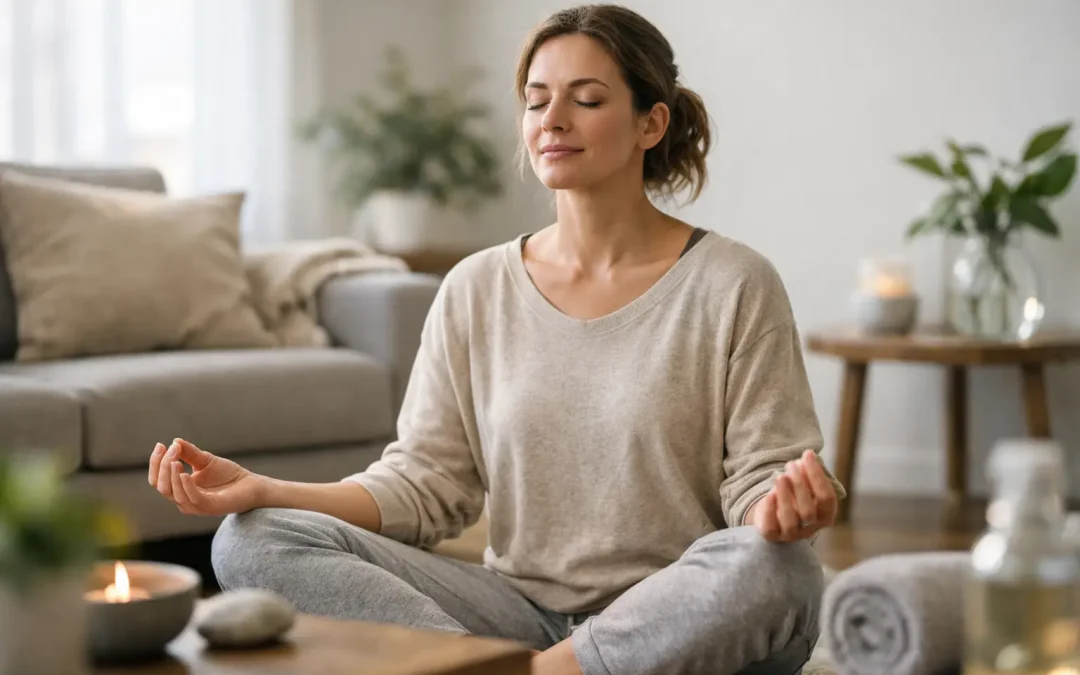
Your mind may know the stressful moment is over, but your body often takes longer to believe it. You finish the hard conversation, close the laptop, leave the hospital shift, or finally get the kids to bed – and still your chest feels tight, your jaw is clenched, and your whole system seems stuck in high alert. If you are wondering how to calm your body after stress, the answer usually is not to force yourself to “relax.” It is to help your nervous system feel safe enough to come out of survival mode.
That distinction matters. Stress is not only mental. It is electrical, chemical, muscular, emotional, and deeply physical. Your heart rate changes. Your breathing gets shallow. Blood flow shifts. Muscles brace. Hormones surge. When stress is intense, repeated, or long-lasting, the body can forget how to return to baseline on its own. That is when calm stops feeling simple and starts feeling out of reach.
Why your body stays activated after stress
The nervous system is designed to protect you. In a real threat, that response is intelligent. It mobilizes energy so you can act quickly. The problem is that modern stressors often do not have a clean ending. Work pressure, grief, caregiving, chronic pain, poor sleep, and emotional overload can keep your system signaling danger long after the moment has passed.
For some people, that activation feels like anxiety, restlessness, a racing mind, or trouble falling asleep. For others, it shows up as fatigue, numbness, brain fog, irritability, inflammation, or feeling disconnected from yourself. Both patterns can come from dysregulation. A body that looks tired may still be carrying a stress response underneath.
This is why mindset alone does not always create relief. You can understand your triggers, practice positive thinking, and still feel physically on edge. The body needs an experience of safety, not just an idea of it.
How to calm your body after stress starts with signals of safety
When the body is activated, the most effective support is usually gentle, consistent, and sensory. You are not trying to overpower stress. You are giving your system better information.
Start with your breath, but keep it simple. Deep breathing can help, but not everyone feels better forcing huge inhales. Often, a slower exhale is more regulating. Try breathing in naturally and extending the exhale just a little longer than the inhale. That subtle shift can cue the body that it is safe to soften.
Temperature can also help. Warmth tends to encourage release, especially when your muscles feel armored or your mind will not stop scanning. This is one reason heat-based therapies can feel so restorative after chronic stress. Infrared sauna sessions, for example, can support relaxation, circulation, and a sense of letting go that is hard to access through willpower alone.
Sound and vibration matter more than many people realize. The nervous system responds to rhythm. Steady, soothing input can help the body entrain toward a calmer state. This is part of why vibroacoustic therapy feels so different from simply lying down in a quiet room. It does not ask your body to figure everything out by itself. It provides structured frequencies and sound-based support that help the system organize, settle, and remember a more regulated pattern.
Light can play a role as well. When the body has been under strain, recovery is not only emotional. It is cellular. Red light therapy is often sought for tissue support, inflammation, and healing, but it can also be part of a broader restoration process when stress has left the body depleted.
The mistake people make when trying to calm down
Many people only reach for support once they are already overwhelmed. That makes sense, but it can create a frustrating cycle. If your nervous system has been running hot for weeks, months, or years, a single meditation or one good night of sleep may not be enough to fully reset the pattern.
This does not mean healing is complicated. It means repetition matters. Regulation is built through consistent experiences of safety. The body learns through what happens again and again.
That is why quick coping tools and deeper restorative care serve different purposes. A few minutes of breathwork after a hard meeting may help you interrupt the stress spiral. More immersive support may be what helps your body actually unwind the accumulated load. Both have value. It depends on whether you need immediate downshifting, long-term recalibration, or both.
What to do in the first 30 minutes after stress
Right after a stressful event, your body usually needs less input, not more. This is not the best time to scroll, multitask, or push through. Give your system a cleaner landing.
If possible, move out of the environment where the stress happened. Change rooms. Step outside. Sit in your car with the radio off for five minutes before driving. Small transitions matter because they help signal that the threat has ended.
Then bring attention to your body before your thoughts take over. Unclench your jaw. Drop your shoulders. Press your feet into the floor. Place one hand on your chest or lower ribs. These are small actions, but they can interrupt the looping message that everything is still urgent.
If your body wants movement, choose steady movement, not punishing exercise. A slow walk, gentle stretching, or simply swaying can help discharge activation. If your body feels depleted rather than wired, rest may be more supportive. The key is listening accurately. Stress recovery is not one-size-fits-all.
Hydration and minerals can help too, especially after intense emotional or physical stress. So can a warm shower, dimmer lighting, and reducing noise. Sensory load matters. A nervous system that is already overextended does not need more stimulation disguised as self-care.
When stress is chronic, calming the body requires a deeper reset
If you have been stressed for a long time, your body may no longer recognize calm as normal. That can feel discouraging, but it is also useful information. It means your system likely needs more than a moment of relief. It needs retraining.
This is where nervous system-focused therapies can be especially supportive. Instead of only managing symptoms, they work with the body directly. The goal is not to numb what you feel. It is to help your system shift out of survival patterns so your own healing capacity can come forward.
At True You Collective, this is the heart of the work – science meets soul in a way that feels deeply restorative and grounded. Therapies that use vibration, sound, light, and heat can help the body settle without demanding that you perform wellness or think your way into calm. For people dealing with burnout, grief, chronic pain, poor sleep, or emotional overload, that kind of support can feel like a return to self.
There is also a trade-off worth naming. Home practices are accessible and powerful, but they depend on your current bandwidth. On hard days, the very system that needs care may not have the capacity to create it. Practitioner-guided experiences can reduce that burden. They create a container where your body can receive regulation instead of trying to generate it alone.
How to know your body is coming back into balance
Calm does not always arrive as bliss. Sometimes it looks like a fuller breath, warmer hands, a softening belly, less urgency, clearer thinking, or the ability to rest without bracing for the next thing. Sometimes it looks like emotion rising once the body finally feels safe enough to release it.
That is why healing after stress can feel surprisingly tender. As your system downshifts, you may notice how much effort it has taken just to keep going. Meet that awareness with compassion. Your body is not failing you. It has been protecting you.
And it still remembers how to heal.
If calm feels far away right now, start by making the next signal of safety small, real, and repeatable. A slower exhale. A quieter room. Warmth. Rest. Support that reaches the body, not just the mind. With enough of those moments, your system begins to trust that it does not have to stay on guard forever.
That is where restoration begins – not in forcing peace, but in helping your body remember it was built for it.