If you feel wired when you want to be winding down, your evening light environment may be working against you. So, does red light therapy help sleep? It may support better sleep for some people, especially when used as part of a calming nighttime rhythm, but it is not a one-session cure for insomnia, stress, or chronic exhaustion.
The bigger conversation is not simply about light. It is about the signals your nervous system receives all day long. When your body has been moving through deadlines, caregiving, pain, grief, screens, noise, and constant decision-making, it may need more than a dark bedroom to remember that it is safe to rest.
Does red light therapy help sleep by supporting your rhythm?
Your circadian rhythm is your internal 24-hour clock. Light is one of its strongest cues. Bright morning light helps tell the brain it is time to be alert, while darkness in the evening supports the natural rise of melatonin, a hormone involved in sleep timing.
Blue and bright white light, particularly from phones, televisions, overhead LEDs, and computer screens, can be more stimulating in the hours before bed. Red and near-infrared light are different. They have longer wavelengths and generally have less effect on melatonin suppression than blue-rich light. That is why swapping harsh bedroom lighting for a dim red or amber option may feel more sleep-friendly.
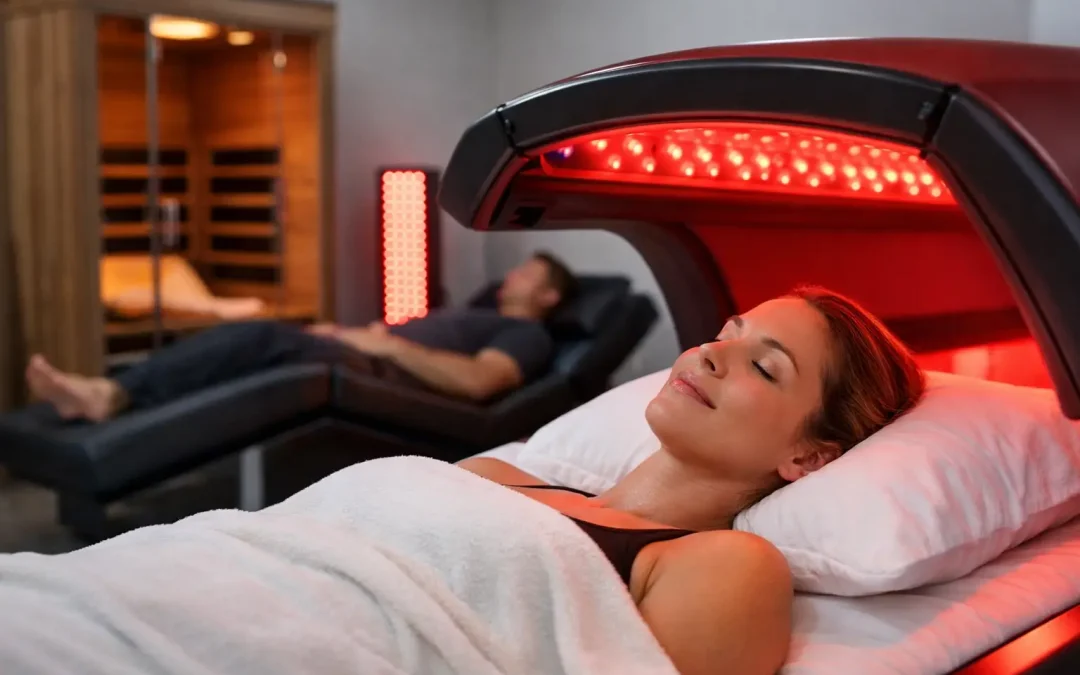
Red light therapy is often discussed in two related but distinct ways. One is using red-toned light in the evening to create a gentler environment. The other is photobiomodulation, where a device delivers specific red and near-infrared wavelengths at a measured intensity. Both may fit into a restorative routine, but they are not interchangeable. A red bulb that helps your room feel softer is not necessarily delivering a therapeutic dose, and a powerful therapy panel can be much brighter than most people expect at night.
Research on red light and sleep is promising but still developing. Some small studies suggest red light exposure may be associated with improvements in sleep quality or sleep-related outcomes in certain groups. Yet sleep is influenced by many factors, including stress load, pain, hormone changes, medications, breathing patterns, caffeine, irregular schedules, and mental health. The evidence does not support treating red light as a universal answer.
Why your nervous system matters at bedtime
Sleep is not something most of us can force. It is a state the body enters more easily when it senses enough safety, consistency, and recovery.
This is where nervous system regulation becomes meaningful. A person can do every “right” sleep habit and still lie awake with a racing mind, a tense jaw, or a body that feels braced for impact. That does not mean they are failing at rest. It may mean their system has spent too long in high alert.
A calming red light session can become a transition ritual: a clear, sensory cue that the day is ending. The warmth of the light, the pause from screens, and the intentional stillness may help create space between the demands of the day and the vulnerability of sleep. For some people, that shift is as valuable as the light itself.
At True You Collective, we view these tools through a nervous system-first lens. Light can be supportive, but deeper restoration often comes from repetition and integration. When the body receives consistent signals of calm through light, sound, vibration, heat, breath, and rest, it may begin to move out of survival mode more readily. Science meets soul when the technology is used not to override your body, but to help you listen to it.
How to use red light therapy for sleep support
Timing and intensity matter. If your goal is better sleep, think of red light as part of your wind-down period rather than another stimulating task to complete perfectly.
Keep evening light gentle
Use dim red or amber lighting in the one to two hours before bed instead of bright overhead lights whenever possible. This can be especially helpful if you tend to scroll at night, work late, or wake up to use the bathroom and struggle to fall back asleep. The goal is not total darkness at 7 p.m. It is reducing unnecessary signals that tell your brain to stay awake.
Be thoughtful with therapy devices
If you use a red light therapy panel or other device, follow the manufacturer’s guidance for distance, duration, and eye protection. More is not automatically better. Longer or later sessions may feel energizing for some people, while others find them deeply relaxing. Your response is useful information.
Try using a session earlier in the evening for a week or two, rather than immediately before getting into bed. Notice changes in how easily you settle, how often you wake, and how you feel in the morning. Consistency gives you a clearer picture than one especially good or difficult night.
Pair the light with a downshift
Red light works best when the rest of your evening is not fighting it. Let the experience become a boundary around rest. Lower the lights, silence nonessential notifications, choose a slower activity, and give your body a chance to come down.
You do not need an elaborate routine. A few minutes of quiet breathing, gentle stretching, journaling, or simply lying down without input can be enough to reinforce the message: there is nothing else required of you right now.
What red light therapy cannot solve on its own
It helps to hold realistic expectations. Red light therapy may be a supportive piece of your sleep care, but persistent sleep disruption deserves a wider look.
If you snore loudly, gasp during sleep, wake with headaches, have severe daytime sleepiness, experience restless legs, or struggle with insomnia for months, speak with a qualified healthcare professional. These symptoms can point to concerns that need assessment beyond an evening wellness routine.
It is also wise to check with a clinician before using red light therapy if you have a condition involving light sensitivity or take medications that can make you more sensitive to light. If a session leaves you feeling activated, uncomfortable, or gives you a headache, shorten it, move it earlier, or pause and seek guidance.
For people living with chronic pain, burnout, anxiety, or emotional overwhelm, sleep troubles are often a message rather than a standalone problem. The body may be asking for more recovery, more support, or a different relationship with the pace you have been carrying.
A more restorative way to approach sleep
The question is not only whether red light can help you sleep tonight. It is whether your daily patterns are giving your body enough opportunities to recalibrate.
A supportive sleep practice might include morning daylight, consistent meal and bedtime rhythms, movement that feels nourishing, less screen intensity at night, and modalities that help the body release held tension. Vibroacoustic therapy, for example, uses sound and vibration to support relaxation and entrainment, offering a deeply embodied way to practice settling into a calmer state. For someone whose mind understands rest but whose body cannot quite access it, that sensory support can matter.
Red light therapy can be a beautiful invitation to slow down, particularly when it replaces the harsh, overstimulating light that has become normal in many homes. Let it be one gentle signal among many. Your body is not a problem to be fixed at bedtime. With steady care and the right support, it can remember how to rest.