
When your mind is racing, your body often follows. Your jaw tightens, your shoulders rise, sleep becomes lighter, and even simple decisions can feel like too much. A guide to vibroacoustic therapy sessions begins here: with the understanding that stress is not only something you think. It is something your nervous system carries.
Vibroacoustic therapy offers a quiet, body-based way to interrupt that pattern. Through low-frequency sound and vibration delivered through a specialized therapeutic bed or chair, this science-backed modality creates an experience that is felt as much as it is heard. For many people, it becomes a place to pause, settle, and remember what internal calm feels like.
What Is Vibroacoustic Therapy?
Vibroacoustic therapy uses sound frequencies, usually in the lower range, to create gentle vibrations that travel through the body while you rest. You may also hear music, tones, or guided sound through headphones or the room’s audio system. The experience is designed to support relaxation and nervous system regulation through a process called entrainment.
Entrainment describes the natural tendency for rhythms to influence one another. Think of how your breathing may gradually slow when you listen to a steady, peaceful rhythm. In a vibroacoustic session, the body receives consistent sensory input through sound and vibration, which can help invite it out of a high-alert state and toward a more regulated one.
This is not about forcing your body to relax or thinking your way out of stress. It is about giving your system a different signal – one of safety, steadiness, and support.
For someone living with burnout, chronic tension, emotional fatigue, sleep disruption, grief, or persistent pain, that signal can be meaningful. The nervous system influences how we experience the world, including our capacity to rest, focus, connect, and recover. When it has been working overtime for too long, a vibration-based experience can offer a gentle doorway back into the body.
What a Vibroacoustic Therapy Session Feels Like
Your first session may feel unfamiliar only because so many of us are used to doing more, trying harder, and pushing through. Vibroacoustic therapy asks for something different: your willingness to be supported.
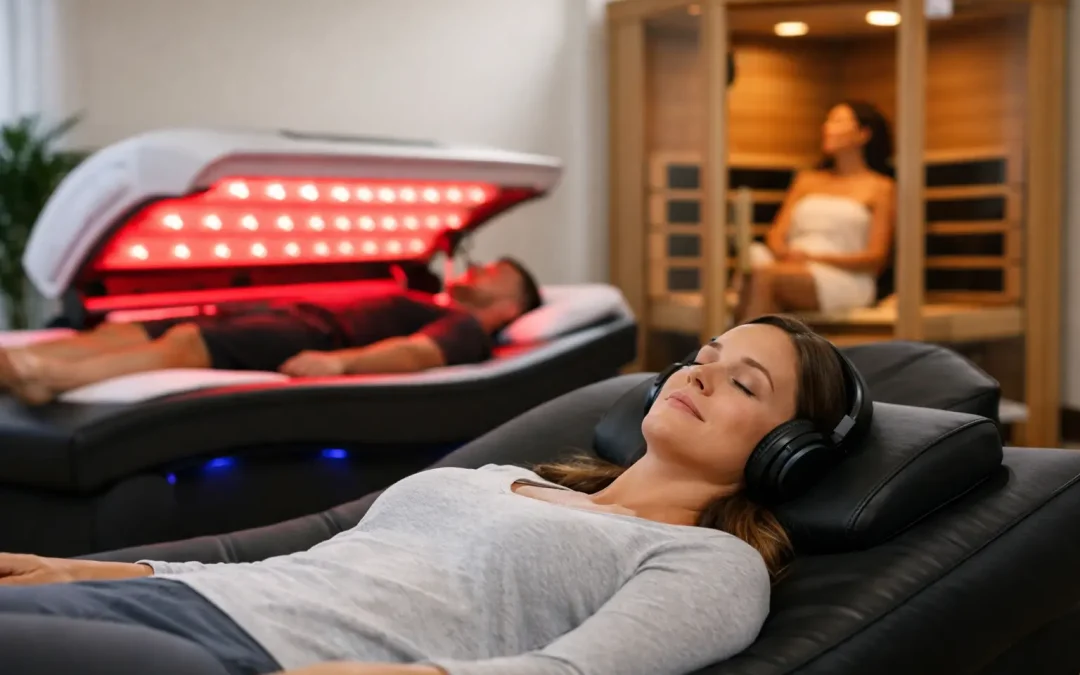
You will typically remain fully clothed and lie comfortably on a vibroacoustic bed or settle into a therapeutic chair. Once the session begins, you may notice a low, humming vibration moving beneath you. It is often described as a soothing internal massage, though the sensation varies by person and by frequency.
Some people feel deeply relaxed within minutes. Others notice their thoughts getting louder before they settle. Neither response is wrong. When the body finally has space to be still, it can reveal how much stimulation, emotion, or tension it has been holding.
You may experience warmth, heaviness in the limbs, slower breathing, gentle tingling, or a sense of being grounded. Some clients drift into a light sleep. Others remain awake but feel unusually clear and present afterward. Emotional release can happen, too. A few tears, a wave of relief, or a feeling of tenderness may be part of the nervous system softening its grip.
Results are personal. One session may leave you feeling peaceful for the rest of the day, while another may be more subtle – perhaps you sleep more deeply that night or realize you responded differently to a stressful moment. The work is often cumulative. Repetition gives the body more opportunities to practice regulation.
How to Prepare for Your Session
You do not need a perfect meditation practice or a completely calm mind to benefit from vibroacoustic therapy. Come as you are. A few simple choices can help you receive the experience more comfortably.
Wear soft, comfortable clothing that allows you to rest without restriction. Have a light meal beforehand if needed, but avoid arriving overly full. Hydration can also support your comfort, especially if your session is part of a broader wellness routine.
Try to give yourself a small buffer before and after your appointment. If possible, avoid scheduling a stressful call immediately afterward or rushing straight into errands. Your nervous system does not need a perfectly quiet day, but it benefits when you let the session have a little room to land.
Before you begin, set a gentle intention rather than a demand. You might silently offer yourself a phrase such as, “I am here to rest,” or “My body knows how to receive support.” The goal is not to make something happen. It is to create space for your body to reconnect with its own healing capacity.
A Guide to Vibroacoustic Therapy Sessions: What Happens Step by Step
A session begins with comfort and orientation. Your practitioner may ask how you are feeling, what you hope to receive from the session, and whether there are any physical considerations to keep in mind. This is a useful time to share if you are feeling especially overwhelmed, sore, depleted, or emotionally tender.
Once you are settled, the sound and vibration begin. There is nothing you need to perform. You can keep your eyes open or closed, adjust your position if necessary, and simply notice what arises. If your mind wanders, that is normal. You can return your attention to the sensations of the bed, your breath, or the music without judgment.
At the end, allow yourself to reorient slowly. Sit up when you are ready. Notice whether your body feels different from when you arrived. You do not have to name a dramatic shift for the session to have value. Sometimes the most powerful change is a small exhale that has been waiting for permission.
How Often Should You Book Sessions?
The right rhythm depends on your goals, current stress load, and how your body responds. Someone seeking support during an intense season of burnout, poor sleep, grief, or chronic stress may benefit from more consistent sessions at first. Others may use vibroacoustic therapy as a regular reset alongside movement, nourishing food, mindfulness, therapy, or other supportive care.
Think of nervous system regulation as a relationship, not a one-time event. Your system has learned its current patterns through repeated experience. It can also learn new patterns through repeated experiences of safety, rest, and embodied calm.
A single session can be restorative, especially when life feels heavy. Ongoing care may create a deeper foundation because it gives your body a familiar place to recalibrate. At True You Collective, this consistency is part of the philosophy: healing is not about chasing a quick fix. It is about creating conditions where you can feel more like yourself again.
Who May Benefit and When to Check In First
Vibroacoustic therapy is non-invasive and gentle for many people, but it is still wise to approach any wellness modality with awareness. It may be especially appealing if you feel stuck in fight-or-flight, carry chronic muscular tension, struggle to truly rest, or want a more embodied complement to your current self-care practices.
If you are pregnant, have a pacemaker or other implanted electronic device, have a seizure condition, are experiencing an acute medical concern, or have questions about whether vibration therapy is appropriate for you, check with a qualified healthcare professional and share your needs with your practitioner before booking. Vibroacoustic therapy is intended to support well-being and nervous system regulation. It is not a replacement for medical diagnosis, treatment, or emergency care.
The best sessions are collaborative. Your comfort, your history, and your body’s feedback matter. A skilled practitioner will help create an experience that feels supportive rather than overwhelming.
You do not have to wait until you are completely depleted to give your nervous system care. A vibroacoustic therapy session can be a protected moment to lie down, receive, and listen beneath the noise. Even when life is still life, your body can learn that calm is available to return to.