
Your reactions may feel bigger than the moment in front of you. A short email can send your chest tightening. A noisy room can leave you irritable for hours. You may know the breathwork, take the walks, and still feel as though your body has not received the message that you are safe. The best therapies for emotional regulation support recognize that emotions are not only thoughts to manage. They are also nervous system experiences held in the body.
Emotional regulation does not mean becoming detached, positive all the time, or never feeling grief, anger, fear, or stress. It means having enough internal capacity to move through those experiences without being completely consumed by them. The goal is to feel your feelings while staying connected to yourself.
For many people, that requires more than insight alone. It requires repeated experiences of safety, rest, rhythm, and reconnection. Science meets soul here: your body carries extraordinary healing intelligence, and with the right support, it can remember how to settle.
What emotional dysregulation can feel like
Nervous system dysregulation can look different from person to person. Some people feel constantly activated: restless, tense, worried, reactive, unable to sleep, or unable to turn their mind off. Others move toward shutdown: numbness, exhaustion, disconnection, brain fog, low motivation, or the sense that even simple tasks are too much.
Both patterns can be protective responses. Your system may have adapted to prolonged work stress, caregiving, chronic pain, grief, inflammation, poor sleep, trauma, or a season when life demanded more than you had available. That does not mean you are broken. It may mean your nervous system has been carrying too much for too long.
The most helpful therapy depends on your symptoms, history, preferences, and what feels safe in your body. A person who needs a place to process loss may benefit deeply from talk-based care. Someone who understands their patterns but cannot seem to relax may need more body-based support. Often, a layered approach is the most nourishing one.
Best therapies for emotional regulation support
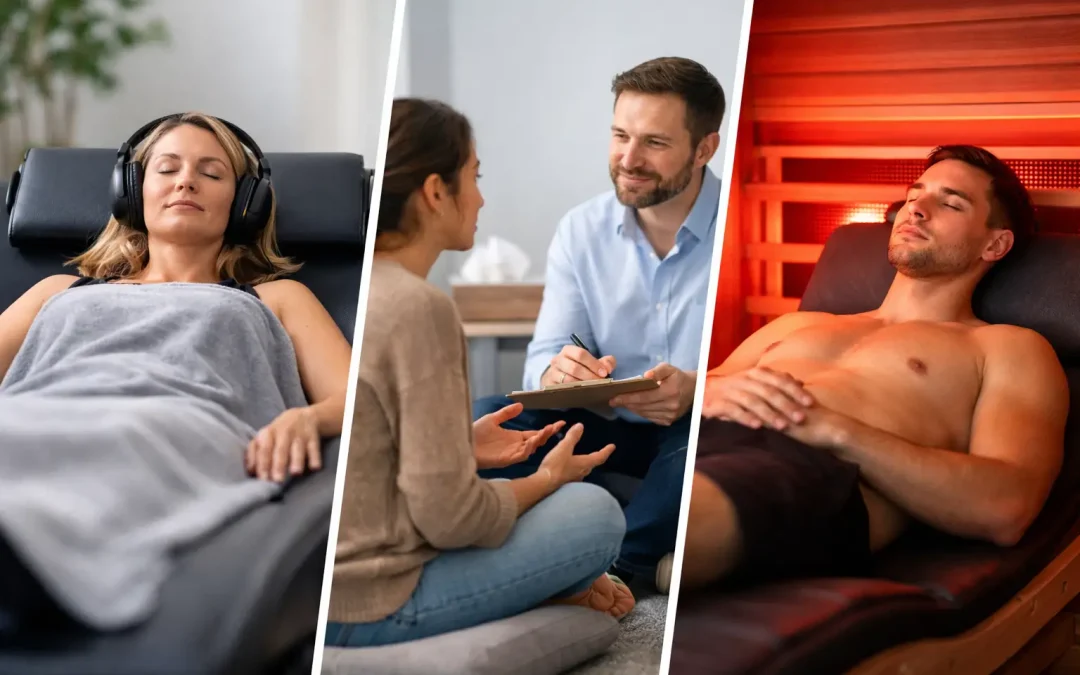
Talk therapy for insight, skills, and connection
Therapy with a qualified mental health professional can create a consistent, confidential space to understand emotional patterns and practice new responses. Approaches that teach coping skills can be especially useful for noticing triggers, working with difficult thoughts, setting boundaries, and tolerating distress without acting impulsively.
The relationship itself can be regulating. Being met with steadiness, compassion, and appropriate guidance can help your system experience connection differently. This option may be particularly supportive when anxiety, depression, trauma, relationship strain, or major life changes are affecting daily life.
Still, insight is not always the same as regulation. You can understand exactly why you are overwhelmed and still have a racing heart at 2 a.m. That is where somatic and sensory therapies can become a meaningful complement.
Somatic therapies for the body’s stress response
Somatic approaches work with the felt experience of stress in the body: breath, posture, sensation, movement, tension, and the ability to notice internal cues without becoming overwhelmed. They can help create a little more space between a trigger and a reaction.
This does not have to be intense. Gentle movement, guided body awareness, yoga, slow breathing, and carefully paced body-based therapeutic work can all help some people reconnect with sensations in a way that feels manageable. The key is pacing. For a highly activated or trauma-sensitive nervous system, pushing too hard to “release” emotions can feel like more overwhelm. A skilled practitioner helps prioritize safety and choice.
Vibroacoustic therapy for deep sensory regulation
Vibroacoustic therapy is a powerful option for people who feel depleted by talking, touch-sensitive, chronically tense, or simply ready for support that reaches beyond the thinking mind. During a session, low-frequency sound vibrations move through a specialized treatment surface while calming audio supports the experience. You do not have to perform, explain, or figure anything out. You get to receive.
These frequencies can support relaxation by giving the nervous system a predictable, soothing sensory input. This process is often discussed through entrainment: the body can begin to respond to a steady external rhythm by shifting toward a more settled internal state. Research around sound, vibration, and relaxation continues to grow, and many people experience vibroacoustic sessions as a deeply grounding complement to their wellness or clinical care.
The benefit is not about forcing calm. It is about offering the body a repeated invitation to downshift. For someone whose system has been bracing for months or years, that gentle repetition matters. Over time, regular sessions may help make rest feel more familiar and emotional recovery feel more accessible.
At True You Collective, vibroacoustic therapy is central to a nervous system-first approach because it offers full-body support without requiring you to push through or relive what hurts. It can be especially meaningful for emotional fatigue, grief, burnout, sleep disruption, chronic pain, and the feeling of being disconnected from yourself.
Red light therapy and infrared sauna for restorative support
Emotional regulation is influenced by the whole body. When you are in pain, inflamed, sleep-deprived, or physically depleted, it is harder to access patience, presence, and resilience. Red light therapy and infrared sauna sessions are not replacements for mental health treatment, but they can support a larger restoration practice.
Red light therapy uses specific wavelengths of light that are commonly used to support cellular energy and recovery. People often choose it as part of a routine focused on physical restoration, mood support, and feeling more energized. Infrared sauna uses gentle heat to encourage relaxation, circulation, and a release from the physical holding that can accompany chronic stress.
These modalities are not identical, and neither is right for every person. Heat may not be appropriate for certain health conditions or medications, while light-based therapy should be personalized around individual needs. A thoughtful wellness provider can help you determine what feels supportive rather than stimulating.
Why consistency matters more than the perfect session
A single deeply relaxing experience can be a beautiful reset. But emotional regulation is usually built through repetition. Your nervous system learns through pattern and practice. Each time you experience a safe, supported downshift, you are giving your body evidence that it does not have to stay on high alert.
That is why a consistent rhythm often serves people better than chasing the one perfect therapy. A weekly vibroacoustic session, regular sauna time, a standing therapy appointment, daily breath practices, or an integrated experience such as an Immersion Reboot session can become anchors in a full life. The aim is not to eliminate stress. Life will still be life. The aim is to recover your center more readily when stress arrives.
Consider what your system is asking for right now. Do you need space to be heard? More tools for difficult moments? A body-based reset that does not require more mental effort? Better sleep and physical restoration? Your answer can guide the kind of support that belongs in your care plan.
Choosing support with care
The best approach should feel respectful, not overwhelming. Look for providers who listen to your health history, explain what to expect, welcome your questions, and honor your boundaries. If you have a history of trauma, severe symptoms, or a diagnosis that affects your safety, coordinated care with a licensed healthcare or mental health professional is especially valuable.
If you are experiencing thoughts of harming yourself or someone else, feel unable to stay safe, or are in immediate crisis, contact emergency services or a crisis resource right away. Nervous system wellness can be deeply supportive, but urgent safety needs deserve immediate clinical care.
You do not have to earn rest by reaching a breaking point. Sometimes the next right step is simply allowing your body to be supported long enough to remember what steady feels like.