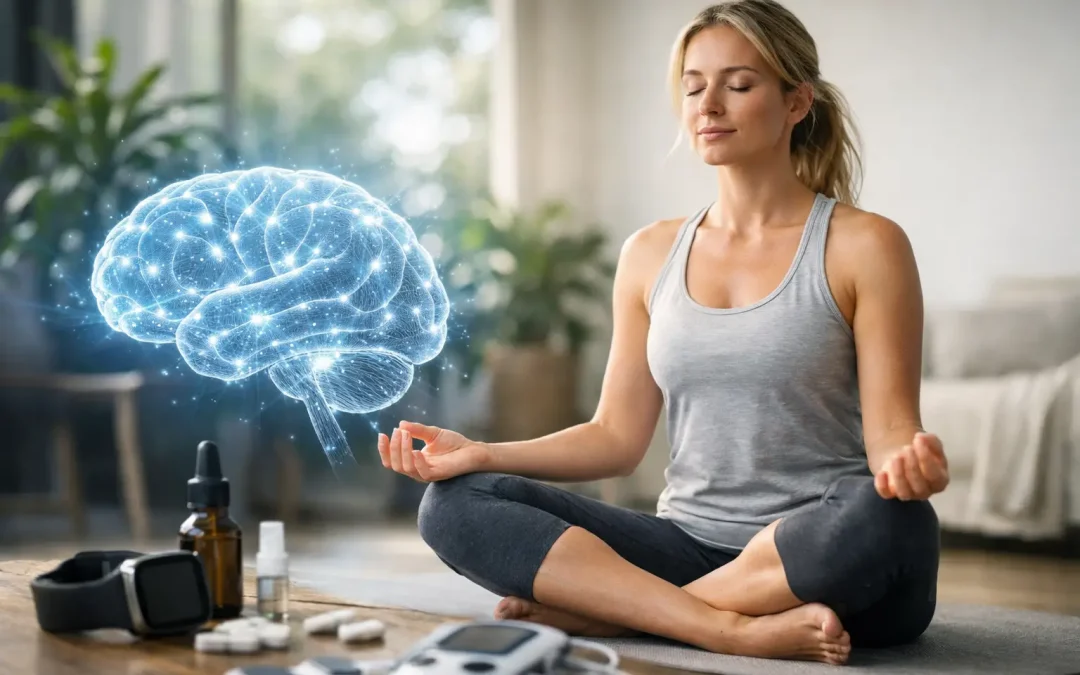
If your body feels tired but your mind will not power down, or you are waking up already bracing for the day, your nervous system is likely asking for more than another coping tool. Biohacking for nervous system health is not about forcing your body into better performance. At its best, it is about giving your system the right inputs so it can remember safety, rhythm, and repair.
That distinction matters. Many people are not dealing with a lack of motivation or discipline. They are dealing with a body that has spent too long in survival mode. When stress becomes chronic, the nervous system can get stuck in patterns of overactivation, shutdown, or constant fluctuation between the two. You may feel wired, depleted, numb, reactive, inflamed, or unable to rest deeply even when you are exhausted.
This is where a more supportive form of biohacking can help. Not the kind built around extremes, punishment, or optimization for its own sake. The kind where science meets soul, and the goal is regulation, not pressure.
What biohacking for nervous system health really means
In the wellness world, biohacking can mean almost anything. For nervous system care, the most useful definition is simple: using targeted tools and environmental inputs to influence how your body responds to stress and recovery.
Your nervous system is always reading signals. Light tells it when to be alert and when to wind down. Sound and vibration can shift brainwave states and muscle tension. Heat changes circulation, relaxation, and detoxification pathways. Repetition helps the body learn that calm is available again.
So biohacking for nervous system health is less about chasing the newest trend and more about working with the body in the language it already understands. Rhythm. Frequency. Warmth. Rest. Sensory safety. Consistency.
That is also why the best results usually do not come from a one-time experience. Regulation is often an entrainment process. The body learns through repetition, not force.
Why the nervous system should come first
When the nervous system is dysregulated, other healing efforts often feel harder than they should. Sleep becomes shallow. Pain feels louder. Mood becomes less stable. Focus drops. Recovery slows. Even healthy habits can feel difficult to sustain because the body is spending so much energy scanning for threat or trying to keep up with internal stress.
This is part of why symptom-based approaches can feel incomplete. You may do all the right things and still feel off because the deeper system organizing your stress response has not truly settled.
A regulated nervous system does not mean you never feel stress. It means your body can respond to life and return to baseline more easily. There is more resilience, more capacity, and often more clarity about what you need. Your body remembers how to heal when it is not constantly defending itself.
The most effective modalities are sensory, not just mental
Mindset work matters, but many people cannot think their way out of dysregulation. If your system is overwhelmed, it often needs body-based support first.
That is why sensory therapies can be so powerful. They speak directly to the systems involved in stress and restoration without requiring you to push, perform, or explain yourself.
Vibroacoustic therapy and entrainment
Vibroacoustic therapy uses sound frequencies paired with therapeutic vibration to influence the body through resonance. This can support relaxation, reduce muscular tension, and help the nervous system shift toward a more regulated state.
What makes this approach especially meaningful for nervous system care is entrainment. The body tends to synchronize with steady, calming rhythms. When your internal state has become chaotic or depleted, consistent therapeutic frequency can offer a pattern of coherence to follow. For people dealing with burnout, emotional fatigue, chronic pain, or difficulty settling, that can feel like being guided back into themselves.
Some people notice a sense of spaciousness after a session. Others describe deeper rest, emotional release, or the rare feeling that their body is no longer fighting them. Results vary, and deeper patterns often need repeated sessions, but the principle is the same: the body responds to vibration in ways that are both physical and deeply regulating.
Red light therapy for recovery support
Red light therapy is often discussed in terms of skin, inflammation, and cellular energy, but it also has a place in nervous system recovery. When the body is under prolonged stress, healing capacity can feel sluggish. Supporting energy production at the cellular level may help with recovery, tissue repair, and overall resilience.
For someone living in a stress-loaded body, this matters because the nervous system is not separate from the rest of you. Less inflammation, better recovery, and more available energy can create conditions where regulation becomes more possible. It is not a magic fix, but it can be a supportive layer in a broader healing process.
Infrared sauna and the art of downshifting
Infrared sauna offers a different kind of signal. Heat invites the body to soften. Muscles let go. Circulation increases. Many people notice that the transition out of a session feels like a reset button for tension they had stopped noticing.
For nervous system health, sauna can be useful because it creates a contained experience of release. You are warm, supported, and removed from the pace of the outside world long enough for your body to shift gears. That said, more is not always better. If you are highly sensitive, depleted, pregnant, or dealing with certain medical conditions, sauna use may need to be adjusted or avoided. Nervous system support should feel nourishing, not overwhelming.
Biohacking works best when it feels safe
This is where a lot of wellness advice misses the mark. A tool can be evidence-based and still be the wrong fit if it pushes your system too hard.
Cold exposure is a good example. For some people, it improves resilience and mood. For others, especially those already running on stress chemistry, it can feel like another demand on an overloaded body. Fasting can help one person feel clearer and destabilize another. High-intensity exercise can regulate one nervous system and dysregulate another.
The question is not just, Does this work? The better question is, Does this help my body feel safer, steadier, and more resourced over time?
That shift in thinking changes everything. Nervous system biohacking should not be built around proving toughness. It should be built around creating the conditions for repair.
How to approach nervous system biohacking wisely
Start by noticing your pattern. Are you chronically wired and unable to slow down? Flat and exhausted? Swinging between both? Your answer helps determine what kind of support may be most helpful.
If you are overstimulated, calming sensory modalities often make sense first. If you are shut down, gentle activation paired with safety may be more supportive than aggressive stimulation. If you have trauma, grief, chronic pain, or long-term burnout, slower and more consistent is usually more effective than dramatic experimentation.
It also helps to think in layers. A session with therapeutic sound and vibration may help your body access calm. Red light may support repair. Sauna may deepen release. Combined thoughtfully, these inputs can create a fuller nervous system reset than any single modality alone. That is part of why immersive, multi-modality experiences can feel so restorative. They work with the body on several levels at once.
At True You Collective, this nervous system-first approach is what makes the work feel different. Rather than chasing symptoms one by one, the focus is on helping the body recalibrate through consistent, non-invasive support so healing can happen from the root.
What results can you realistically expect?
Sometimes people feel a shift right away – deeper breathing, a quieter mind, less pain, better sleep that night. Sometimes the first sign is simply that they realize how stressed their body has been because they finally feel contrast.
Longer-term results tend to come from repetition. Over time, many people notice they recover from stress faster, sleep more deeply, feel less reactive, and have more capacity for work, relationships, and daily life. They may also feel more present in their bodies, which is often the beginning of true healing.
Still, it depends on what your system has been carrying and for how long. If your body has lived in survival mode for years, regulation is usually a relationship, not a quick fix. That does not make the process less powerful. It makes it more honest.
The most meaningful form of biohacking is not about becoming someone else. It is about clearing enough noise from the system that you can hear yourself again. When the right inputs meet the right level of care, the body often does what it has wanted to do all along – soften, rebalance, and remember its way back.