
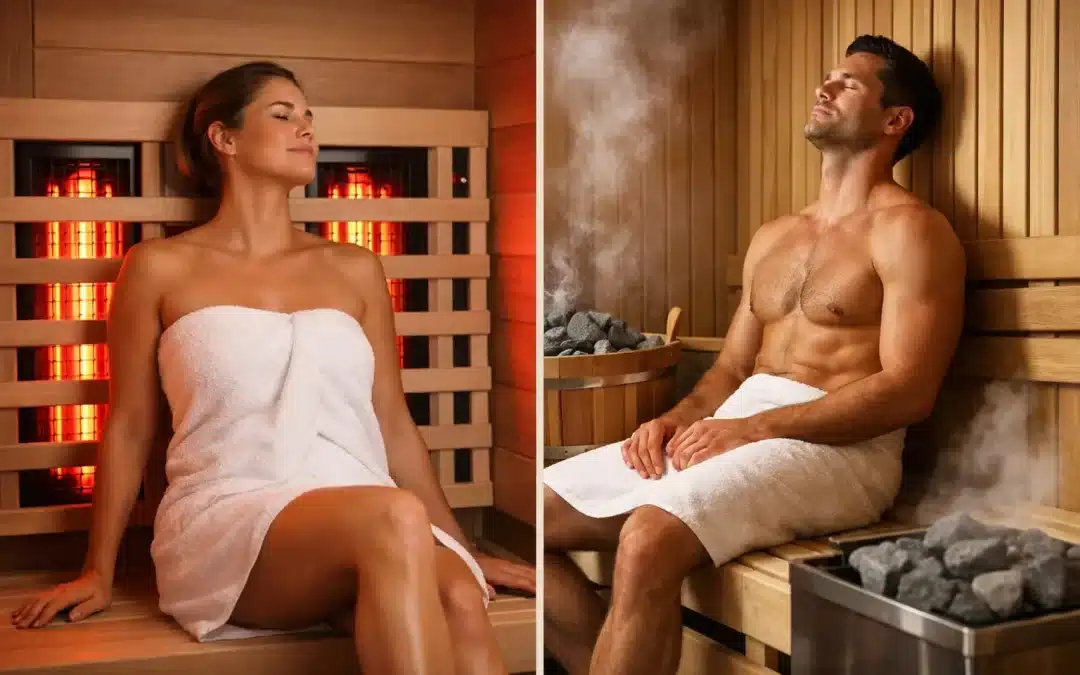
A sauna session can feel like a rare permission slip to stop bracing. The phone is away, the outside world quiets down, and your body has a chance to soften into warmth. But when choosing between an infrared sauna vs traditional sauna, the experience matters as much as the temperature. The right choice is the one your body can receive consistently, safely, and without adding more stress to an already full nervous system.
Both styles can support relaxation, circulation, and a sense of release. Yet they create heat differently, feel very different in the body, and may suit different seasons of healing. One is not universally better. What matters is understanding what each offers, then choosing the practice that helps you come home to yourself.
Infrared Sauna vs Traditional Sauna: The Key Difference
A traditional sauna heats the air around you, usually with a stove and heated rocks. As the air temperature rises, your body works to regulate itself through sweating and increased circulation. Traditional dry saunas commonly range from about 150 to 195 degrees Fahrenheit, though the exact experience varies by setting. Steam and humidity can make that heat feel even more intense.
An infrared sauna uses infrared light to warm the body more directly while keeping the surrounding air at a lower temperature, often around 110 to 150 degrees Fahrenheit. You will still sweat, but many people find the environment more tolerable because they are not sitting in such intensely hot air.
That distinction is meaningful if you are depleted, sensitive to heat, living with chronic discomfort, or rebuilding your capacity after burnout. A lower air temperature does not necessarily mean a lesser experience. In fact, comfort can be what allows a wellness practice to become a steady ritual rather than another thing you have to push through.
How Each Type of Heat Feels
Traditional sauna heat is immediate, enveloping, and powerful. It can create a familiar ritual for people who enjoy high heat, the scent of wood, and the grounded simplicity of sitting in a hot room. For some, that intensity feels clarifying. It offers a clear break from mental noise and invites the body into a deep sweat.
For others, high heat and humidity can feel overwhelming. If you tend to feel lightheaded, anxious in enclosed spaces, or already overstimulated, a traditional sauna may ask more of your system than it gives on a particular day. This is not a failure of willpower. It is useful information from your body.
Infrared heat tends to feel gentler and more gradual. Because the air is cooler, you may be able to stay comfortable for longer, read, meditate, listen to calming audio, or simply rest without feeling like you need to escape the room. That can make infrared sauna sessions especially supportive for people learning to recognize safety and ease in their bodies again.
Neither experience needs to be treated as a test of endurance. The goal is not to sweat the most or stay the longest. The goal is to create conditions where your body can downshift and reconnect with its own restorative rhythms.
Potential Benefits Without the Hype
Both infrared and traditional saunas may support relaxation and temporary relief from muscle tightness. Heat encourages blood flow, can ease the feeling of stiffness, and often helps people transition out of a busy, externally focused state. Many people also find sauna time supports a more settled evening routine and better sleep.
Research on sauna bathing, particularly traditional Finnish-style sauna use, has found associations with cardiovascular health outcomes. But association is not the same as a guarantee, and sauna is not a replacement for medical care, movement, nourishment, sleep, or prescribed treatment. Your health is not a one-modality equation.
Infrared sauna research is still developing. People often choose it for post-workout soreness, relaxation, chronic tension, and the accessibility of lower-temperature heat. It may be easier to use consistently, which matters. Small, repeatable moments of regulation often have more impact than an occasional intense experience that leaves you drained.
It is also worth being thoughtful about the word “detox.” Sweating is a normal cooling response, and your liver and kidneys do the primary work of processing and eliminating waste. A sauna can leave you feeling refreshed and can support healthy routines, but it does not need exaggerated claims to be valuable. The calm, the pause, the circulation, and the opportunity to rest are already meaningful.
Which Sauna Is Better for Nervous System Support?
If your nervous system has been carrying too much for too long, the best approach is usually the one that feels regulating rather than demanding. Heat is a stressor, even when it is a beneficial one. Your body responds by adjusting circulation, heart rate, and temperature. In a well-supported session, that temporary stress can be followed by a sense of calm and release.
The dose matters. A person who feels grounded after 20 minutes of infrared heat may feel depleted after 20 minutes of high traditional heat. Another person may love the ritual and invigorating intensity of a traditional sauna. Your response can also change from week to week based on sleep, hydration, hormones, workload, grief, illness, or pain.
Infrared sauna may be a particularly aligned option when you want warmth without the intensity of very hot air. It can create space for stillness, slow breathing, and a gentler relationship with your body. For someone recovering from chronic stress, that sense of choice can be profoundly supportive.
Traditional sauna may be a wonderful fit if you enjoy higher heat, tolerate it well, and feel restored rather than overwhelmed afterward. The ritual itself can be deeply grounding. What matters is leaving the session feeling more connected, not more dysregulated.
Safety and Practical Considerations
Hydration is essential with either sauna type. Drink water before and after your session, and consider replenishing electrolytes if you sweat heavily or have been active. Avoid alcohol before sauna use, since it can increase dehydration and make it harder for your body to regulate temperature.
Start shorter than you think you need to. Ten to 15 minutes can be enough, especially if you are new to sauna or returning after a difficult season. Build gradually based on how you feel during the session and in the hours afterward. Dizziness, nausea, headache, racing heart, weakness, or a sense of panic are signs to leave, cool down, and rest.
Talk with a qualified health care professional before using a sauna if you are pregnant, have cardiovascular concerns, have uncontrolled blood pressure, are prone to fainting, take medications that affect heat tolerance or hydration, or have any condition that makes heat exposure a concern. Sauna is a supportive tool, not a place to override medical guidance or your body’s signals.
Making Sauna Part of a Restorative Rhythm
A sauna session becomes more powerful when it is part of a wider pattern of care. Arrive unhurried if you can. Let your breath lengthen. Notice whether your jaw, hands, belly, or shoulders are holding tension. Afterward, give yourself a few quiet minutes before returning to emails, errands, or emotionally demanding conversations.
At True You Collective, infrared sauna can be part of a larger nervous system-centered practice, especially when paired thoughtfully with modalities such as red light, sound, and vibration. These experiences are not about forcing a breakthrough. They are an invitation to repetition, entrainment, and the steady remembering that your body has its own capacity for repair.
Choose traditional sauna when you genuinely enjoy its stronger heat and ritual. Choose infrared when a lower-temperature, more accessible experience helps you stay present and consistent. And on the days when rest is the medicine, honor that too. Healing is not measured by how much discomfort you can tolerate. It is often built through the quiet moments when your body finally feels safe enough to let go.