If you are choosing between vibroacoustic therapy vs sound bath, the real question is not which one is better. It is which one meets your body where it is right now. Both can feel deeply calming. Both use sound as medicine. But they work in very different ways, and that difference matters when your nervous system is tired, overloaded, inflamed, or stuck in survival mode.
For some people, a sound bath feels like a sacred pause – spacious, emotional, and centering. For others, vibroacoustic therapy offers something more direct: sound you do not just hear, but physically feel moving through the body in a precise, therapeutic way. When stress has been living in your muscles, your sleep is off, or your body no longer feels safe enough to fully rest, that distinction can change the experience entirely.
Vibroacoustic therapy vs sound bath: what is the difference?
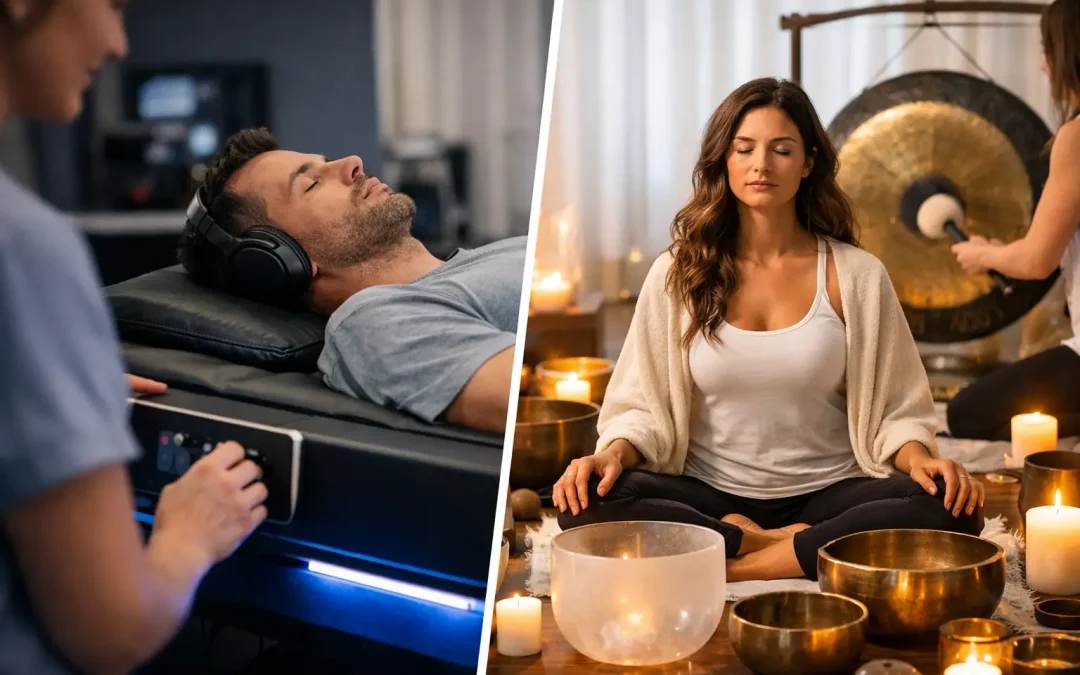
A sound bath is usually an immersive listening experience. You lie down while a practitioner plays instruments such as crystal bowls, gongs, chimes, or tuning forks. The sound fills the room and invites your mind and body into a slower rhythm. Many people experience emotional release, deep relaxation, imagery, or a meditative state.
Vibroacoustic therapy is more targeted and body-based. It uses low-frequency sound vibrations delivered through a specially designed table, mat, or chair, often paired with music or therapeutic audio. Instead of sound moving around you, the vibration moves through you. That mechanical input can help guide the nervous system toward regulation through a process often described as entrainment, where the body begins to match a calmer, more coherent pattern.
Both modalities can support healing. The difference is in delivery, precision, and how directly the body receives the stimulus.
How each experience feels in the body
A sound bath often begins with listening. The tones may feel expansive, floating, and emotionally evocative. Some people leave feeling lighter, clearer, and spiritually reconnected. Others notice that their mind stays busy for a while before settling. If you are very sensitive to sound, certain instruments or volumes may feel intense before they feel soothing.
Vibroacoustic therapy tends to feel more immediate in the body. The low frequencies can create a gentle pulsing or humming sensation through the back, legs, or torso depending on the setup. Many people describe the experience as being held, grounded, or reset from the inside out. Rather than asking your body to find calm through listening alone, it gives the nervous system a physical cue that safety and rest are available.
That is often why people dealing with chronic stress, burnout, poor sleep, tension, or pain are drawn to it. When the body has forgotten how to downshift, felt vibration can sometimes reach places that words, mindset work, and even traditional relaxation practices do not.
Why vibroacoustic therapy can feel more therapeutic
Sound baths can be profoundly healing, especially for emotional processing, mindfulness, and spiritual connection. But vibroacoustic therapy is generally the more clinical and structured modality. It is designed not only to soothe, but to influence the nervous system and body with measurable frequency-based input.
Low-frequency vibration has been studied for its potential effects on relaxation, pain perception, muscle tension, circulation, and sleep support. While individual results vary, the mechanism is not simply aesthetic or symbolic. The body is receiving sensory information it can respond to.
That makes vibroacoustic therapy especially relevant for people who feel dysregulated in a very physical way. If your jaw is always tight, your shoulders never drop, your chest feels braced, or your sleep never gets truly deep, your system may need more than a beautiful soundscape. It may need an experience that helps the body remember how to soften.
This is where science meets soul in a very grounded way. The technology is modern, but the goal is timeless: to bring the body back into enough safety that healing can happen.
Sound baths shine in different ways
None of this means sound baths are lesser. They simply serve a different purpose.
A sound bath can be ideal if you are looking for ceremony, reflection, and emotional spaciousness. It can support meditation, inner awareness, and a sense of energetic clearing. In group settings, it may also offer a meaningful feeling of community and shared intention.
For some people, that is exactly what is needed. If your stress shows up more as mental overactivity, disconnection from self, or emotional heaviness, a sound bath may feel nourishing and restorative. It can help you slow down enough to hear yourself again.
The trade-off is that it may be less targeted. Because it is usually a shared and practitioner-led listening experience, there is less precision in how the sound is delivered to your individual body.
Which one is better for stress, sleep, and pain?
It depends on what your body is asking for.
If stress has left you feeling ungrounded, overstimulated, and emotionally frayed, either option may help. A sound bath may create a sense of peace and spaciousness. Vibroacoustic therapy may help you settle more quickly because the nervous system is being cued through both sound and vibration.
If sleep is the main issue, vibroacoustic therapy often has an edge. People who struggle to power down at night are not always dealing with a lack of relaxation knowledge. Often, their body is still running a stress pattern long after the day ends. Low-frequency vibration can support a state change that feels more embodied than mental.
If pain, inflammation, or chronic muscular tension are part of the picture, vibroacoustic therapy is usually the stronger fit. Because the vibration is physically received, it may support muscle release, downregulation, and comfort in a way a passive listening session may not.
If your goal is spiritual connection, emotional release, or meditative reflection, a sound bath may feel more aligned. The environment itself can become part of the healing.
Vibroacoustic therapy vs sound bath for nervous system regulation
When people talk about wanting to feel better, they are often describing nervous system dysregulation without using those words. They say they are exhausted but cannot rest. Wired but drained. Anxious, numb, reactive, foggy, or stuck. They have tried self-care, but it has not fully landed in the body.
This is where vibroacoustic therapy stands out. Nervous system regulation is not just about feeling calm for an hour. It is about helping the body build a more reliable pathway back to safety. Repetition matters. Precision matters. The body learns through experience.
A sound bath can absolutely support regulation, especially if it helps you feel present and emotionally resourced. But vibroacoustic therapy is often more effective for people who need a stronger physiological signal. It meets the body with sensation, not just sound.
That can be especially supportive for high-stress professionals, caregivers, first responders, and anyone who has been carrying too much for too long. When your system is in a chronic holding pattern, gentle vibration can become a bridge back to yourself.
How to choose what fits you best
Choose a sound bath if you are craving spaciousness, reflection, and a more traditional energetic or meditative experience. It may be the right fit if live instruments, group settings, and spiritual ambiance help you feel restored.
Choose vibroacoustic therapy if you want a more direct therapeutic approach, especially for sleep issues, chronic stress, pain, burnout, or a nervous system that has trouble settling. It may also be the better entry point if meditation feels hard for you right now. You do not need to force your mind to be still in order to receive the benefits.
Some people benefit from both. A sound bath can open the heart and quiet the mind. Vibroacoustic therapy can help that calm become more embodied and repeatable. One is not a replacement for the other. They simply speak to different layers of healing.
At True You Collective, this distinction matters because healing is not about chasing temporary relief. It is about helping your body come back into rhythm so your own inner healing abilities can do what they were designed to do.
If you are not sure which path fits, start by listening to what has felt hardest lately. If your mind is noisy, a sound bath may offer space. If your body feels like it cannot let go, vibration may be the message it has been waiting for. Sometimes the most healing choice is the one that helps you feel at home in yourself again.