
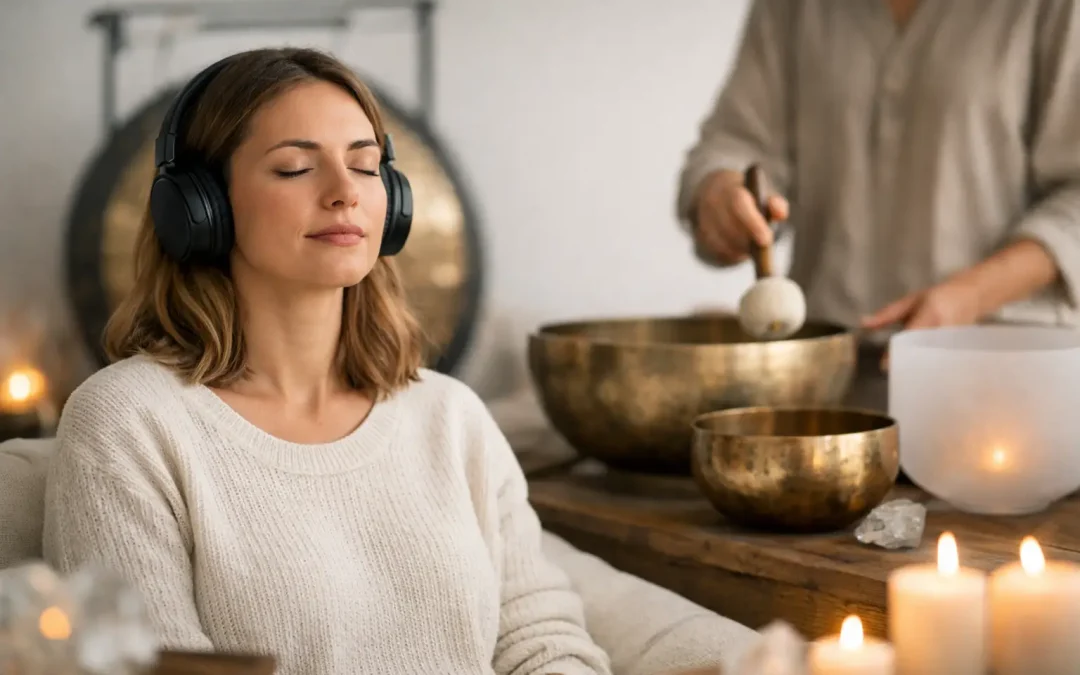
Anxiety does not always look dramatic. Sometimes it looks like lying in bed exhausted but unable to sleep. Sometimes it feels like a racing mind, a tight chest, shallow breathing, or the sense that your body never fully stands down. That is why sound therapy for anxiety has become such a meaningful support for people who are not just looking to cope, but to help their nervous system remember how to feel safe again.
When the body has been living in stress for too long, calm can start to feel unfamiliar. You may know logically that you are safe, yet your system still acts as if it is bracing for impact. This is where sound can become more than background noise. Used intentionally, it can help guide the body out of hypervigilance and into a more regulated state.
What sound therapy for anxiety actually does
At its core, sound therapy works through frequency, rhythm, and vibration. The goal is not to force relaxation. It is to give the nervous system a clear, steady signal that it can begin to follow. This process is often described as entrainment, where the body starts syncing with a calmer external input.
For someone with anxiety, that matters. Anxiety is often a whole-body experience, not just a mental one. The heart may feel fast, the muscles tense, digestion off, sleep broken, and emotions close to the surface. Sound-based therapies can help interrupt that stress loop by creating conditions where the brain and body shift together.
Some people notice this as a softening in the chest or jaw. Others feel their breath deepen without trying. Some simply realize that, for the first time in days or weeks, they are not holding themselves so tightly. These changes may seem subtle, but they are often signs that the nervous system is moving out of defense.
Why sound can reach the body differently than talk alone
There is real value in insight, therapy, and mindset work. But anxiety is not always resolved by understanding it. Many people know exactly why they are stressed and still cannot get their body to settle. That is not a personal failure. It is a sign that the nervous system needs support at the level where stress is being held.
Sound can help because it is felt as much as it is heard. That physical component is especially powerful when vibration is involved. Vibroacoustic therapy, for example, combines sound frequencies with therapeutic vibration delivered through the body. Instead of only listening to calming tones, you experience them physically.
That matters for people who feel stuck in their head. A body-based approach can create a different kind of access point. Rather than trying to think your way into calm, you are invited into it through sensation, rhythm, and resonance.
How anxiety and nervous system dysregulation overlap
Not all anxiety is the same. For some, it is situational and temporary. For others, it is woven into daily life, especially after prolonged stress, burnout, grief, trauma, poor sleep, or chronic pain. In those cases, anxiety often overlaps with nervous system dysregulation.
When the system is dysregulated, it can become harder to shift gears. You may feel wired and tired at the same time. You may startle easily, overthink constantly, or feel emotionally flooded by small things. Even rest can feel difficult, because the body has forgotten how to fully receive it.
This is why root-cause healing matters. If the nervous system is the foundation, then helping it recalibrate can change more than your mood in the moment. It can influence your sleep, recovery, focus, patience, and sense of connection to yourself.
Sound therapy is not a magic fix, and it is not the only answer. But for many people, it becomes an important part of helping the body move from survival into repair.
What a session may feel like
A well-designed sound therapy experience usually does not feel intense or demanding. Most people are invited to lie back, get comfortable, and receive. The environment matters. Feeling physically supported, warm, and undisturbed helps the body let go of the need to stay on guard.
During a vibroacoustic session, you may hear low-frequency tones and feel gentle vibrations moving through the body. The sensations are often grounding rather than stimulating. Some people drift into a sleep-like state. Others remain awake but deeply settled. Occasionally, emotions rise to the surface. That can be part of the process too, especially when the body has been holding stress for a long time.
The experience is different for everyone. Some feel relief after one session. Others need repetition before their body fully trusts the process. If your system has been in overdrive for months or years, it makes sense that it may need consistent signals of safety, not just a single moment of calm.
The trade-offs and limits to know
Sound therapy for anxiety can be deeply supportive, but it is not one-size-fits-all. Some people respond quickly to sound and vibration. Others may need a slower approach, especially if they are highly sensitive to sensory input. The volume, frequency, and setting all matter.
It also depends on what is driving the anxiety. If anxiety is connected to trauma, hormones, substance use, medication changes, or other health conditions, sound therapy may be best used as one part of a larger care plan. Holistic support works best when it respects complexity.
This is also where expectations matter. The goal is not to never feel anxious again. The goal is to help your body become more flexible, more resilient, and less trapped in constant activation. Regulation does not mean life stops being stressful. It means your system is better able to return to center when life is still life.
Why repetition matters more than intensity
One of the biggest misunderstandings in wellness is the idea that a single powerful session should fix everything. The nervous system usually does not work that way. It learns through repetition.
That is especially true if anxiety has become familiar. A body that has adapted to stress often needs repeated experiences of safety to build a new baseline. Gentle, consistent care can be more effective than occasional intensity.
This is why many people benefit from integrating sound therapy into a broader rhythm of support. That may include breathwork, restorative practices, heat therapy, red light therapy, or simply making space for regular recovery. At True You Collective, this nervous system-first approach is central because healing tends to deepen when the body is supported from multiple angles.
Signs sound therapy may be a good fit
If you feel overstimulated, emotionally exhausted, unable to shut your mind off, or stuck in a cycle of tension and poor sleep, sound therapy may be worth exploring. It can also be helpful for people who have tried meditation and found it frustrating. When the body is highly activated, silence is not always soothing. Sometimes a structured sensory experience feels safer and more accessible.
It may also appeal to people who want something non-invasive and restorative. There is no performance required. You do not need to explain everything perfectly or force yourself to relax. You simply allow your body to receive a different signal.
For many high-functioning adults, that alone can be profound. Especially if you are used to carrying a lot, fixing a lot, and pushing through. Receiving care can feel unfamiliar at first. Then it starts to feel like coming back to yourself.
A more embodied path to calm
There is a reason sound has been used in healing spaces for centuries and is now being explored through modern wellness technology. Science meets soul here in a very tangible way. Frequency, vibration, and nervous system regulation are not abstract ideas when you can feel the shift happening in your own body.
If anxiety has left you feeling disconnected from yourself, sound therapy offers a different doorway back in. Not by overpowering your symptoms, but by helping your system soften its grip. Your body remembers how to heal. Sometimes it simply needs the right conditions to begin.