

For years, pain was treated as a muscle problem or a joint problem.
But we now understand there’s another major player in chronic pain:
Fascia.
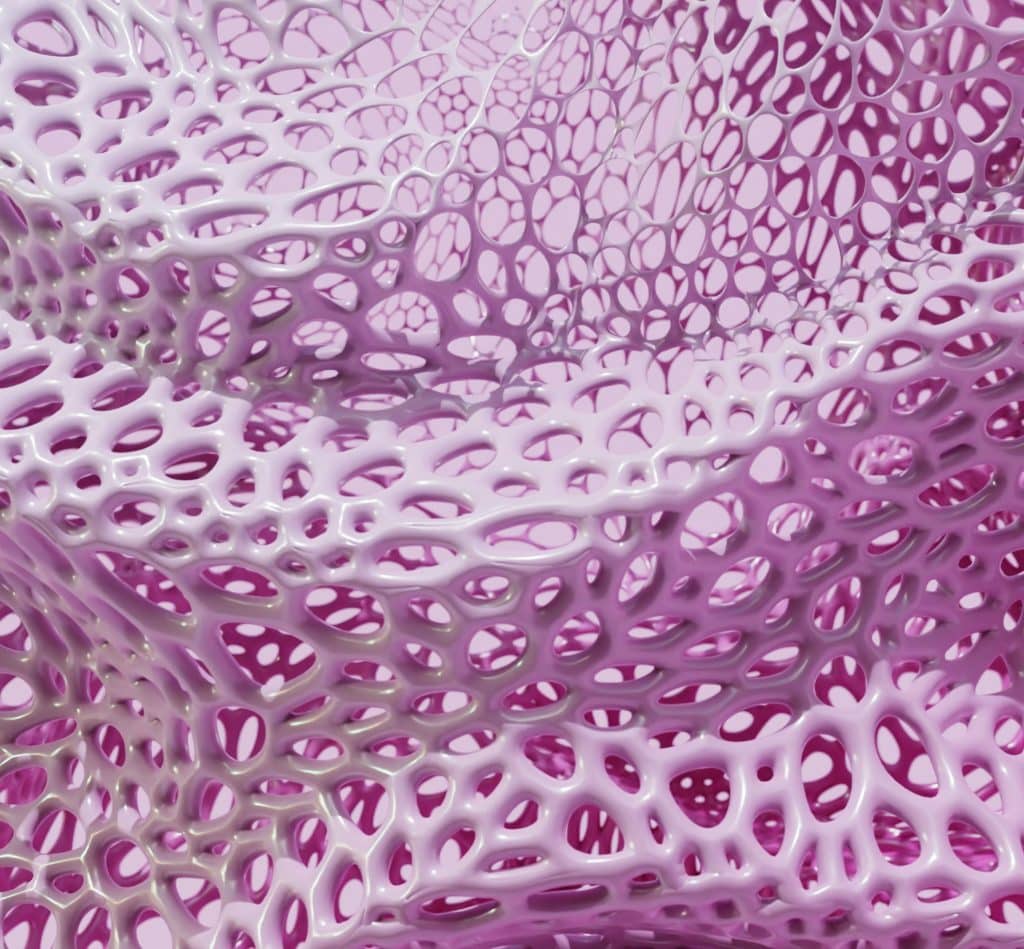
Fascia is the connective tissue web that wraps around muscles, organs, nerves, and bones. It is continuous throughout the entire body. It holds structure. It transmits force. It communicates tension.
And it responds to stress.
When someone lives in chronic stress — emotional or physical — fascia can become less elastic and less hydrated. Instead of gliding smoothly, it stiffens. Instead of distributing load evenly, it holds tension patterns.
This is why pain doesn’t always stay localized. Tightness in the hips can affect the back. Jaw tension can influence the neck. Fascia connects everything.
Fluid plays a critical role here.
Healthy fascia relies on fluid movement. Hydration and circulation allow tissues to glide and adapt. When stress keeps the nervous system activated, circulation shifts toward survival priorities. Peripheral tissues may receive less flow. Over time, this can contribute to stiffness and restricted sensation.
Low-frequency vibration introduces gentle movement back into that system.
In vibroacoustic therapy — particularly in the 40–75 Hz range used for pain-focused sessions — vibration moves through tissue in waves. It stimulates mechanoreceptors and encourages subtle fluid movement. It provides rhythm where there has been holding.
Research on vibration therapy and low-frequency stimulation suggests potential benefits including improved circulation, muscle relaxation, and decreased pain perception. While the field continues to grow, clinically we see consistent patterns:
When tissue receives safe, rhythmic stimulation, it softens.
And when fascia softens, pain often decreases.
But fascia is not separate from the nervous system.
Fascia contains nerve endings. It communicates tension. It responds to stress signals. That means addressing fascia without addressing regulation is incomplete.
This is why frequency matters.
Low-frequency vibration doesn’t just move tissue. It supports parasympathetic activation. It signals safety. It reduces the protective bracing that keeps fascia tight in the first place.
Pain relief is rarely about forcing tissue to release.
It’s about giving the body enough safety to stop guarding.
When fluid moves and the nervous system downshifts, something changes. Posture improves. Breath deepens. The body feels less rigid and more adaptable.
That adaptability is health.
Chronic pain often reflects a system that has lost flexibility — physically and neurologically. Frequency reintroduces rhythm. Rhythm restores flow.
And flow changes everything.
A Gentle Invitation
If you’re in Arvada, Colorado and exploring a different approach to chronic pain, consider the role of fascia, fluid, and nervous system regulation.
At True You Collective, our vibroacoustic therapy sessions use targeted low-frequency blends to support tissue softening and regulatory balance.
Learn more here:
https://trueyoucollective.com/services/
Sometimes pain relief isn’t about pushing harder.
It’s about restoring flow.
💙✨ #TrueYouCollectiveColorado #FasciaAndChronicPain #VibroacousticTherapy #LowFrequencyHealing #NervousSystemRegulation #Entrainment #SomaticHealing #ArvadaColorado #FrequencyHealing