But here’s the wild truth:
Your body uses the exact same physiological signal for excitement as it does for fear.
That flutter in your stomach before a first date?
Butterflies.
That same flutter before a difficult conversation?
Anxiety.
The tightness before you get on a roller coaster?
We call it thrilling.
The tightness before walking into work on Monday?
We call it dread.
The body doesn’t label these sensations.
We do.
And most of us learned to label them through fear, not curiosity.
So What Actually Is Anxiety?
Modern research shows anxiety is not an emotion — it’s an activation state.
A surge of energy.
A readiness signal.
A biochemical cocktail preparing you for movement, action, response, or connection.
Your nervous system sends the same physiological cues for:
- excitement
- anticipation
- nervousness
- fear
- passion
- creativity
- falling in love
- stepping into something new
The body simply says:
“Something is happening. Pay attention.”
Anxiety becomes a problem when the signal gets looped into threat interpretation, not when it appears.
In other words:
Anxiety isn’t the issue.
Your relationship to the sensation is the issue.
The Gut Sensation: The First Place Anxiety Speaks
People often describe anxiety as “a pit in my stomach,” “butterflies,” “tightness,” or “nausea.”
This isn’t random.
Your gut has more neurons than your spinal cord.
It’s the nervous system’s messenger center.
When the gut feels something, the whole body listens.
But that sensation isn’t inherently negative.
It’s the same sensation you feel when:
- you’re about to start something meaningful
- you’re about to kiss someone for the first time
- you’re stepping on stage
- you’re saying yes to something big
- you’re meeting someone who awakens something inside you
We celebrate the feeling when we want the outcome.
We fear the feeling when we don’t understand it.
But the sensation itself has not changed.
The Nervous System Doesn’t Tell Stories — We Do
Your body is ancient.
It knows danger.
But it also knows awakening.
Anxiety is just activation without direction.
It’s your nervous system saying:
“Energy is rising.
Life is moving.
Something is shifting.”
But your mind can take that neutral activation and turn it into:
- fear
- spiraling thoughts
- “what ifs”
- self-doubt
- worst-case scenarios
This is where anxiety becomes overwhelming—not because the body is wrong, but because the story we attach to it is.
So Why Can We Laugh at Anxiety Sometimes?
Because laughter is what happens when the truth slips through.
Laughter interrupts the fear narrative.
It creates a physiological reset.
It signals safety.
It returns you to presence instead of prediction.
You’ve had those moments:
When anxiety feels so ridiculous, so dramatic, so inflated that the only response is to laugh.
That laugh isn’t dismissing your experience —
it’s your nervous system remembering that the story wasn’t real.
It’s the body saying:
“Oh… we’re safe.
We’re okay.
The threat was imagined, not lived.”
Laughter is a natural regulator.
It drops cortisol.
It increases vagal tone.
It shifts the entire emotional landscape in seconds.
Sometimes the quickest way out of anxiety is letting the absurdity of it be seen.
Butterflies Become Anxiety When We Resist the Sensation
When you’re falling in love, that flutter feels magical.
When you’re walking into something unfamiliar, that flutter feels threatening.
The sensation is identical.
The interpretation is not.
This is why some people’s lives shrink around anxiety:
They stop trusting the body’s signals.
They stop exploring.
They avoid unknowns.
They brace against any internal movement.
And here’s the paradox:
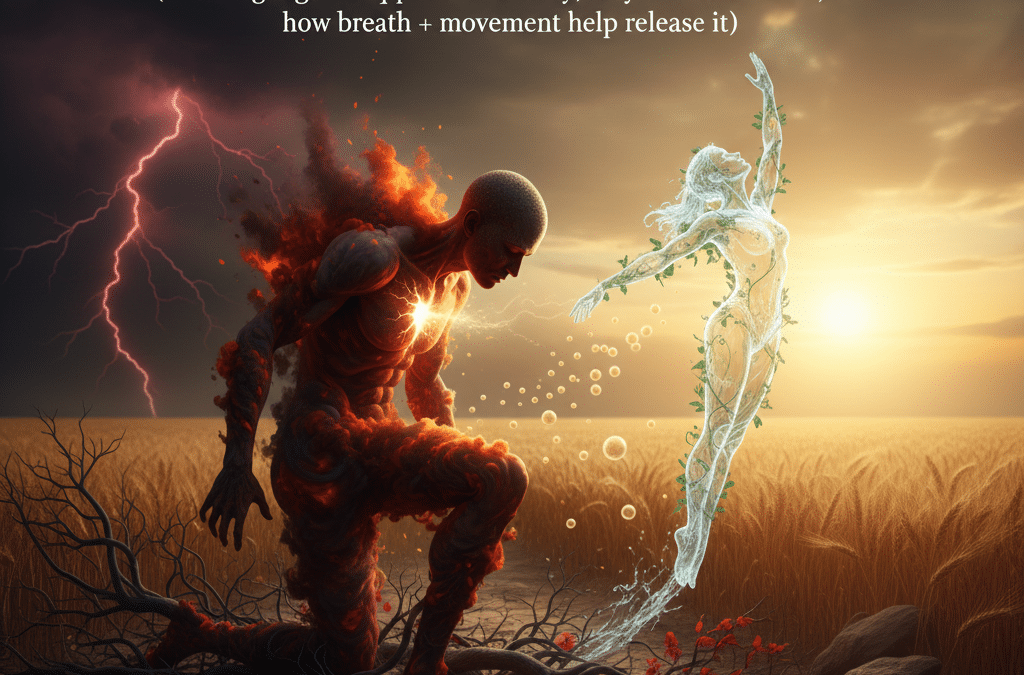
When you fight the sensation, it grows.
When you breathe into it, it softens.
When you move with it, it releases.
A Nervous System Reframe: Anxiety as Aliveness
What if anxiety wasn’t a problem?
What if it was just your life-force waking up?
What if that flip in your stomach was a reminder that you’re about to do something brave, meaningful, or aligned?
What if the flutter wasn’t danger —
but your soul knocking?
When we stop pathologizing sensation,
we start reclaiming power.
How to Work With the Sensation Instead of Against It
1. Breathe Low and Slow
Butterflies pull energy upward.
Bring it back down.
Hand on belly.
Inhale for 4.
Exhale for 6–8.
Your vagus nerve reads this as safety.
2. Move the Body So the Energy Has Somewhere to Go
Anxiety is often trapped movement.
Try:
- walking
- shaking your arms
- hip circles
- humming
- stretching your side body
- rocking gently
Movement metabolizes activation.
3. Ask: “Is this fear… or is this expansion?”
Often, the answer surprises you.
4. Let Yourself Laugh When It Feels Like Too Much
It’s not disrespectful.
It’s liberation.
It’s your body remembering it isn’t actually dying.
5. Support Regulation Through Sound + Light
This is where the nervous system responds most deeply:
- Vibroacoustic sound calms activation patterns
- Red light therapy decreases stress hormones
- Infrared heat eases tension and grounds the body
Your system can’t panic and relax simultaneously.
These modalities help it choose peace.
Anxiety Is a Signal, Not a Sentence
You get to decide what it means.
You can fear it.
Or you can breathe with it.
Laugh with it.
Move with it.
Listen to it.
Transform with it.
Anxiety isn’t the enemy.
It’s a messenger reminding you that you are alive, sensing, shifting, and capable of more than your fear-led stories want you to believe.
Your nervous system speaks first.
Your interpretation comes second.
When you learn to trust the body’s language,
your entire life opens.