The body can carry stress long after the meeting ends, the grief softens, or the pain flare passes. Tight shoulders, restless sleep, a low mood, and the feeling that your system never fully powers down can all be signals that you need more support, not more pressure. This guide to red light therapy benefits explains where this gentle technology may fit into a fuller practice of restoration.
Red light therapy is not a cure-all, and it does not replace appropriate medical care. But for people looking for a non-invasive way to support recovery, skin health, comfort, and consistent self-care, it can be a meaningful part of the path back to feeling more like themselves.
A Guide to Red Light Therapy Benefits and How It Works
Red light therapy, also called photobiomodulation, uses specific wavelengths of red and near-infrared light. Unlike ultraviolet light, these wavelengths do not tan or burn the skin. Red light works closer to the surface, while near-infrared light reaches more deeply into tissue.
At the cellular level, light energy is absorbed by structures involved in energy production. Researchers are studying how this process may support cellular function, circulation, and the body’s natural repair processes. That is why red light therapy is often used to support concerns such as temporary muscle soreness, joint stiffness, the appearance of skin, and recovery after physical activity.
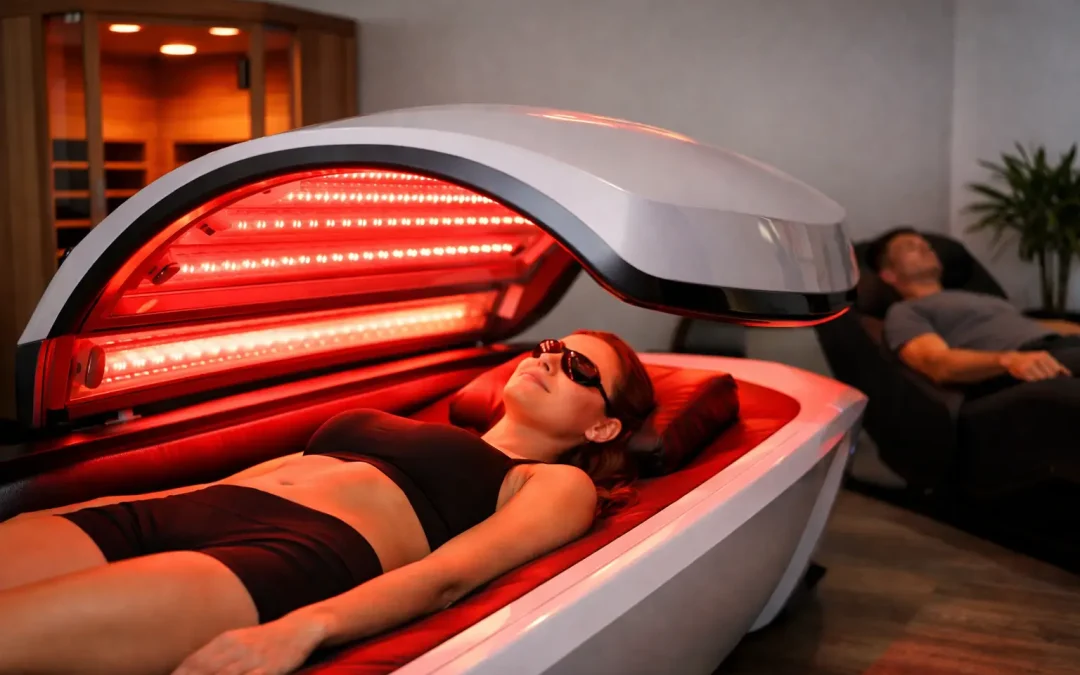
The experience itself is simple. You rest near a professional-grade light panel for a set amount of time, usually with skin exposed in the area being treated. There is no downtime, no needles, and no need to push through discomfort. Most people describe it as quiet, warm, and surprisingly grounding.
Benefits People Commonly Seek
The most useful way to approach red light therapy is not as a promise, but as a supportive input. Your sleep, movement, nutrition, stress load, health history, and consistency all shape what you may notice.
Support for muscle comfort and recovery
If your body feels heavy after training, long workdays, caregiving, or simply living with persistent tension, red and near-infrared light may help support recovery. Some research suggests photobiomodulation can help with temporary pain, muscle fatigue, and inflammation-related discomfort in certain contexts.
That does not mean one session can erase chronic pain. Chronic discomfort is often layered, involving injury history, stress, sleep, movement patterns, and nervous system sensitivity. Still, people may find that regular sessions give their body a calmer starting point for movement, rest, and other healing practices.
Skin health and a more supported glow
Red light therapy is frequently used for its potential to support collagen production and the overall appearance of skin. With repeated use, some people seek it to soften the look of fine lines, support a more even-looking complexion, or help skin feel healthier and more resilient.
Results are gradual. Skin changes happen over weeks and months, not overnight, and they depend on the device, wavelength, treatment plan, skincare routine, sun exposure, and individual biology. Think of red light as one steady layer of care, not a substitute for sun protection or professional dermatologic guidance when you need it.
A gentler ritual for stress and emotional fatigue
Red light is not a stand-alone treatment for anxiety, depression, grief, or trauma. Yet the ritual of stepping into a quiet room, lying down, and allowing your body to receive care can have real value. When life has trained you to stay braced, even 15 to 20 minutes of stillness can feel like a practice in permission.
At True You Collective, we view this through a nervous system-first lens. The light itself may support physical recovery, while the intentional pause gives your system an opportunity to shift out of constant doing. For some people, that is where the deeper benefit begins: not in forcing calm, but in creating conditions where calm has room to return.
Support for sleep routines
Many people use red light therapy as part of an evening wind-down routine because it is a low-stimulation form of self-care. Red light is also different from the bright blue-rich light emitted by many screens, which can interfere with the body’s natural sleep-wake rhythm when used late at night.
This does not mean a red light session will solve insomnia. Sleep disruptions can have medical, hormonal, emotional, environmental, and behavioral causes. But pairing a session with dimmer evening lighting, a consistent bedtime, and a few minutes away from notifications can help create a more supportive transition toward rest.
What Red Light Therapy Cannot Do
Clear expectations protect your energy, your wallet, and your trust in the process. Red light therapy should not be presented as a guaranteed treatment for every condition, nor should it be used to delay care for severe, worsening, or unexplained symptoms.
It is also not automatically the best first choice for everyone. If you are managing a diagnosed medical condition, have a history of light sensitivity, take medications that increase photosensitivity, are pregnant, or are receiving treatment for cancer or an eye condition, speak with your physician or qualified healthcare provider first. Professional guidance matters.
The quality of the device and the treatment plan matter, too. Wavelengths, irradiance, distance from the panel, session length, and frequency all affect the dose you receive. More is not always better. Excessively long or frequent sessions are unlikely to speed results and may irritate sensitive skin.
How to Make Red Light Therapy Part of a Healing Rhythm
Consistency tends to matter more than intensity. A practitioner can help you choose a schedule based on your goals, whether you are focused on post-workout recovery, skin support, persistent tension, or creating a reliable reset in a demanding season.
Before your session, arrive hydrated and wear clothing that allows access to the area you want to treat. Clean, product-free skin is often ideal, especially when using light for facial skin support. Follow the center’s eye-protection guidance and treatment instructions, rather than assuming every panel or protocol is the same.
Afterward, pay attention without overanalyzing. Notice your comfort level, energy, skin response, sleep quality, and how your body feels over several weeks. A simple note on your phone can help you see patterns that are easy to miss in the rush of daily life.
Red light therapy often works best when it is paired with other regulating practices. Gentle movement can support circulation. Breathwork can help you notice where you are holding tension. Heat, sound, vibration, and quiet can each offer different pathways into rest. No single modality has to carry the entire weight of your healing.
Red Light Therapy and Nervous System Regulation
There is a difference between treating a body like a problem to fix and meeting it as a system asking for safety, energy, and support. Red light therapy can be one piece of that support, especially when physical discomfort and stress are feeding each other.
When you hurt, sleep poorly, or run on adrenaline for too long, your capacity for regulation can shrink. Creating repeated experiences of comfort and rest may help you rebuild a relationship with your body that feels less adversarial. That is not about bypassing difficult emotions or pretending life is easy. It is about giving your system more resources to meet what is real.
For those in Arvada and the greater Denver area who have tried to think their way out of burnout, a light session can offer something more embodied: time to stop performing wellness and simply receive it.
Your body does not need to earn restoration. Start with one intentional session, listen to what shifts, and allow consistency to become a quiet reminder that your body remembers how to heal.