When your body is still exhausted after a full night of sleep, when a small stressor feels enormous, or when pain and tension seem to have no off switch, willpower is rarely the missing piece. Your nervous system may be working overtime to protect you. The best therapies for nervous system healing help your body receive a different message: you are safe enough to soften, rest, and repair.
That does not mean life suddenly becomes quiet or easy. Nervous system healing is not about never feeling stress. It is about building the capacity to meet stress without staying trapped in survival mode long after the moment has passed. For many people, that process is more effective when care reaches the body, not just the mind.
What nervous system healing actually means
Your nervous system constantly scans your internal and external environment. It adjusts your heart rate, muscle tension, breathing, digestion, sleep, focus, and emotional responses based on what it perceives. A demanding job, chronic pain, caregiving, grief, illness, poor sleep, trauma, and years of simply pushing through can leave this system stuck in a high-alert pattern.
This can look like anxiety, irritability, brain fog, shallow sleep, digestive changes, headaches, fatigue, emotional numbness, or a body that feels tense even during downtime. These experiences deserve compassionate attention, not a label of being “too sensitive.” They can be signs that your system has had to carry too much for too long.
Healing supports regulation: the ability to shift between activation and restoration with more ease. It is often built through repetition. A single session may create a meaningful moment of calm, but consistent experiences of safety give the body more opportunities to remember a steadier baseline.
The best therapies for nervous system healing work through the body
There is no one best treatment for every person. The most supportive path depends on your health history, current stress load, sensory preferences, budget, and what your body responds to. Some people need quiet stillness. Others regulate more easily through sound, heat, movement, or skilled therapeutic support.
The therapies below are not meant to replace medical or mental health care. If you are experiencing severe depression, thoughts of harming yourself, new or worsening neurological symptoms, chest pain, or other urgent concerns, seek appropriate medical support right away. For ongoing symptoms, a qualified healthcare professional can help you understand what else may be contributing.
Vibroacoustic therapy: sound you can feel
Vibroacoustic therapy uses low-frequency sound vibrations delivered through a specialized sound lounge or table, usually paired with music and a restful environment. You do not need to perform, process, or explain anything. You simply lie back while sound becomes a physical sensation moving through the body.
This matters because the nervous system responds to more than thoughts. Gentle, predictable sensory input can help create conditions for downshifting. The process is often described through entrainment, where rhythmic vibration and sound may encourage the body to settle into a calmer rhythm. Many clients describe feeling deeply grounded, sleepy in the best way, emotionally lighter, or more at home in their bodies afterward.
Research into vibroacoustic therapy is still developing, but studies and clinical use point to potential benefits for relaxation, stress, pain perception, mood, and quality of life in certain settings. It is not a cure-all, and results vary. Its particular strength is that it offers an embodied experience of rest for people who struggle to meditate, have trouble turning off their thoughts, or feel disconnected from their bodies.
For nervous system support, repetition matters. Regular vibroacoustic sessions can become a dedicated practice of receiving regulation rather than trying to force it. At True You Collective, this is a central part of the approach because it meets the whole person through vibration, sound, stillness, and care.
Red light therapy: supportive light for cellular recovery
Red light therapy uses specific wavelengths of red and near-infrared light intended to support cellular energy processes. It is commonly used in wellness settings for skin health, recovery, inflammation support, and discomfort related to muscles and joints. For a taxed nervous system, its value is often indirect but meaningful: when the body feels less depleted or physically uncomfortable, it may have more room to rest.
A session can feel simple and quiet. There is no effort required, which is part of the appeal for someone whose days already demand constant output. Evidence is stronger for some uses than others, so it is wise to have realistic expectations and consider red light as one supportive piece of a wider care plan rather than a stand-alone answer.
People with certain conditions, medications, or light sensitivities should check with their medical provider before beginning. Thoughtful wellness is never about doing more at all costs. It is about choosing what truly supports your system.
Infrared sauna: warmth, circulation, and a pause from urgency
Infrared sauna sessions use infrared heat to gently warm the body. Many people find that heat helps muscles release, invites slower breathing, and creates a rare pocket of uninterrupted stillness. That shift can be especially welcome when your nervous system has been bracing all day.
The benefits are partly physical and partly experiential. Warmth may support circulation and temporary relief from muscle tension, while the ritual of stepping away from noise, screens, and responsibilities can signal that rest is allowed. Hydration matters, and sauna is not appropriate for everyone. If you are pregnant, have cardiovascular concerns, are prone to fainting, or have a health condition affected by heat, consult your provider first.
The goal is not to sweat your way out of stress. It is to use warmth wisely as a cue for restoration.
Integrated sessions: when your system needs more than one input
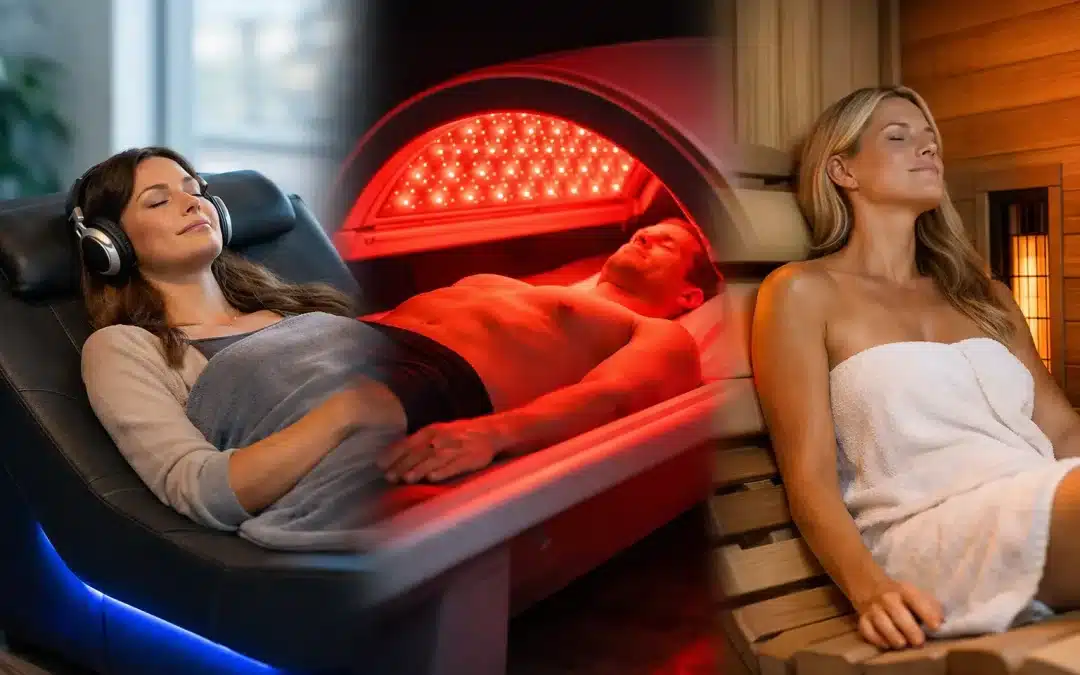
Sometimes the most powerful care is layered. Light, vibration, sound, and heat each offer a different sensory pathway into rest. Combined intentionally, they can create a fuller experience for someone who feels worn down, overstimulated, disconnected, or unable to access calm through talk-based practices alone.
An Immersion Reboot™ session brings multiple modalities together in one dedicated experience. Rather than asking the mind to solve everything, it creates space for the body to receive gentle, supportive input from several directions. This can be especially helpful during seasons of burnout, grief, chronic stress, emotional overload, or recovery from prolonged pain.
Integration does not always mean intensity. For a highly sensitive or depleted system, starting with shorter, quieter sessions may be the better choice. More is not automatically better. The right pace is one your body can absorb.
Pair therapy with daily signals of safety
Professional wellness therapies can be deeply supportive, but their effect becomes even more meaningful when everyday life includes small moments of regulation. Think less about adding another demanding routine and more about changing the signals your body receives throughout the day.
A few minutes of morning sunlight, a slower exhale before a difficult meeting, a protein-rich meal, a walk without your phone, gentle stretching, meaningful connection, and a consistent wind-down ritual can all help. These are not replacements for care when you need it. They are ways to reinforce the message that your body does not have to remain on guard every minute.
Notice which practices leave you feeling more present afterward, not merely distracted in the moment. Numbing out and regulating can look similar at first, but regulation tends to leave you clearer, softer, and better able to respond to what is in front of you.
How to choose the right starting point
Start with the experience you most need. If you feel mentally busy and physically braced, vibroacoustic therapy may offer a gentle entry point because it asks nothing of you except receptivity. If soreness, recovery, or inflammation are part of the picture, red light or infrared heat may complement your broader plan. If you feel like you need a full reset, an integrated session can provide a more immersive container.
Then give your choice enough consistency to learn from it. One session can tell you whether a modality feels safe and supportive. A series of sessions may reveal whether it is helping your sleep, mood, pain levels, energy, or ability to recover after stress. Keep the question simple: do I feel more like myself over time?
Your body is not broken for needing support. It is adaptive, intelligent, and always responding to the conditions around it. With the right care, repeated gently and received without pressure, it can begin to remember a truth that burnout often makes hard to feel: healing does not have to be forced. Sometimes it begins when your system finally has permission to rest.