
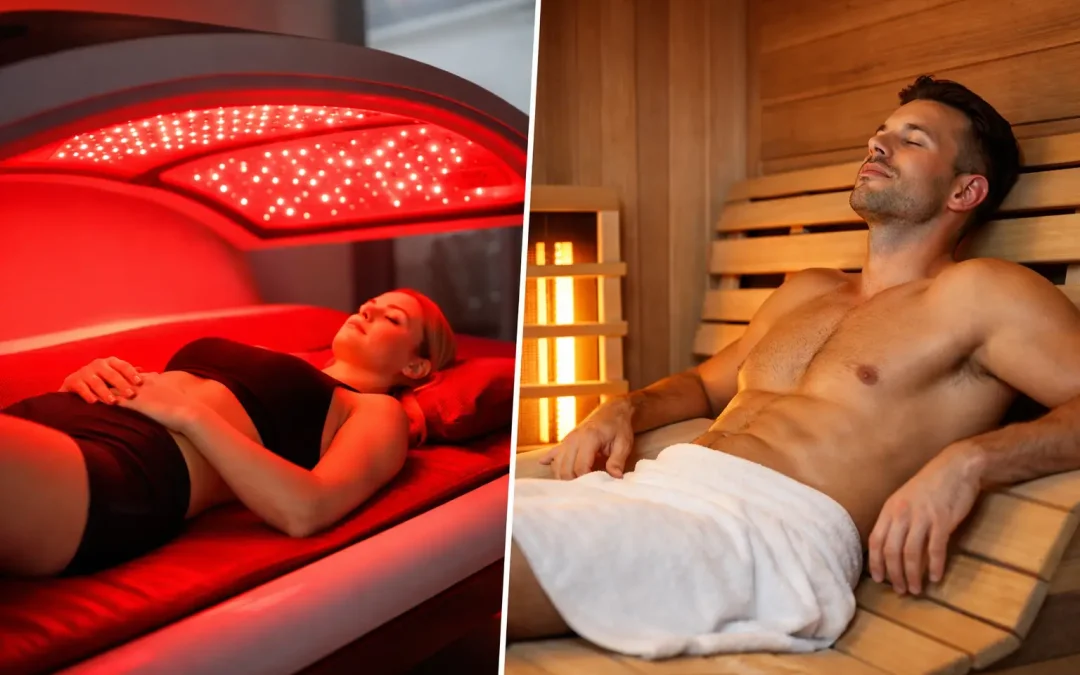
When your body feels wired and tired at the same time, the question usually is not which wellness trend is popular. It is which support will actually help you feel like yourself again. In the conversation around red light therapy vs infrared sauna, both can be powerful, but they work differently in the body and create different healing experiences.
For some people, red light therapy feels like a gentle cellular reset. For others, an infrared sauna session offers the deeper exhale their system has been craving. If you are dealing with chronic stress, inflammation, pain, poor sleep, burnout, or that hard-to-describe sense of being out of rhythm, understanding the difference matters.
Red light therapy vs infrared sauna: what is the difference?
Red light therapy uses specific wavelengths of red and near-infrared light to support cellular function. Rather than heating the entire body, it delivers light energy that is absorbed by the skin and tissues. This can support mitochondrial activity, circulation, tissue repair, and inflammation balance. The experience is usually calm, quiet, and non-strenuous.
Infrared sauna uses infrared heat to warm the body more directly than a traditional sauna. Instead of only heating the air around you, infrared waves penetrate the body and raise your internal temperature more gradually. This creates a full-body heat response that often leads to sweating, muscle relaxation, increased circulation, and a sense of release.
That means the core difference is simple. Red light therapy is primarily a light-based cellular support. Infrared sauna is primarily a heat-based whole-body experience. Both can support healing, but they do not ask the same thing of your nervous system.
How each one feels in the body
This is where the choice often becomes clearer.
Red light therapy tends to feel nourishing and easy to receive. You sit or lie down under the light, and the body absorbs the wavelengths without the challenge of intense heat. For people who are already overstimulated, exhausted, sensitive, or dysregulated, that gentler input can feel more accessible. There is less effort involved. Your system does not have to push through discomfort to get the benefit.
Infrared sauna is more immersive. Heat can feel deeply comforting, especially if your body holds tension or your mind struggles to slow down. Many people leave feeling looser, lighter, and mentally clearer. But heat is also a stressor, even when it is a beneficial one. A regulated nervous system may love that kind of challenge. A depleted or highly sensitive system may need a more gradual approach.
This is why the best choice is not always the modality with the longest list of benefits. It is often the one your body can receive safely and consistently.
Red light therapy vs infrared sauna for pain and inflammation
If pain and inflammation are part of your daily life, both modalities may help, but in different ways.
Red light therapy is often chosen for targeted support. If your pain is connected to joints, soft tissue irritation, recovery, or localized inflammation, the cellular support from red and near-infrared light may be especially useful. It can be a good fit for people who want relief without a physically demanding session. The effect is often subtle at first, then cumulative over time.
Infrared sauna can be especially supportive when pain is tied to stiffness, muscle tension, sluggish circulation, or the kind of body armoring that happens under prolonged stress. Heat helps tissues soften. It can invite the body into a parasympathetic state where guarding starts to ease. For some people, that reduction in tension is what finally creates space for pain relief.
If your pain is both physical and stress-related, the answer may not be either-or. It may depend on whether your body needs targeted repair, full-body relaxation, or a combination over time.
Which is better for stress, burnout, and nervous system support?
This is where nuance matters most.
Burnout is not just fatigue. It is often a nervous system problem first. You may feel exhausted, but still unable to fully rest. You may have inflammation, poor sleep, anxiety, brain fog, tension, and emotional numbness all at once. In that state, healing has to feel safe enough for the body to receive.
Red light therapy can be a beautiful place to begin because it is low demand. There is no intense thermal load, no need to tolerate sweating, and no sense of pushing your system to perform. For people who are fried, overstimulated, grieving, or running on empty, that matters. Sometimes the body needs soft support before it can tolerate stronger inputs.
Infrared sauna can also be deeply regulating, especially for people who feel stuck, contracted, cold, tense, or unable to drop into rest. Heat can help interrupt the pattern of bracing. It gives the body a clear sensory cue to soften. But if someone is already depleted, dehydrated, heat-sensitive, or prone to feeling overwhelmed, sauna may need to be approached slowly.
At True You Collective, this is part of the larger philosophy behind nervous system-first care. Science meets soul when we stop asking only what a modality does and start asking what your body is ready for. Your body remembers how to heal, but it often heals best through the right level of support, not the most intense one.
What red light therapy does especially well
Red light therapy tends to shine in situations where gentle, consistent, cellular support is the goal. It can be a strong option for skin health, recovery, inflammation support, fatigue, and localized discomfort. It also works well for people who want a treatment that feels calm rather than effortful.
There is another advantage that often gets overlooked. Because red light therapy does not rely on high heat, some people can tolerate it more regularly. That consistency matters. Healing is rarely about one dramatic session. More often, it comes through repetition, regulation, and giving the body enough safety to shift patterns over time.
For clients who are sensitive, in active stress, or rebuilding after a long stretch of dysregulation, red light therapy can feel like a grounded reintroduction to support.
What infrared sauna does especially well
Infrared sauna is often the stronger choice when your body is craving heat, circulation, and a more obvious physical release. Many people use it for muscle recovery, tension relief, sweating, stress reduction, and that post-session feeling of heaviness lifting out of the system.
It can also become a ritual of pause. Sitting in heat asks you to stop. To breathe. To let the body move from guarding to yielding. For high-performing adults, caregivers, first responders, and anyone who has spent too long overriding their own signals, that pause can be meaningful.
Still, sauna is not automatically better because it feels more intense. If a session leaves you drained instead of restored, your body may be telling you it needs a different pace.
How to choose between red light therapy and infrared sauna
A simple way to decide is to ask what your body needs most right now.
If you want gentle support for inflammation, recovery, skin, fatigue, or localized pain, red light therapy may be the better fit. If you want full-body warmth, sweating, muscle relaxation, and a stronger sense of physical release, infrared sauna may serve you better.
If your nervous system feels fragile, highly reactive, or deeply depleted, starting with the less demanding option often makes sense. If you feel stagnant, tense, and able to tolerate heat well, sauna may feel relieving faster.
And if you are not sure, that uncertainty is valid. Healing is not one-size-fits-all. The best modality is the one that meets you where you are, not where you think you should be.
Can you do both?
Yes, and for many people the real answer is integration.
Red light therapy and infrared sauna can complement each other because they support the body through different mechanisms. One offers light-based cellular nourishment. The other offers heat-based circulation and release. Together, they can create a more layered healing response than either one alone.
That said, more is not always better. If your system is sensitive, stack carefully. Pay attention to hydration, recovery, and how you feel later that day and the next morning. The goal is not to collect modalities. It is to help your body recalibrate.
For some people, combining supportive therapies over time can create a deeper sense of entrainment, where the body begins to remember a steadier internal rhythm. That is often when changes in sleep, mood, pain, and resilience start to become more noticeable.
If you are choosing between red light therapy and infrared sauna, try not to think in terms of which one wins. Think in terms of what kind of healing experience your body can actually receive right now. Sometimes that is the quiet precision of light. Sometimes it is the full-body exhale of heat. Sometimes it is both, in the right season, in the right sequence, with enough care for your nervous system to feel safe coming back home to itself.