When your body feels wired, tired, heavy, or emotionally overloaded, more information is rarely the answer. What often helps first is a felt sense of safety. That is where light sound vibration healing can be so powerful. Instead of asking your mind to force calm, it works through the body, giving your nervous system rhythmic, sensory cues that support regulation, rest, and repair.
For many people, stress does not stay in the mind. It settles into sleep issues, chronic tension, inflammation, burnout, shallow breathing, mood shifts, and a constant feeling of being “on.” You can know all the right things to do and still feel stuck. That does not mean your body is broken. It usually means your system has been carrying too much for too long and needs the right conditions to recalibrate.
What is light sound vibration healing?
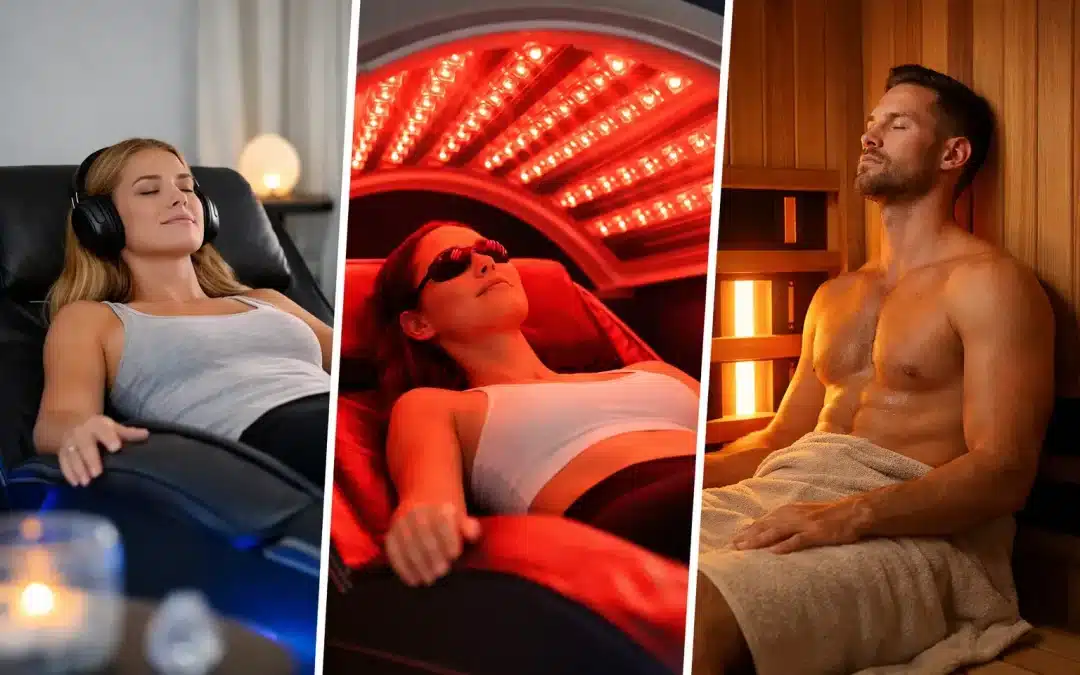
Light sound vibration healing is an umbrella term for therapeutic experiences that use specific frequencies and sensory input to help the body shift out of survival mode. Depending on the setting, this may include red light therapy, vibroacoustic therapy, sound-based relaxation, and heat-supported recovery such as infrared sauna sessions.
The common thread is not just relaxation for relaxation’s sake. The deeper goal is nervous system regulation. When the body receives consistent, non-invasive signals of safety and support, it can begin to soften protective patterns that were once necessary but are now exhausting. This is where science meets soul. The technology creates measurable input, and the body responds in deeply personal ways.
In practical terms, light supports cellular energy and recovery, sound provides auditory rhythm that can quiet mental noise, and vibration offers a physical frequency the body can feel. Heat can further enhance circulation, release tension, and encourage a sense of letting go. Together, these inputs can create a more complete full-body experience than any one modality on its own.
Why the nervous system matters in light sound vibration healing
If you are dealing with stress, pain, fatigue, poor sleep, emotional overwhelm, or burnout, the nervous system is not a side note. It is often the foundation. A dysregulated nervous system can keep the body in patterns of hypervigilance, shutdown, or instability, even when you are trying to rest.
This is why symptom-chasing can feel frustrating. You might address sleep, digestion, tension, or mood one at a time and still not feel like yourself. Regulation works differently. It starts at the level of how safe, adaptable, and responsive your system feels from moment to moment.
Light sound vibration healing supports this by giving the body repeated opportunities to experience a different state. That matters because healing is often less about one dramatic breakthrough and more about repetition. The nervous system learns through pattern. When it meets calming, organizing input again and again, it begins to remember another way of being.
The role of entrainment
One of the most helpful concepts here is entrainment. In simple terms, entrainment is the process by which one rhythm helps another rhythm synchronize. This is especially relevant in vibroacoustic therapy, where carefully selected sound frequencies are translated into gentle vibrations the body can feel.
When the body is in a chaotic or stressed state, rhythm can be organizing. The breath slows. Muscles begin to release. The mind may become less busy. For some people, this feels deeply meditative. For others, it feels like the first real exhale they have taken in months.
That said, the experience is not always dramatic. Sometimes the first sign of regulation is subtle. You sleep more deeply that night. Your shoulders drop. Your pain intensity shifts from sharp to manageable. You feel emotionally steadier in situations that usually overwhelm you. These quieter changes matter because they often signal that the body is starting to trust again.
What each modality brings to the experience
Vibroacoustic therapy is often the most direct expression of sound and vibration working together. The body rests on a surface that delivers therapeutic vibration while sound frequencies help guide the experience. This can support relaxation, tension relief, pain reduction, and nervous system settling. For people who struggle to meditate or “turn off” their thoughts, this can feel much more accessible because the body has something tangible to follow.
Red light therapy works differently, but it complements this process well. It uses targeted wavelengths of light to support cellular function, tissue recovery, and inflammation response. While it may not create the same immediate sensory experience as vibration, it can contribute to the deeper repair side of healing. People often seek it for skin support, soreness, recovery, and low energy, but its value goes beyond surface-level benefits.
Infrared sauna adds another layer. Heat can help increase circulation, support detox pathways, and create a strong sense of physical release. Many people find that heat helps them drop into their body more fully, especially if they have been carrying stress in a guarded, contracted way. It is not the right fit for every person on every day, but when well-timed, it can be deeply restorative.
Combined sessions can be especially effective because they meet the body through multiple pathways at once. In some cases, a layered experience allows the nervous system to settle more quickly than it would with a single modality alone. This is part of why immersive, multi-modality sessions can feel like a full-body reset rather than a temporary break.
What light sound vibration healing can help with
People are often drawn to these therapies because something in them knows they need relief, even if they cannot fully explain what is off. The most common reasons include chronic stress, emotional fatigue, poor sleep, pain, inflammation, burnout, grief, anxiety, and a general sense of disconnection from self.
This work can also be supportive for high-performing people who are used to pushing through. Executives, caregivers, first responders, and wellness-minded adults often spend so much energy managing life that they lose touch with what restoration actually feels like. A regulated nervous system does not make life perfect. It helps you meet life with more steadiness, clarity, and capacity.
Still, there is nuance here. No single modality is a cure-all, and results can vary depending on your stress load, consistency, health history, and the kind of support your body responds to best. Some people feel a shift immediately. Others need regular sessions before their system stops bracing against rest. Both experiences are normal.
What a session may feel like
Most people expect healing to feel active or effortful. With this approach, the shift often happens when effort softens. During a session, you may notice warmth, gentle pulsing, a floating sensation, emotional release, or an unusual level of stillness. You might drift into a dreamlike state while staying aware of your body.
Sometimes the body uses that space to process. That can mean tears, deep breaths, digestive sounds, temperature changes, or unexpected fatigue afterward. None of that necessarily means something is wrong. It may simply reflect that your system has enough safety to unwind.
It is also possible to feel very little at first. If your body has been in survival mode for a long time, receiving can take practice. Regulation is a relationship, not a performance.
Is light sound vibration healing right for everyone?
This kind of care is appealing because it is non-invasive and deeply supportive, but it is not one-size-fits-all. Your needs, sensitivity level, goals, and current capacity all matter. Some people do best with gentle, shorter sessions at first. Others are ready for more immersive experiences that combine multiple modalities.
If you are highly sensitive, exhausted, or healing from prolonged stress, slower may actually be better. More intensity does not always equal better results. The nervous system tends to respond best when it feels met, not pushed.
That is why practitioner guidance matters. A thoughtful approach can help you choose the right cadence, whether you need a single restorative session, a consistent rhythm of care, or a more comprehensive reboot experience. In a place like True You Collective, the focus is not just on feeling better for an hour. It is on helping your body build a new baseline over time.
Healing does not always begin with doing more. Sometimes it begins when your body finally receives the message that it is safe enough to let go, soften, and remember its own wisdom.