
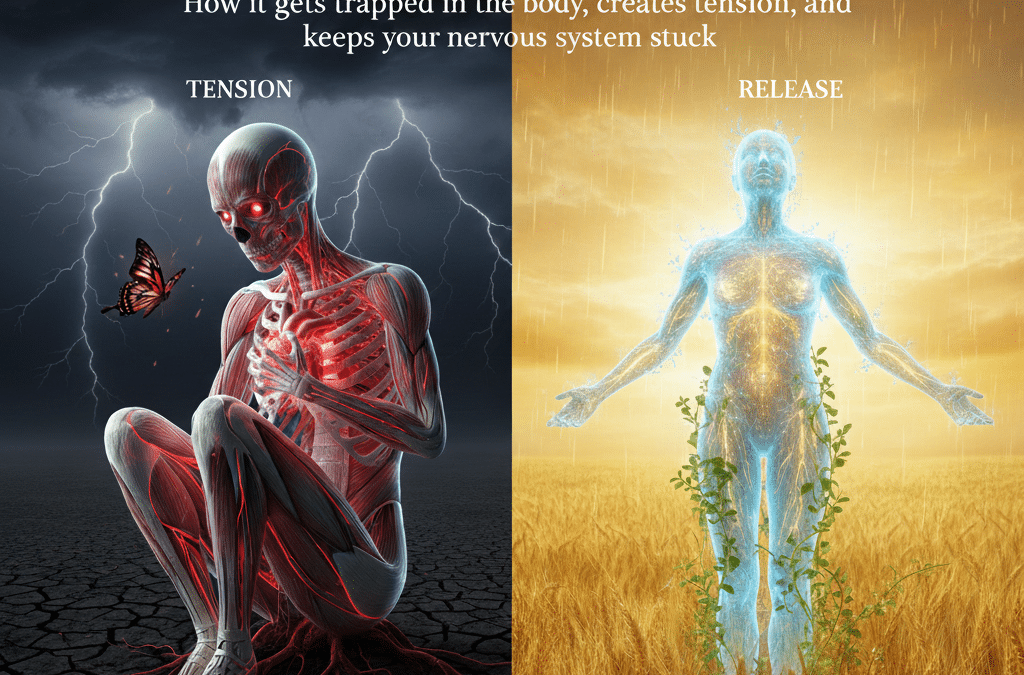
Anxiety is often framed as a mental or emotional issue — something to think through, talk through, or manage with willpower.
But anxiety doesn’t begin in the mind.
It begins in the body.
From a nervous system perspective, anxiety is a state, not a thought. And one of the most influential tissues shaping that state is fascia.
Anxiety as a Physiological Pattern
Anxiety is the nervous system’s way of preparing for perceived danger. It increases alertness, muscle tone, heart rate, and sensory awareness. In short bursts, this response is adaptive.
The problem arises when the nervous system never fully turns off the alarm.
Chronic stress, unresolved trauma, grief, illness, environmental toxins, and sensory overload can keep the system in a heightened state of readiness. Over time, this state becomes familiar — even when it’s exhausting.
This is where fascia enters the picture.
Fascia and the Physical Experience of Anxiety
Fascia surrounds muscles, nerves, and organs, and it responds quickly to stress by tightening. This tension is not random. It follows predictable patterns linked to protection and survival.
Common fascial patterns associated with anxiety include:
- Tight chest and restricted rib movement
- Elevated shoulders and neck tension
- Jaw clenching or facial tightness
- Bracing through the abdomen or hips
- Shallow, rapid breathing
- A constant sense of internal pressure or restlessness
These patterns send continuous signals to the nervous system that something isn’t safe — even when there is no immediate threat.
The mind then tries to explain the sensation. Thoughts race. Worry attaches. Anxiety becomes “about” something.
But the origin is physical.
Why Anxiety Persists Despite Insight
Many people with anxiety are highly self-aware. They understand their triggers, patterns, and stories. Yet their symptoms persist.
This is not because they haven’t done enough work.
It’s because insight alone does not change tissue tone.
Fascia and the autonomic nervous system operate below conscious awareness. They respond to sensation, rhythm, pressure, warmth, and movement — not logic.
When the body remains braced, the nervous system continues to interpret the world as unsafe. The mind follows the body’s lead.
The Fascia–Vagus Nerve Connection
The vagus nerve plays a central role in calming anxiety. It regulates heart rate, digestion, breath, and emotional tone. But its function is influenced by the tissues it travels through.
Restricted fascia around the neck, chest, and diaphragm can impair vagal signaling, making it harder for the nervous system to downshift into calm states.
Research on heart rate variability (HRV) shows that reduced vagal tone correlates with anxiety, emotional rigidity, and stress-related disorders.
Improving vagal tone often requires physical signals of safety, not mental reassurance.
Why Forcing Calm Often Backfires
Telling an anxious nervous system to “calm down” can feel invalidating or even threatening. For some people, traditional relaxation techniques increase anxiety because the body doesn’t yet feel safe enough to let go.
This is why gentle, passive, bottom-up approaches can be so effective.
Low-frequency vibration stimulates mechanoreceptors in fascia, helping reduce tissue tension and calm nervous system signaling. Gentle heat improves circulation and tissue pliability, allowing the body to soften without effort. Light-based sensory input can support emotional regulation centers in the brain without overwhelming the system.
At True You Collective, these inputs are used not to eliminate anxiety, but to reduce the physical load that keeps it alive.
When Anxiety Begins to Shift
One of the first signs that anxiety is resolving is not the absence of thoughts — it’s a change in the body.
People often notice:
- Deeper, slower breathing without trying
- A softening in the chest or belly
- Less jaw or shoulder tension
- Improved digestion or sleep
- A sense of spaciousness or clarity
- Emotional flexibility returning
These shifts signal that fascia is releasing and the nervous system is recalibrating.
The mind then follows.
Anxiety as a Signal, Not a Flaw
From a root-cause perspective, anxiety is not something to eradicate. It is information.
It tells us the body has been living in a state of readiness for too long. It points toward systems that need support — not judgment.
When we listen to anxiety through the body rather than arguing with it through the mind, healing becomes possible.
A Different Way Forward
Anxiety doesn’t require fixing who you are.
It requires restoring safety in the tissues that have been holding on.
By addressing fascia, circulation, sensory input, and nervous system regulation together, anxiety can loosen its grip — not through force, but through relief.
The body already knows how to feel calm.
It just needs permission to stop protecting.